Cuban state workers mark May Day as Washington imposes fresh sanctions on security apparatus
Former leader Raul Castro and President Miguel Diaz-Canel joined electrical and petroleum workers in Havana to demonstrate resilience, despite unsubstantiated US claims linking the regime to transnational terrorist groups.
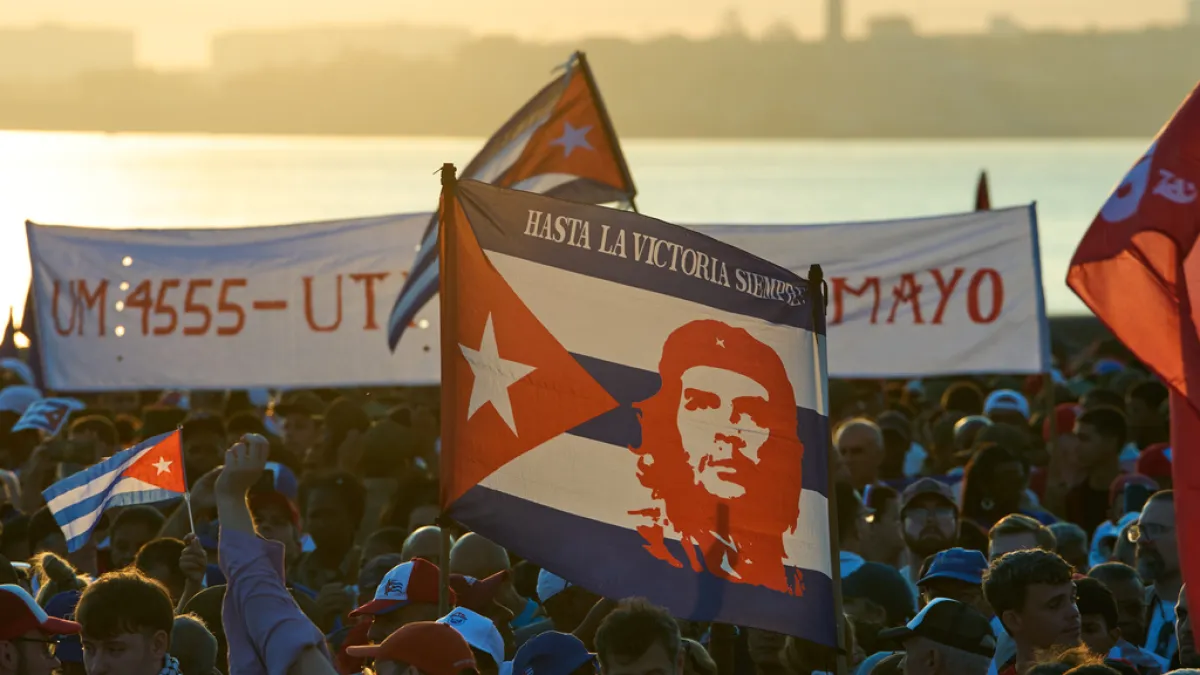
Cuban electrical and petroleum workers marched through Havana on 1 May 2026 to celebrate International Workers' Day, a demonstration of state continuity that coincided with a significant escalation in external pressure. The event saw the participation of former leader Raul Castro and current President Miguel Diaz-Canel, underscoring the government's commitment to the labour holiday amidst a deteriorating domestic situation.
Simultaneously, the administration of US President Donald Trump announced a new round of sanctions specifically targeting Cuban security services and individuals identified as material supporters of the government. This policy move represents a tightening of restrictions on the island's internal apparatus, adding a new layer of economic and political constraint to the existing US energy blockade that has long battered the country's struggling economy.
The justification provided by the White House for these measures relies on unsubstantiated claims that the Caribbean island serves as a safe haven for transnational terrorist groups, explicitly naming Hezbollah. The administration's statement characterised the island in this manner without presenting evidence to support the assertion, framing the sanctions as a necessary response to alleged security threats posed by the Cuban state.
The impact of these new restrictions is felt acutely in the daily struggle for basic utilities. Yunier Merino Reyes, an accountant with the Electric Union who participated in the march, described the current effort to maintain power supplies as tough, arduous and relentless. He noted that the workforce is operating day and night to provide electricity to those in need, highlighting the severe strain placed on the national infrastructure by the prolonged blockade.
Despite the mounting pressure, local residents expressed a resolve to withstand the external threats. Milagros Morales, a resident of Havana who joined the procession, stated that the Cuban people do not give up and will defend their homeland tooth and nail. Her comments reflect a broader sentiment of defiance against the US administration, which has frequently threatened military attacks in addition to its sustained economic pressure.
The juxtaposition of the celebratory march with the announcement of punitive measures illustrates the deepening divide between the two nations. While the Cuban leadership uses the occasion to project stability and unity, the US government leverages the same day to signal its continued commitment to isolating the regime through targeted financial and operational restrictions.