Cuban dissident artist Luis Manuel Otero Alcántara arrives in Miami after five-year prison sentence
The artist, who was jailed in 2021 for charges including public disorder and contempt, has arrived in the United States, where he received what has been described as a hero’s welcome.
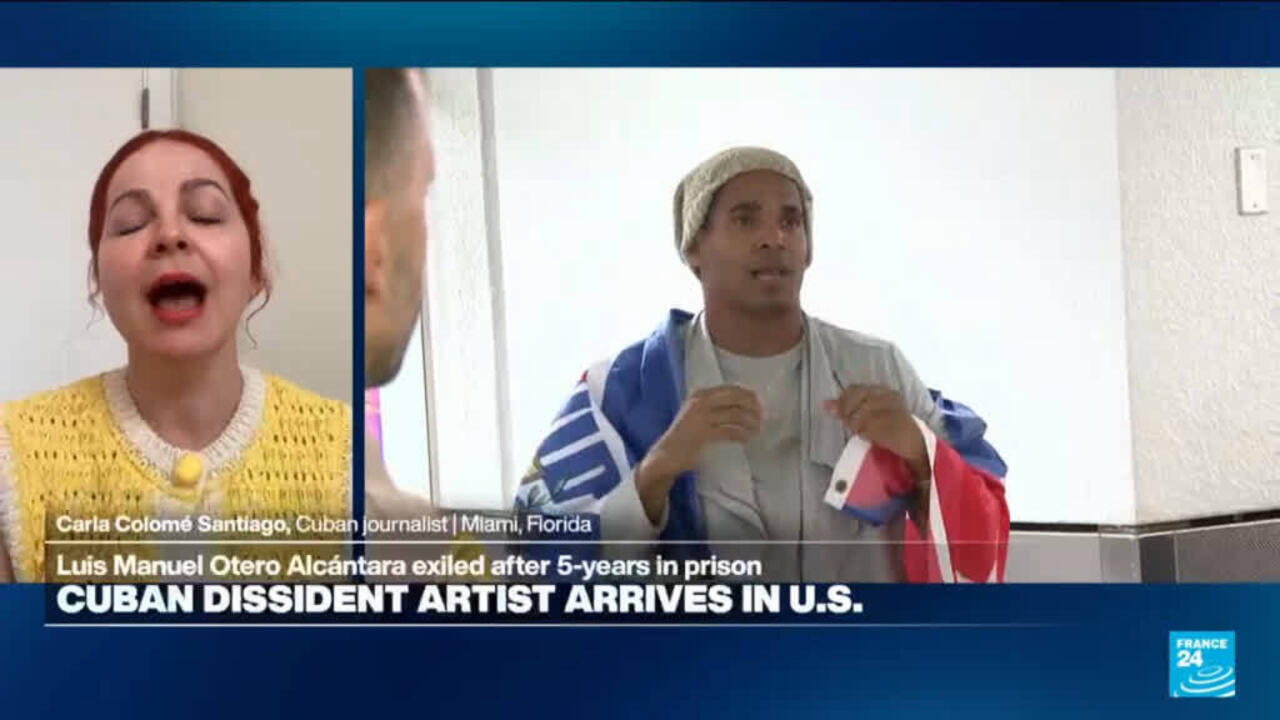
Cuban dissident artist Luis Manuel Otero Alcántara has arrived in Miami following his release from prison in Cuba. The artist, who co-founded the San Isidro Movement, accepted exile after the United States granted him humanitarian parole.
Otero Alcántara was arrested in Havana in 2021 during anti-government demonstrations. He was subsequently sentenced to five years in prison on charges of public disorder, contempt, and disrespect for national symbols.
The San Isidro Movement is a collective of Havana-based artists, writers, and musicians that protests against the Cuban government. Otero Alcántara’s release and departure mark a significant development in the case of one of Cuba’s most prominent cultural dissidents.
Upon his arrival in Miami, Otero Alcántara received what has been described as a hero’s welcome. Cuban journalist Carla Colomé Santiago, based in Miami, provided insights regarding the event.
The United States’ decision to grant humanitarian parole facilitated his exile, allowing him to leave the island nation after serving his sentence. The specific date of his arrival in Miami was not provided in the source material.
The charges against Otero Alcántara were brought in the context of the 2021 protests, which the source material characterises as anti-government demonstrations. His case has drawn international attention due to his role in the San Isidro Movement and the severity of his sentence.
Carla Colomé Santiago’s commentary highlights the ongoing interest in the situation of Cuban political prisoners and the role of the diaspora in Miami. The artist’s arrival in the United States concludes a period of detention that began in 2021.
The San Isidro Movement continues to operate as a voice for cultural and political dissent within Cuba. Otero Alcántara’s exile underscores the tensions between the Cuban government and its artistic community.
The humanitarian parole granted by the United States represents a specific mechanism for addressing the status of political detainees. It allowed Otero Alcántara to leave Cuba without returning to face any potential further legal proceedings.
His arrival in Miami marks the end of his imprisonment and the beginning of his life in exile. The event has been noted by journalists and observers tracking human rights and political developments in Cuba.