Costa Rica inaugurates new administration with sweeping security overhaul and deepened US ties
The Sovereign People's Party secures an absolute majority in the legislature as the nation pivots toward a militarised approach to security and third-country deportation agreements
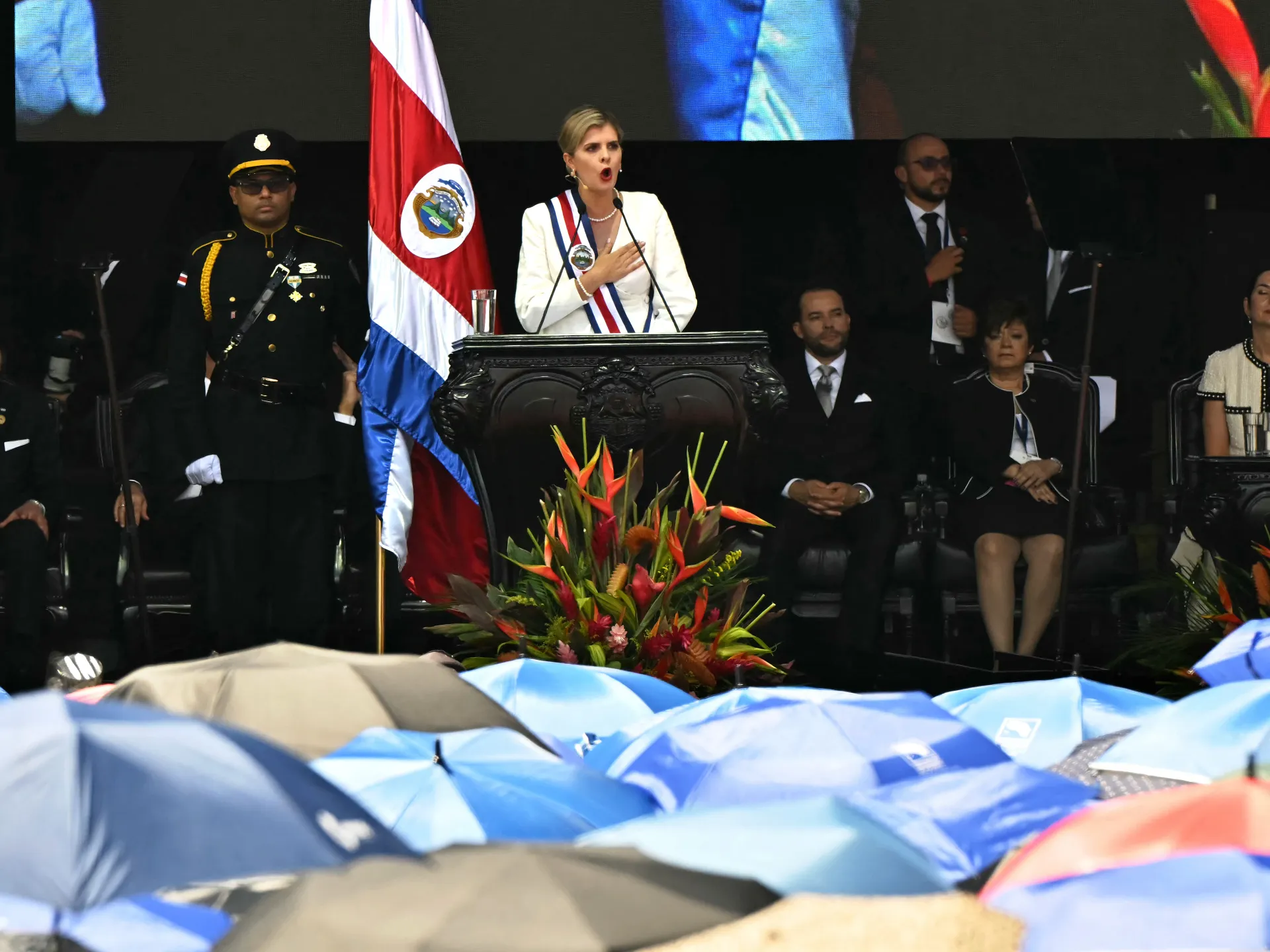
Laura Fernandez was sworn in as the president of Costa Rica on 8 May 2026, marking a significant shift in the Central American nation's political landscape. The 39-year-old leader of the right-wing Sovereign People's Party (PPSO) defeated outgoing president Rodrigo Chaves in the February 1 vote, bringing an administration defined by a commitment to combat rising crime and maintain close ties with the United States. Her party secured an absolute majority in the single-chamber legislature, winning 31 of 57 seats, which provides the incoming government with the legislative dominance necessary to implement its agenda.
The inauguration ceremony, held on 8 May 2026, featured high-profile international dignitaries including US special envoy Kristi Noem and Israeli President Isaac Herzog. Noem, who leads the Trump administration's "Shield of the Americas" initiative, was present to underscore the strategic alignment between Washington and San Jose. The event also saw the introduction of Gerald Campos as the new security minister, a move that signals the start of a broad crackdown on organised crime within the country.
Central to Fernandez's policy platform is the construction of a maximum security prison modelled on El Salvador's CECOT centre. This facility is intended to house inmates under strict conditions, mirroring the approach taken in neighbouring El Salvador. The plan includes accepting non-citizens deported from the United States under third-country agreements, a framework signed in March that allows Costa Rica to host deportees who have no ties to the region. This policy has drawn condemnation from rights groups, who warn of the potential for inhumane conditions for those stranded in foreign jurisdictions.
Fernandez has vowed sweeping reforms to the judiciary and security laws, describing her approach to organised crime as a "war without quarter." This rhetoric reflects a departure from the nation's traditional stability-focused governance, as Costa Rica has increasingly become a transit route for drug smuggling to the US. The new administration aims to reverse this trend through heavy-handed security measures, though the specific timeline for the construction of the new prison and the full scope of judicial changes remain to be detailed.
In an unorthodox political move designed to ensure continuity, outgoing president Rodrigo Chaves will remain in the government as a dual minister of the presidency and finance. This arrangement guarantees outsized influence for Chaves, a close ally of US President Donald Trump, within the incoming administration. Additionally, Fernandez has appointed her second vice president, Douglas Soto, as the ambassador to Washington, further cementing the diplomatic bridge with the United States.
The new government faces the challenge of implementing these aggressive security policies while navigating the complexities of international relations and domestic rights concerns. With the PPSO holding a legislative majority and a strong mandate from the electorate, Fernandez is positioned to push through the controversial measures that define her first term in office.