Coordinated offensive by JNIM and FLA tightens siege on Bamako as Mali faces worst security crisis in years
The Group for the Support of Islam and Muslims and the Azawad Liberation Front have launched a unified campaign that marks a significant shift from previous ad-hoc cooperation, intensifying pressure on President Assimi Goïta's military government.
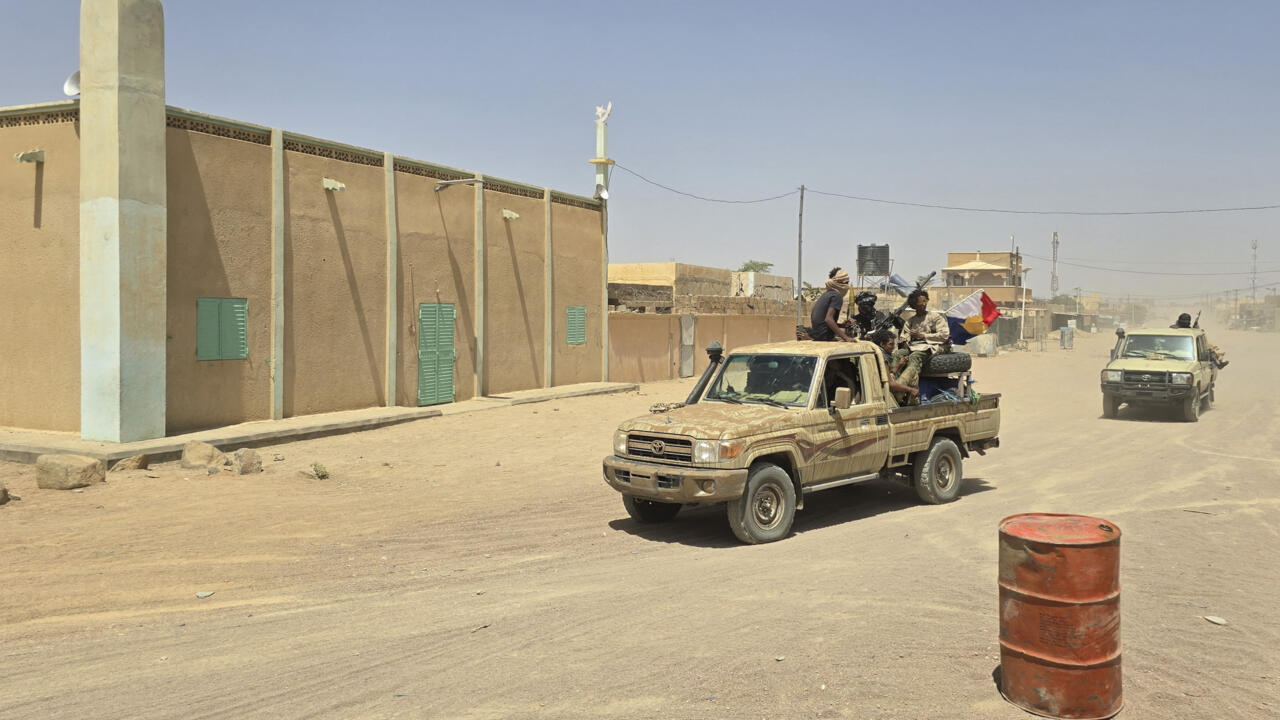
Mali is confronting its most severe security challenge in years as the Group for the Support of Islam and Muslims (JNIM) and the Azawad Liberation Front (FLA) execute a coordinated offensive that has tightened a blockade around the capital, Bamako. This escalation, described by analysts as the most serious since 2012, involves the two groups operating together rather than merely fighting side by side, indicating a level of integration achieved after months of planning. The alliance has seized control of northern strongholds, including Kidal and the strategic military camp at Tessalit, where Russian mercenaries and Malian troops surrendered.
Following the coordinated attacks launched on Saturday, 25 April 2026, which struck multiple towns and military positions across the country, rebel forces have focused on isolating the capital. The offensive saw heavy weapons fire reported near Modibo Keïta International Airport in Bamako, with helicopters observed patrolling neighbourhoods in the vicinity. While the fighting has reached the capital, JNIM has reportedly allowed civilians to leave the city while cutting supply routes to erode the state's ability to hold the seat of government.
The developments have intensified pressure on the military junta led by President Assimi Goïta, particularly after the death of defence minister Sadio Camara. Camara, a key architect of the regime's ties with Russia, was killed in an attack on his residence in Kati last weekend. His funeral was held as the alliance issued a call for a nationwide uprising against the ruling junta, demanding a "peaceful and inclusive transition." The death of Camara removes a central figure who had been instrumental in maintaining the government's relationship with Moscow during this period of instability.
Despite the operational synergy on the battlefield, the alliance remains fragile due to fundamentally different objectives. JNIM, an affiliate of al Qaeda, seeks to impose a strict interpretation of Islamic law across Mali and the wider Sahel. In contrast, the FLA is pursuing independence or at least autonomy for the Tuareg people in the north. This ideological divide is evident in their respective strategies: the FLA aims to expand its territorial control in the north, while JNIM focuses on shaping the political landscape to force a regime change.
The current alignment echoes developments in the early 2010s when similar cooperation between Tuareg separatists and Islamist factions led to the seizure of much of northern Mali, prompting French intervention in 2013. However, the scale and coordination of the current assaults suggest a more sophisticated campaign. Analysts note that while the groups share a common enemy in the military junta, they lack a common project, creating a partnership driven by pragmatism rather than shared long-term goals.
As the situation on the ground remains uncertain, the blockade around Bamako continues to tighten, raising fears of a prolonged siege. The ability of the junta to maintain control over the capital is being tested by a coalition that combines the local legitimacy of the FLA with the firepower and operational expertise of JNIM. The outcome of this crisis will likely depend on whether the pragmatic nature of the alliance can sustain itself against the divergent political ambitions of its constituent groups.