Colombia’s new government pledges militarised response after car bomb attack
The explosion at a Cauca toll plaza, attributed to FARC splinter groups, has accelerated the hardline security agenda of the newly inaugurated president, who has promised to dismantle criminal networks through force rather than negotiation.
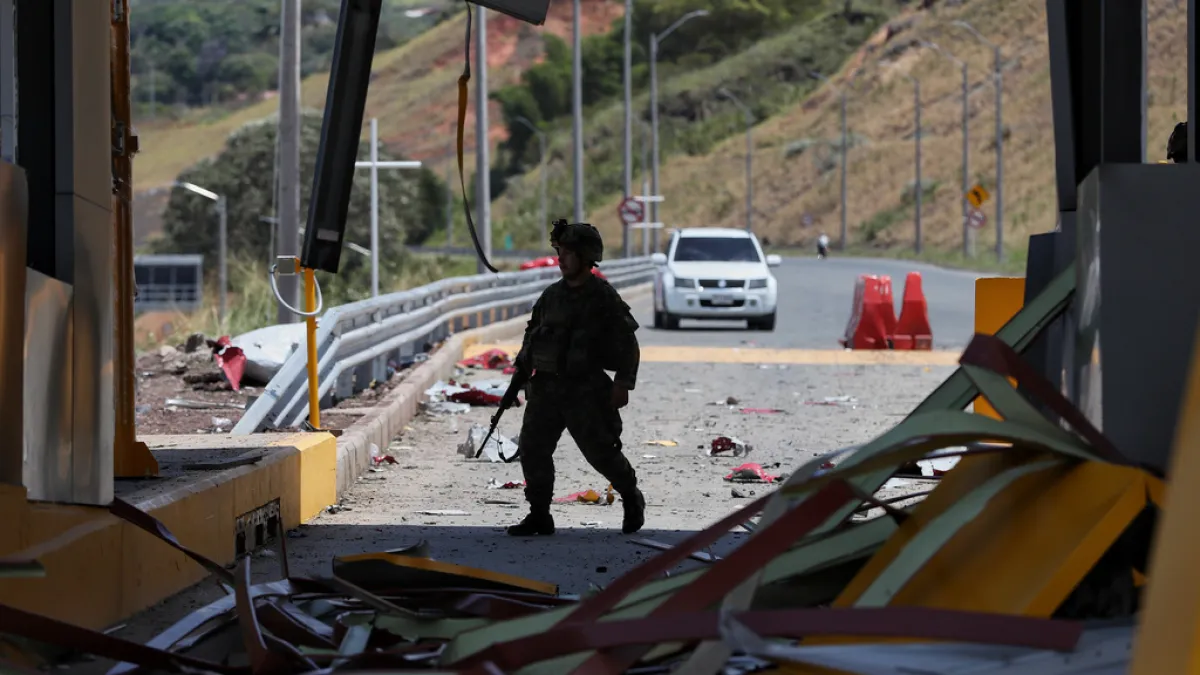
A car bomb detonated at a toll plaza on the Pan-American Highway in the southwestern department of Cauca on Saturday, marking the first major security challenge for President Abelardo de la Espriella’s administration. The attack occurred just one day after the far-right lawyer was sworn in, underscoring the volatile environment in which his government has begun its term. Two security guards sustained minor injuries in the explosion, which authorities have attributed to splinter factions of the former Revolutionary Armed Forces of Colombia (FARC).
The Colombian military identified the perpetrators as armed groups that fractured from the FARC after the rebel organisation disarmed following a 2016 peace deal. Witnesses reported that the attacker abandoned the vehicle and fled the scene on a motorcycle. The incident has provided immediate impetus for President de la Espriella and his cabinet to articulate a stern, militarised response to violence, signalling a definitive departure from the negotiation-heavy strategies of the previous administration.
Transportation Minister Elsa Noguera framed the bombing as a direct assault on national infrastructure and regional connectivity. In a statement referencing the president’s inaugural address, Noguera declared that the time for restoring order had begun. She affirmed the government’s commitment to recovering control of territories and ensuring public safety, echoing de la Espriella’s pledge to defeat narco-terrorism and suppress criminal activity through decisive state action.
De la Espriella, a political newcomer who narrowly defeated leftist Senator Ivan Cepeda in a June run-off election by less than one percent, campaigned on ending the “Total Peace” policy of his predecessor, Gustavo Petro. In his inaugural speech, the president stated that the option of dialogue with armed groups was exhausted. This rhetorical shift aligns with a broader regional trend of right-wing leaders capitalising on public concerns over crime and insecurity to secure electoral victories.
The new administration’s hardline stance is bolstered by support from the United States. The Trump administration has promised $1bn in security aid to de la Espriella’s government, marking a significant shift from the tense relations characterised by the Petro era. This support coincides with de la Espriella’s pledge to employ aggressive tactics against illicit trafficking, including bombing boats and planes suspected of carrying drugs, mirroring strategies used in the Caribbean and eastern Pacific.
However, these proposed measures have drawn caution from rights groups, which warn that militarised responses to drug trafficking could lead to human rights abuses by government forces. De la Espriella faces the complex task of addressing Colombia’s six-decade internal armed conflict, involving paramilitaries, rebels, and criminal networks, within a single four-year term, as the constitution prohibits presidential re-election.