Colombia votes on Petro’s legacy as election enters decisive first round
Left-wing Senator Ivan Cepeda leads opinion polls, but a run-off on June 21 remains likely as voters weigh social reforms against security concerns.
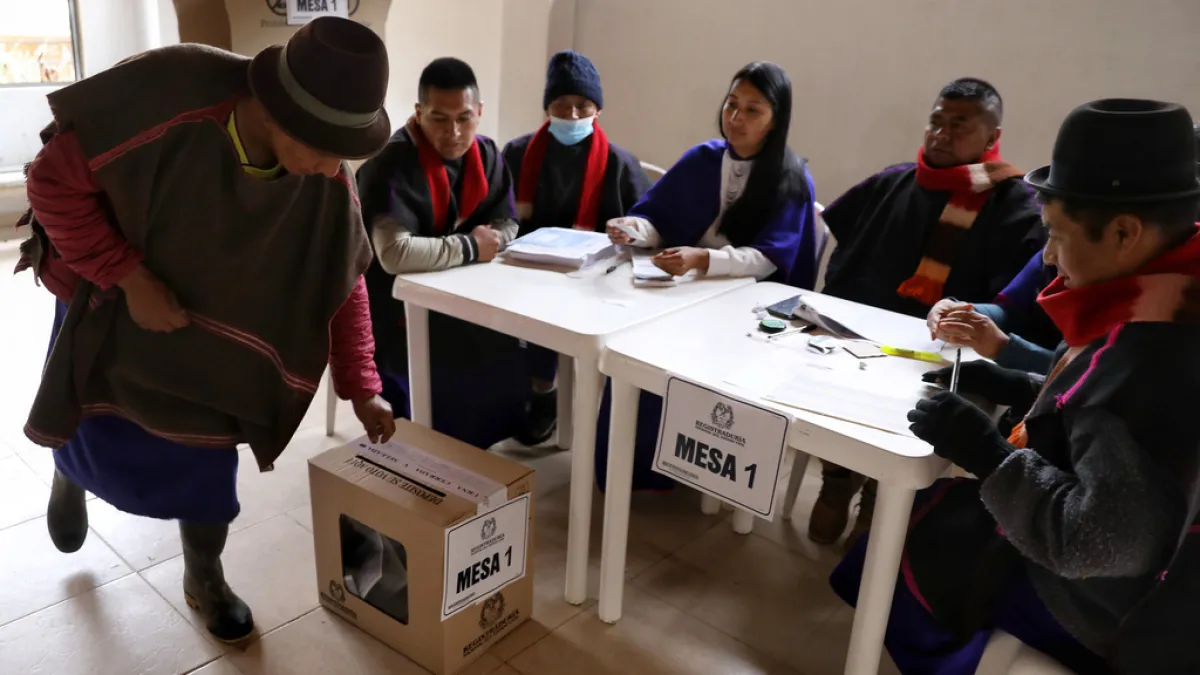
Voters in Colombia have cast ballots in the first round of the presidential election to determine the successor to term-limited President Gustavo Petro. The contest features 14 candidates, with the race largely defined by three main contenders: left-wing Senator Ivan Cepeda, independent businessman Abelardo de la Espriella, and right-wing Senator Paloma Valencia. Cepeda currently leads in opinion polls with approximately 33.4 percent support, aiming to secure an outright victory and avoid a June run-off. If no candidate achieves more than 50 percent of the vote, the top two contenders will face each other in a second round on June 21.
The election is viewed as a referendum on Petro’s legacy and social reforms, set against a backdrop of significant security concerns and historical internal conflict. Cepeda, who pledged to continue the outgoing leader’s social reforms to combat poverty, is seeking to cross the 50 percent threshold to prevent a scenario where the splintered right wing might consolidate around a single candidate. A poll earlier this month from the National Consulting Centre (CNC) showed Cepeda with the highest support among all candidates, though his popularity has been tested by questions regarding the efficacy of Petro’s policies.
Abelardo de la Espriella, the closest opponent in the polls, is promising to crack down on crime and armed groups by bolstering security operations and constructing megaprisons. His approach echoes the policies of El Salvador’s President Nayib Bukele, appealing to voters seeking a hardline response to violence. In contrast, Paloma Valencia, a senator backed by former President Alvaro Uribe, currently sits third in the polls. If elected, Valencia would become the country’s first female president, representing a shift in the right-wing faction that previously favoured other candidates.
Security measures are stringent as the country grapples with more than six decades of internal conflict involving criminal networks, paramilitaries, and rebel groups. Officials have implemented a ban on the sale and consumption of alcohol in public places to keep tensions low, and a heavy security presence is expected at polling stations. The threat of violence remains acute, highlighted by the assassination of presidential candidate Miguel Uribe Turbay during a campaign stop in Bogota last year, underscoring the risks inherent in the political landscape.
Cepeda has promised to push on with Petro’s “Total Peace” plan, prioritising talks with armed groups rather than relying solely on military force. While this strategy has faced criticism for failing to stem immediate violence, supporters argue it offers a long-term solution to the conflict. Conversely, some voters favour de la Espriella’s call for aggressive military campaigns to restore order. The outcome will also reflect Colombia’s foreign policy trajectory, particularly regarding Petro’s strained but recently improved relations with the United States following sanctions imposed during the Trump administration.