Colombia votes in presidential election pitting Petro allies against pro-Trump candidates
With the race narrowed to three main contenders, Colombians cast ballots on Sunday in a contest viewed as a referendum on outgoing President Gustavo Petro’s policies and the future of national security.
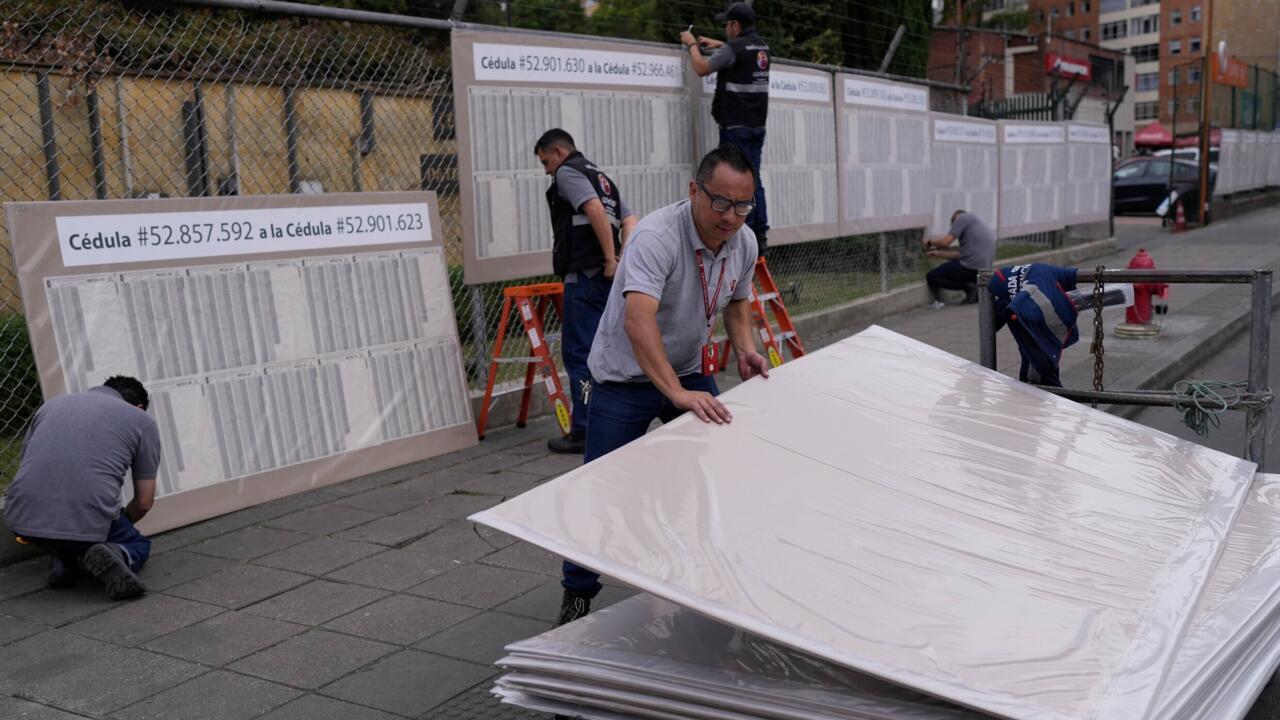
Colombians cast their ballots on Sunday in the first round of the presidential election, a contest widely viewed as a referendum on the policies of outgoing President Gustavo Petro. The vote takes place ten years after the historic peace pact signed with the Revolutionary Armed Forces of Colombia (FARC), an agreement that offered hope to end decades of armed conflict but has been followed by a resurgence of violence as criminal groups have filled power vacuums.
Fourteen candidates are on the ballot, but the contest has effectively narrowed to a three-way race between Senator Ivan Cepeda, lawyer Abelardo de la Espriella, and Paloma Valencia. The election highlights a sharp divide in governance strategies, with Cepeda advocating for the continuation of Petro’s “total peace” initiative, while de la Espriella and Valencia propose more aggressive, heavy-handed tactics to combat armed groups.
Cepeda, a Petro ally and peace-builder, has led the polls by promising to negotiate with remaining rebel groups to resolve the persistent crisis. Despite the peace plan facing criticism for being exploited by criminals during ceasefires, Cepeda and Petro have maintained support through progressive domestic policies, including increases to the minimum wage and improvements to medical infrastructure.
Running against Cepeda are de la Espriella and Valencia, who have vowed to crack down on armed groups with greater force. De la Espriella, known as “The Tiger,” has gained traction by pitching himself as an outsider keen on emulating the tactics used in El Salvador, which reduced gang violence but drew accusations of human rights abuses. Valencia, a protege of former President Álvaro Uribe, supports a stance similar to that of US President Donald Trump, who has pressured Latin American nations to more forcefully target criminal organisations.
The security landscape has deteriorated significantly in recent years, with criminal groups launching drone strikes and armed attacks plaguing the political race. Last June, presidential hopeful Miguel Uribe Turbay was fatally shot at a political rally, underscoring the risks facing candidates. If no candidate secures at least 50 percent of the vote, a runoff election will be held in June.
Voter sentiment reflects this policy split. Some voters, such as Maria Eugenia, support a heavy-handed approach to clean up rural violence, prioritising security over human rights concerns. Others, like Cristian Morales, favour Cepeda’s dialogue-based approach, arguing that aggressive confrontations will only lead to more bloodshed and that the conflict requires a solution beyond simple military force.