Colombia pivots to hardline security as US pledges $1bn aid under new president
The United States has committed $1bn (£740m) in security assistance to Colombia on the first day of Abelardo de la Espriella’s presidency, marking a decisive break from the diplomatic approach of his predecessor, Gustavo Petro.
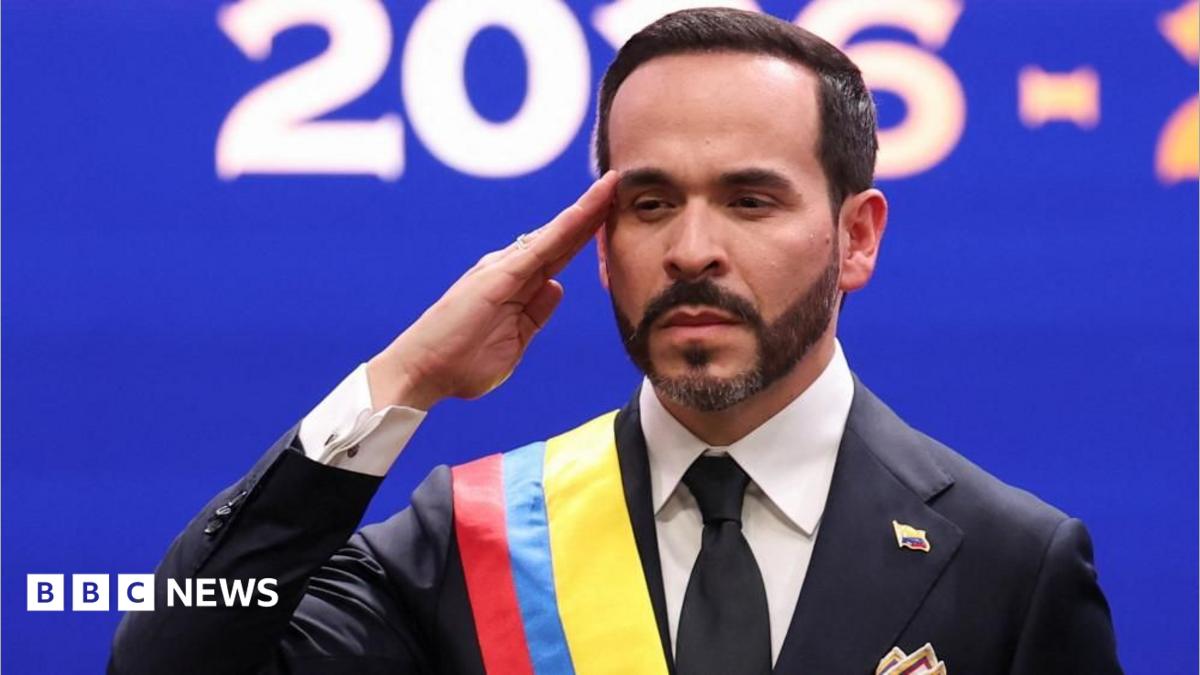
The United States has pledged $1bn (£740m) in security assistance to Colombia on the first day of Abelardo de la Espriella’s presidency. The announcement, made by the US State Department, frames the funding as support for "shared goals" including the fight against organised crime and illegal immigration. The move signals a sharp geopolitical realignment in Latin America, with the new administration immediately joining the US-led "Shield of the Americas" security partnership.
De la Espriella, a right-wing populist and US citizen who has lived and worked in Miami since the 1990s, delivered his maiden speech in Cali rather than the capital, Bogotá. The choice of location, a volatile western city prone to gang violence, was interpreted as a signal of his intent to reassert state control over regions previously contested by armed groups. Addressing troops at a nearby military base, he vowed to crush insurgents and rebuild the nation, stating there would be no place in Colombian territory where criminals could feel safe.
The new president has explicitly abandoned the "total peace" strategy pursued by his predecessor, Gustavo Petro. Petro’s approach prioritised negotiation with guerrilla groups and incentivising farmers to stop cultivating coca, a policy critics argue failed as membership in armed groups expanded and conflict along the Colombia-Venezuela border displaced tens of thousands. De la Espriella, who refers to himself as the "Tiger", promised an "all-out war" on what he termed "narco-terrorism", adopting a hardline stance that draws comparisons to security measures implemented in El Salvador and Ecuador.
De la Espriella’s ascent leaves Brazil’s Luiz Inácio Lula da Silva as the last remaining left-wing leader in South America, although he faces a potential challenge from Flávio Bolsonaro in October. The shift in Colombia aligns it with other right-leaning governments in the region, such as Argentina, where President Javier Milei has received significant US support. Trump has previously indicated he would feel "a lot differently" about supporting Argentina if it were led by a left-wing president, contrasting with his current endorsement of de la Espriella, whom he described as having the "total support and strength of the United States behind him".
The inauguration was attended by US Attorney General Todd Blanche and FIFA president Gianni Infantino. De la Espriella, a former defence lawyer who represented drug-trafficking paramilitaries, has cast himself as a maverick outsider refusing to govern with Colombia’s pre-Petro political elite. He has also pledged a strong military alliance with the US and Israel, reversing Petro’s decision to cut ties with Israel over its offensive in Gaza. The new administration’s pro-growth agenda is expected to deepen economic ties with Washington, marking a significant departure from Petro’s insistence that Colombia should not become a "vassal" of the US.