Cockroach People’s Party stages first street protest in New Delhi over education row
Hundreds of supporters gathered at Jantar Mantar in a display of digital-to-physical mobilisation, highlighting youth frustration with employment prospects and institutional accountability.
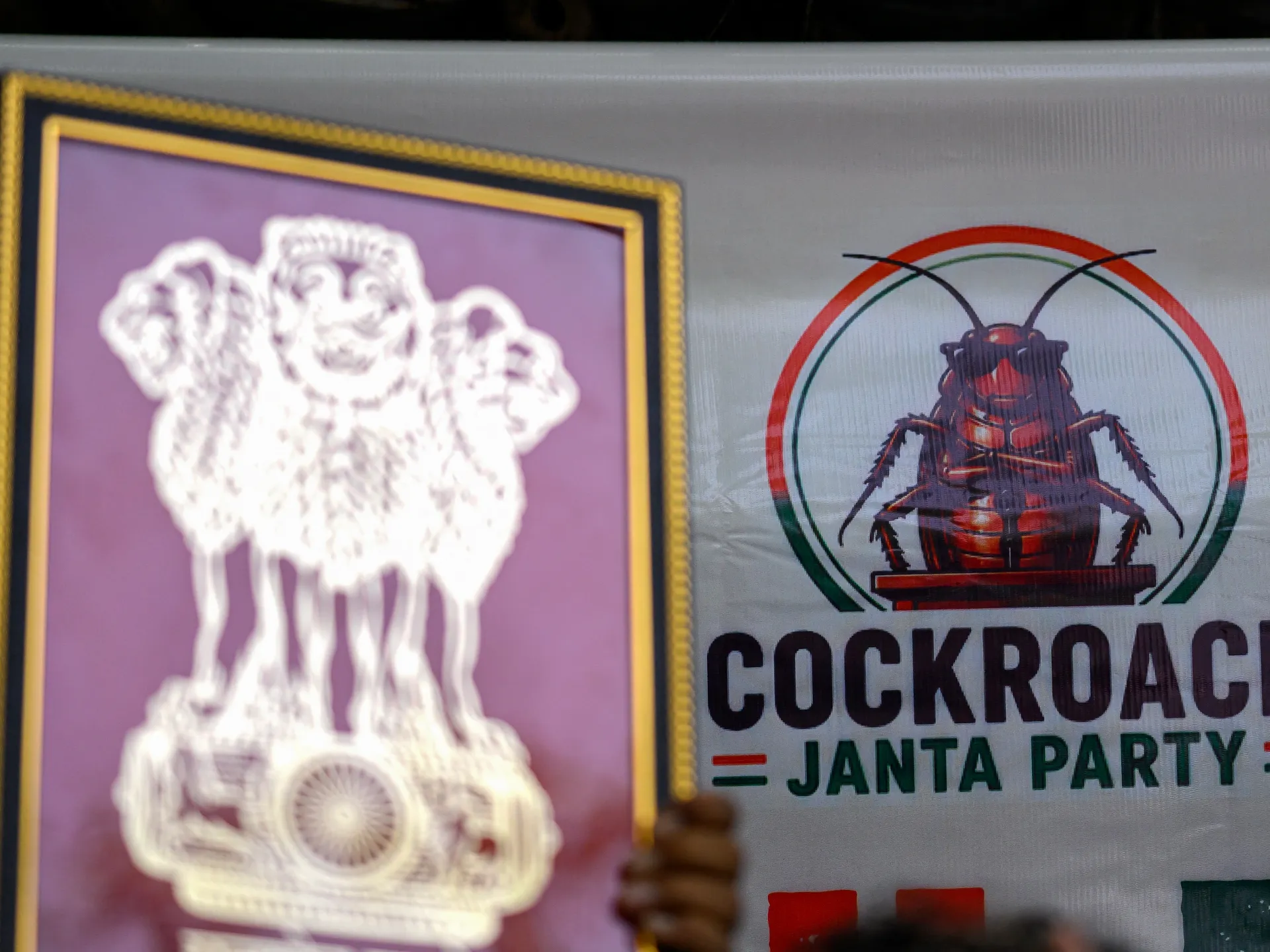
Hundreds of supporters of the Cockroach People’s Party (CJP) gathered in New Delhi on Saturday for the movement’s first physical street protest, staging a demonstration near parliament at Jantar Mantar. The rally, which saw participants wearing cockroach masks, was organised to demand the resignation of Education Minister Dharmendra Pradhan following a controversy over exam irregularities that emerged in May.
The CJP, a satirical social media movement, has rapidly expanded its digital footprint since its launch three weeks ago. Founded by Abhijeet Dipke, a political communications strategist and Boston University student, the group adopted the name and imagery of the insect as a direct response to comments made by Chief Justice Surya Kant in May. During a court hearing, Kant likened young critics of the government and unemployed youth to “cockroaches” and “parasites,” a remark he later stated had been taken out of context.
Within a week of launching its website and social media accounts, the CJP amassed more than 22.2 million followers on Instagram. The movement, which parodies Prime Minister Narendra Modi’s Hindu-nationalist Bharatiya Janata Party (BJP), operates under the slogan: “A political front for the youth, by the youth, for the youth.” Supporters have adopted the cockroach as a symbol of endurance, with some jokingly describing themselves as unemployed and perpetually online.
Organisers urged participants to bring India’s national flag and a book to the protest, symbols intended to represent the right to education and equal opportunity. Demonstrators chanted slogans including “Cockroaches are coming, Dharmendra Pradhan is going!” while maintaining a peaceful stance. Organisers explicitly asked attendees to avoid any confrontations with police during the march.
Indian police increased security at the Jantar Mantar site and nearby airports ahead of the rally, setting up steel barricades at key points. The rise of the CJP mirrors broader trends across South Asia, where youth-led social media movements have played significant roles in antigovernment protests in countries such as Sri Lanka, Bangladesh, and Nepal.
The protest reflects deep-seated frustration among young Indians regarding the education system and limited job opportunities. With youth comprising more than a quarter of India’s population, rising unemployment has fuelled disillusionment with traditional politics. Despite the movement’s rapid online growth, some supporters of the ruling BJP have dismissed the CJP as a fleeting social media gimmick, questioning its ability to sustain long-term political mobilisation.