Coalition of Former Adversaries Targets Russian Mercenaries and Malian Government Forces
Russian mercenaries supporting the Malian government face direct attacks in Bamako, Kati, Gao, and Sevare as security analysts examine the shifting dynamics of regional instability.
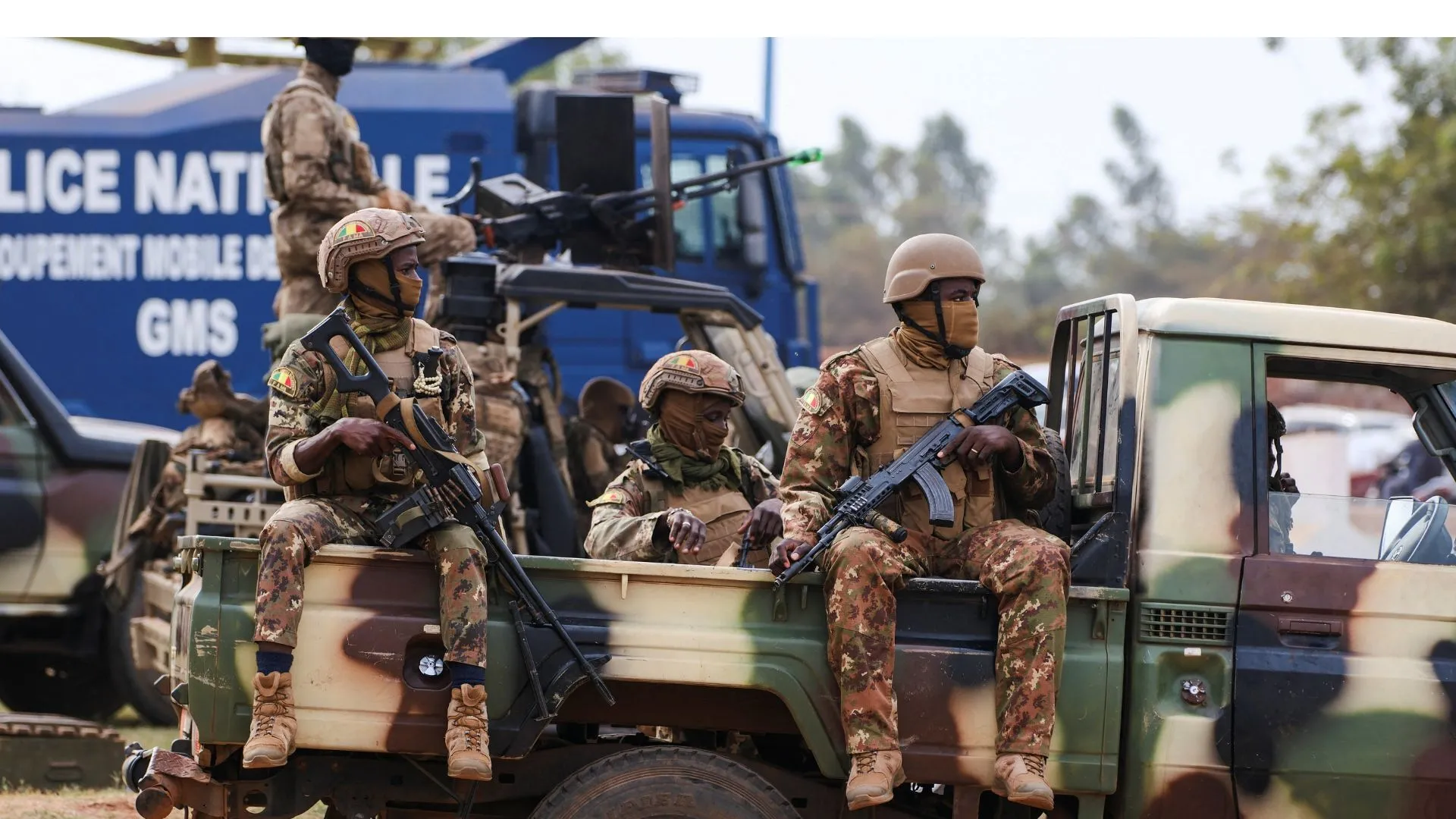
A new coalition of former adversaries in Mali has united to launch coordinated attacks against government positions and Russian mercenary forces. This alliance includes at least one faction linked to al-Qaeda, marking a significant shift in the operational landscape of the country. The strikes specifically target military sites, challenging the stability of the Moscow-backed regime in the region.
The Malian army has characterised the perpetrators of these recent assaults as unidentified armed terrorist groups. However, witness accounts documented by France 24 International and the Associated Press confirm that the attackers are operating as a cohesive unit. Reports indicate that combat was ongoing at the time of the latest updates, suggesting a sustained effort to degrade the government's military capacity.
Russian mercenaries, who currently provide critical support to the Malian government, have come under direct fire from this new coalition. The attacks have struck multiple locations including military positions near Modibo Keïta International Airport in Bamako, as well as sites in Kati, Gao, and Sevare. These engagements highlight the vulnerability of foreign military presence in the face of evolving local threats.
Security analysts from the Institute for Security Studies have noted that Moscow-backed forces have historically reported limited progress in stabilising the region. The persistence of insecurity suggests that the arrival of new combatants has not alleviated the underlying tensions driving the conflict. The Institute for Security Studies continues to monitor the implications of this unrest for broader West African security architecture.
Nicolas Normand, former French Ambassador to Mali and vice president of the Friends of Mali Association, has observed the complex nature of these shifting alliances. While the specific motivations of every faction within the coalition remain partially obscured, the confirmed al-Qaeda link indicates a high level of threat to state institutions. The Friends of Mali Association is tracking the development to understand how these former enemies are coordinating their efforts.
Ovigwe Eguegu, a policy analyst at Development Reimagined, describes the situation as a specialist challenge in West Africa and Sahel geopolitics. The analyst notes that the full extent of the damage and casualties resulting from the coordinated strikes has not yet been detailed in available summaries. Until further intelligence confirms the operational command structure within the coalition, the specific roles of each group must be treated with caution.
France 24 International and the Associated Press continue to document the fighting, providing real-time accounts of the violence near the airport and other key locations. As the Malian army reports that combat remains active, the situation underscores the fragile nature of the current security arrangement. The convergence of these former enemies poses a direct challenge to the government's ability to maintain order and protect its military assets.