Climate change compounded Nepal’s deadly Himalayan collapse, scientists say
World Weather Attribution researchers say warming, glacier retreat, permafrost thaw and geological instability contributed to floods that killed 1,446 people and left at least 6,669 missing.
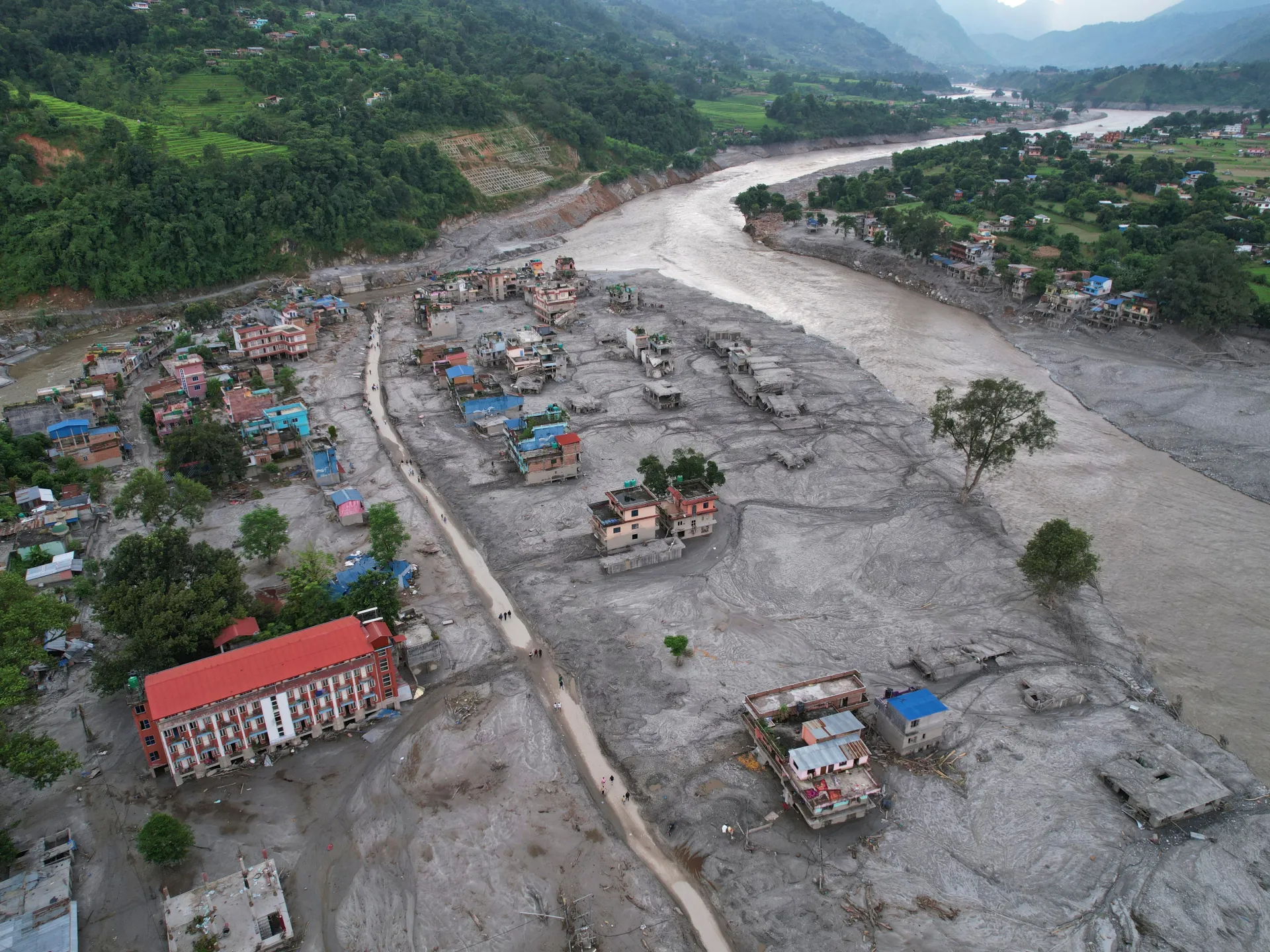
Climate change was a major contributing factor in last month’s glacial mountain collapse and floods across Nepal and Tibet, according to researchers from World Weather Attribution.
The disaster began on 26 August, when rock and glacier broke away from Langtang Lirung in Nepal, releasing water, ice and debris downstream. WWA described the event as a compound crisis rather than the result of a single extreme weather event.
The researchers linked the collapse to long-term warming, glacier retreat, permafrost thaw and geological instability. They said July and August were locally the warmest months recorded, at about 5°C above normal, while heavy snowfall in late 2025 may have increased meltwater before the collapse.
A magnitude 7.8 earthquake in 2015 may also have weakened the slope, although WWA said its precise role remained uncertain. The findings point to interacting environmental and geological pressures rather than climate change acting alone.
Combined figures from Nepalese and Chinese authorities put the death toll at 1,446, with at least 6,669 people missing. Nepal’s disaster authority reported 6,150 missing people and 1,403 bodies retrieved, while China reported 43 deaths and 519 missing.
Nepal estimates reconstruction will cost $4.78 billion. Prime Minister Balendra Shah is due to address the United Nations General Assembly next week, with the disaster expected to reinforce calls for discussion of climate-related loss and damage.