CJP protests escalate in Delhi as police remove activist from hunger strike
Tensions rise in India’s capital following the forcible removal of educator-activist Sonam Wangchuk, prompting calls for the resignation of Education Minister Dharmendra Pradhan.
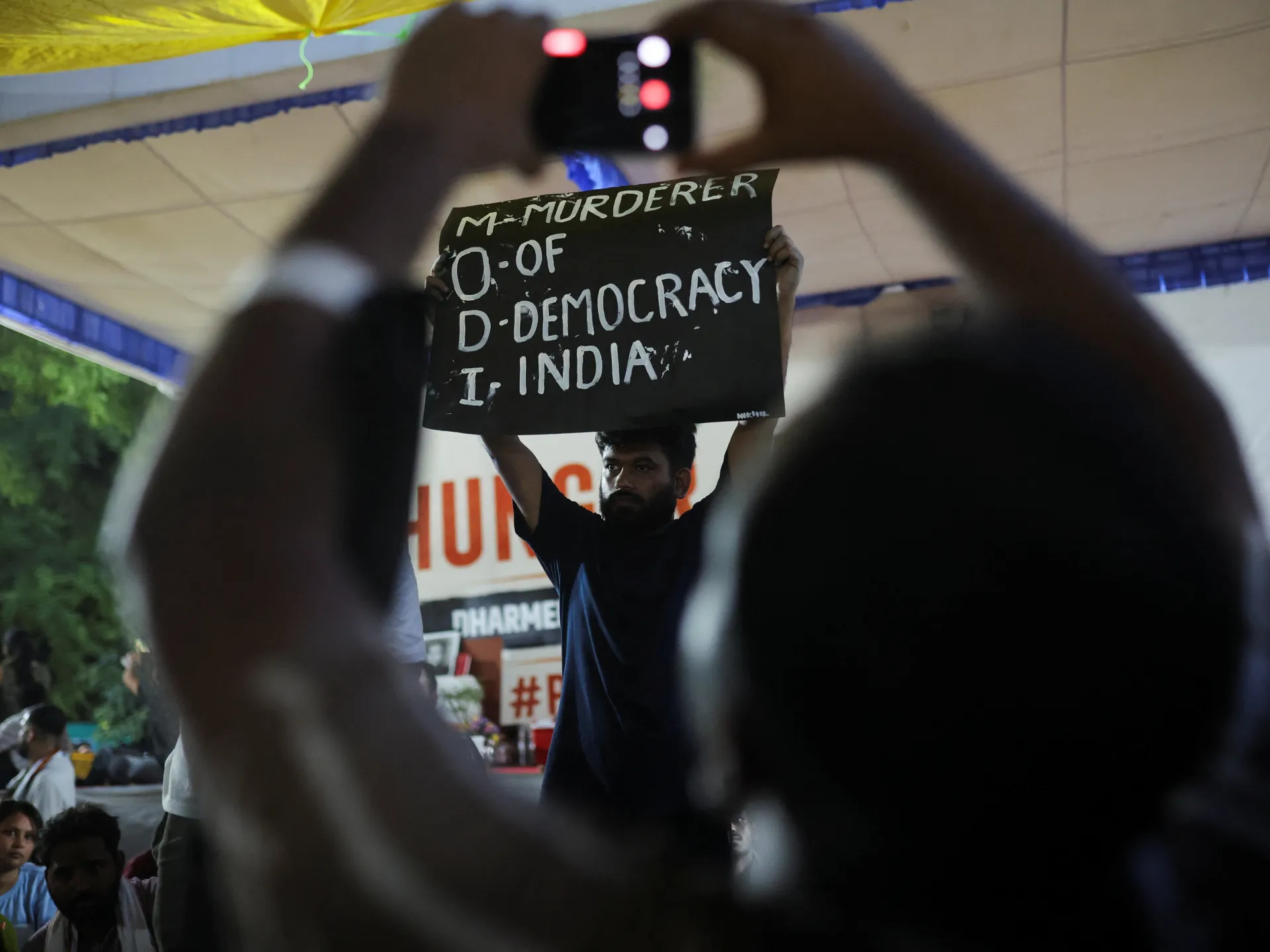
Protests led by the Cockroach Janta Party (CJP) have intensified in New Delhi after police forcibly removed educator-activist Sonam Wangchuk from a hunger strike at the Jantar Mantar observatory. Wangchuk was transported to a hospital against his will on the 21st day of his indefinite fast, an action that has triggered further demonstrations and a new hunger strike initiated by CJP founder Abhijeet Dipke.
Demonstrators have announced plans to march towards the Indian Parliament on Monday to demand the resignation of Education Minister Dharmendra Pradhan. The protest is driven by nationwide outrage over university entrance exam leaks, which have exposed systemic failures in India’s competitive examination system. Calls for the resignation of Prime Minister Narendra Modi have also emerged from the ranks of the protesters.
The CJP, a satirical youth movement that emerged on social media in mid-May, has gained significant traction among young Indians frustrated by unemployment and blocked aspirations. The party’s name originated from remarks by Chief Justice Surya Kant, who referred to unemployed youth as “cockroaches.” The insult was quickly reclaimed by the movement, transforming a derogatory term into a badge of visibility for a demographic feeling despised and dispensable.
Prior to the recent escalation, the state’s response to the CJP was characterised by calibrated containment rather than an all-out crackdown. Authorities permitted protests within narrow limits and monitored police reach, anticipating the coalition would fragment. However, the forcible removal of Wangchuk suggests the movement has unnerved those in power, shifting the dynamic from a viral social media storm to a tangible political challenge.
The unrest occurs against a backdrop of structural economic challenges, including jobless growth and rising costs. In the 2024 general election, the ruling Bharatiya Janata Party (BJP) secured the support of slightly more than a third of voters nationally, meaning two-thirds of voters did not endorse its re-election bid. Despite this, the BJP maintains power through regional alliances and opposition fragmentation, while wealth concentration reaches levels not seen in India in the past century.
More than 800 million Indians currently depend on government food handouts, highlighting the gap between welfare provision and genuine social security. For educated youth, the promise of upward mobility through credentials has clashed with an economy offering limited dignified work. Exam leaks are viewed not merely as administrative failures but as intimate betrayals of families who have sacrificed significantly for their children’s future.
The CJP’s rise reflects a broader exhaustion of traditional political languages, with humour and satire becoming the primary vehicles for public expression. While the movement lacks a coherent ideology or revolutionary programme, its persistence indicates a deep-seated malaise among citizens who feel excluded from the benefits of economic growth and political representation.