Chinese police dashboard reveals automated surveillance targeting foreigners
Unsecured test panel contains real datasets from 2021, showing facial recognition tracking at ski resorts and train stations used to monitor citizens from Five Eyes nations.
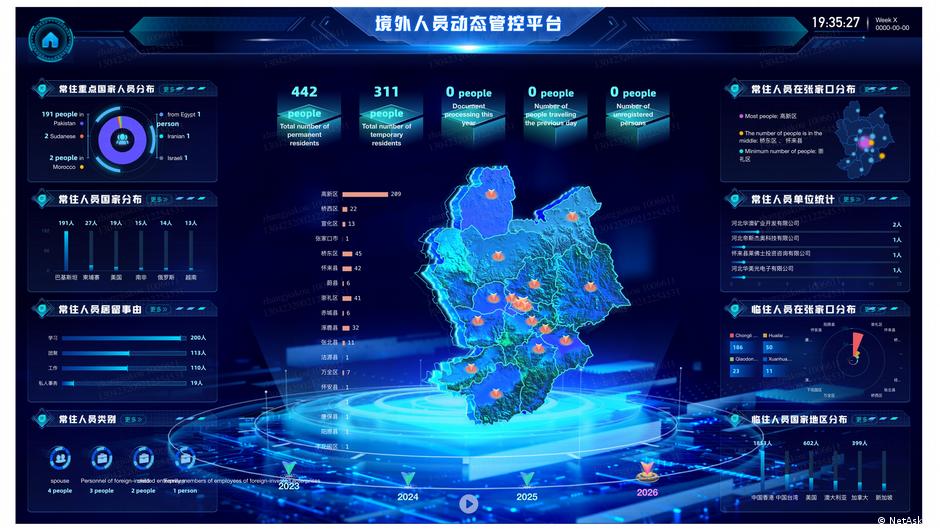
A cybersecurity researcher operating under the pseudonym NetAskari has revealed access to an unsecured Chinese police dashboard that utilises facial recognition technology to track foreigners. The system, designed for the Public Security Bureau in Zhangjiakou, Hebei province, compiles detailed "holistic profiles" of individuals by fusing data from various sensors, including mobile payments, ticket purchases, and camera interactions.
The dashboard contained real datasets from around 2021, including passport photos, private phone numbers, and visa details for foreign journalists based in Beijing. The researcher noted that the system accurately recorded specific train carriage and seat numbers, synchronised facial recognition data from ski resort ticket gates, and logged daily behaviours such as gasoline consumption and visits to "petition areas."
Authorities disproportionately monitor citizens from the "Five Eyes" nations, comprising the US, UK, Australia, New Zealand, and Canada. The system assigns certain foreign journalists a special real-time tracking tag called "trackable," which automatically triggers early warnings for police when they enter a jurisdiction. This automation replaces traditional manual policing, allowing authorities to anticipate itineraries and map interpersonal relationships through algorithmic network graphs.
The technology aims to create a "holistic personnel archive" that stitches together physical whereabouts, consumption habits, and digital footprints. In 2025, the Shanghai Putuo Public Security Bureau awarded a contract for a similar "Holistic Personnel Archive System," reflecting a broader shift from isolated street cameras to a data-fused, predictive social control infrastructure.
NetAskari described the system as reducing people to a "datamass" that can be controlled, shaped, and coerced. Unlike Western democracies where debates over surveillance technology exist, the researcher noted that Chinese security agencies operate with relatively little oversight, effectively eradicating the possibility of under-the-radar investigations.