China’s mineral controls spark market distortion and resource nationalism
A Financial Times analysis published on 15 July 2026 indicates that restrictions on critical metals are altering global trade dynamics and encouraging protectionist policies.
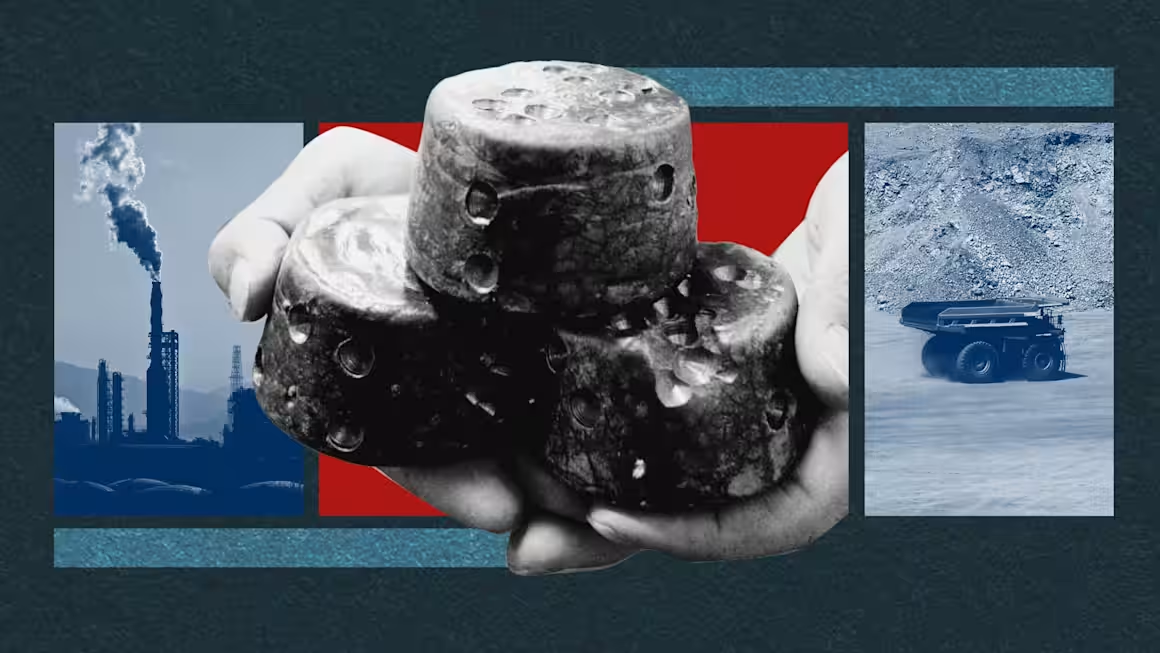
Beijing has implemented export controls on rare earths and other niche metals, measures that are reportedly distorting global markets and fuelling resource nationalism, according to a Financial Times report published on 15 July 2026. The restrictions target specific critical minerals, marking a significant intervention in the trade of materials essential for advanced manufacturing and technology sectors.
The report asserts that these export controls are having a tangible impact on international markets. By limiting the supply of rare earths and niche metals, the policy is creating distortions in pricing and availability, which is contributing to a rise in resource nationalism across various economies. This shift suggests that countries are increasingly prioritising domestic control over strategic assets rather than relying on established global supply chains.
This development occurs against a backdrop of heightened geopolitical tension, including a recent summit in Beijing between Donald Trump and Xi Jinping. The diplomatic engagement addressed complex issues including trade, artificial intelligence, and tensions surrounding Iran, highlighting the intersection of economic policy and international relations. The strategic importance of critical minerals is further underscored by the broader context of institutional investment in technology, such as heavy buying of NVIDIA shares, which reflects the sector's reliance on these materials.
While the specific mechanisms by which markets are being distorted are not detailed in the initial reporting, the assertion that resource nationalism is being fuelled points to a broader trend of countries seeking to secure their own mineral supplies. This qualitative claim, as reported by the Financial Times, indicates a move away from free-market principles in the critical minerals sector, with nations potentially adopting more protective trade measures.
The report serves as a reminder of the fragility of global supply chains for critical inputs. As China tightens its grip on the export of rare earths and niche metals, investors and policymakers are likely to face increased volatility and a reevaluation of dependency on single-source suppliers. The implications for the technology and defence industries, which rely heavily on these materials, remain to be seen as the market adjusts to the new regulatory environment.