China’s energy advantage reshapes AI infrastructure race against US
As grid constraints stall projects in the United States, Beijing leverages abundant cheap electricity and modular data centre deployment to close the gap in artificial intelligence capacity.
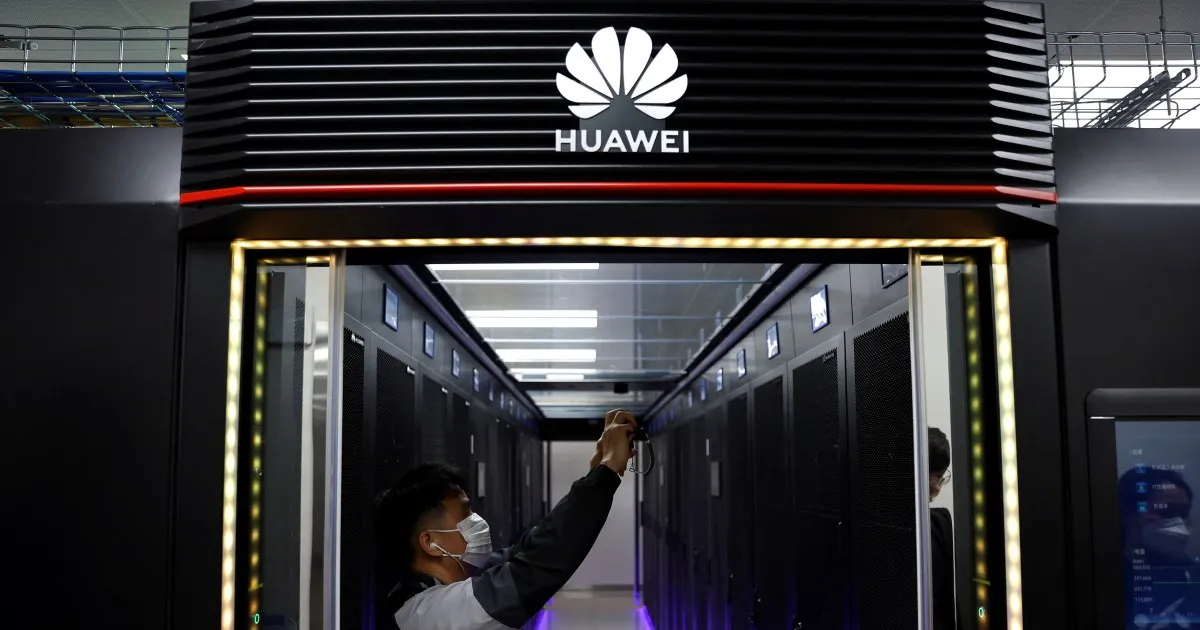
China is leveraging its abundant supply of cheap electricity to counter American dominance in cutting-edge semiconductors within the global artificial intelligence race. While the United States maintains a lead in data centre numbers and investment, Chinese authorities are accelerating infrastructure expansion through state-led renewable energy projects and the “East Data, West Computing” initiative. This strategy locates facilities in the interior where land and energy resources are plentiful, offsetting the US advantage in high-end chip manufacturing.
China already generates more than twice as much electricity as the United States, a gap expected to widen amid aggressive state-led grid investments. BloombergNEF estimates that China will add more than six times as much electricity generation capacity as the US over the next five years. In 2025 alone, China increased its wind and solar power capacity by more than 430 gigawatts, accounting for over half of the global addition in renewables that year.
A key element of this strategy involves integrating data centres with the renewables sector. On May 12, Beijing announced the start of operations at its first large-scale renewable energy project linked directly to a data centre. The 500-megawatt wind and solar project in the northwestern Ningxia region powers a cloud data centre operated by China Datang through a dedicated transmission line.
Experts highlight that electrical power availability is becoming a critical bottleneck for AI deployment. US projects face grid constraints and local opposition, whereas China benefits from faster construction times and lower energy costs. Modular Huawei data centres can be constructed in six months, compared to at least a year for equivalents in the US. This speed has allowed China’s data centre racks to grow by 30 percent annually from 2016 to 2023.
Conversely, the AI rollout in the US is encountering significant power limitations. Energy consultancy Wood Mackenzie reported a 50 percent quarter-on-quarter drop in new data centre projects in the US at the end of 2025 due to grid constraints. Between May 2024 and June 2025, at least 36 data centres were blocked or stalled in the US, driven partly by community backlash against the strain on local grids.
Despite these challenges, the US retains a substantial lead in current infrastructure. Stanford University’s AI Index estimates the US had 5,427 data centres in 2025, compared with 449 in China. US tech leaders, including Elon Musk, Jensen Huang, and Sam Altman, have publicly acknowledged China’s edge in energy infrastructure, with Musk noting that China’s growth in electricity is tremendous.
China’s data centre capacity is projected to reach 60 gigawatts by 2030, nearly doubling its current level. However, analysts note that China’s power grid suffers from fragmentation, with transmission corridors acting primarily as one-way power flows. Additionally, quality issues and low utilisation rates, estimated at 20 to 30 percent, remain hurdles for Beijing as it attempts to build heterogeneous chip clusters.