China hosts 26th foreign leader as diplomatic surge underscores economic leverage
With trade hitting record highs and President Xi Jinping remaining domestic, foreign delegations from 23 countries are prioritising engagement with Beijing’s manufacturing and technology sectors.
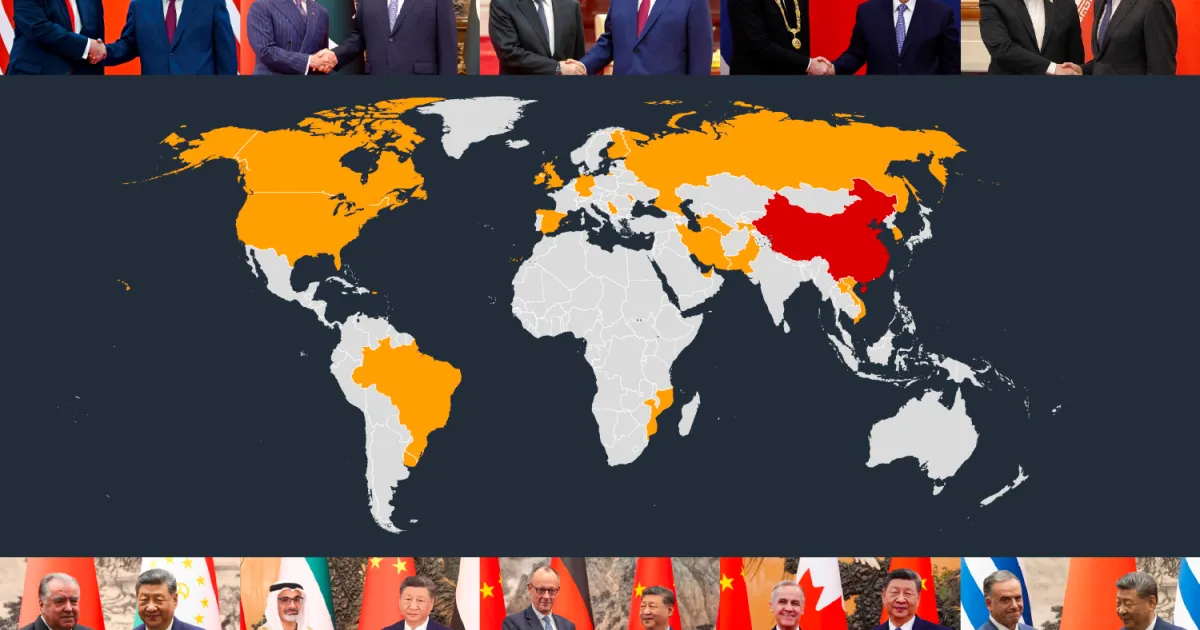
British Foreign Secretary Yvette Cooper has become the 26th foreign leader or senior official to visit China in 2026, continuing a significant diplomatic trend that highlights Beijing’s central role in global economic and political affairs. According to an Al Jazeera tally, Cooper is the latest in a steady stream of international dignitaries travelling to China this year, representing 23 countries across six major regions.
During her three-day trip, Cooper is scheduled to meet Chinese Foreign Minister Wang Yi and Vice President Han Zheng in Beijing. Her itinerary subsequently moves to Shenzhen, a southern technology hub, where she will engage in a programme focused on science and technology. This visit follows a series of high-profile engagements by leaders from the United States, Russia, the United Kingdom, Germany, Spain, and Canada, all of whom are seeking investment opportunities, market access, and cooperation in key sectors such as manufacturing, energy, and infrastructure.
The geographic distribution of these visits underscores the breadth of China’s diplomatic reach. Ten countries from Europe, eight from Asia, and two each from the Middle East, Africa, North America, and Latin America have been represented. Notable visitors include Canadian Prime Minister Mark Carney, British Prime Minister Keir Starmer, German Chancellor Friedrich Merz, Spanish Prime Minister Pedro Sanchez, US President Donald Trump, and Russian President Vladimir Putin. The presence of multiple senior officials from Russia and Pakistan indicates the strategic importance Beijing places on these partnerships.
A defining feature of China’s 2026 diplomatic calendar is that President Xi Jinping has remained in the country throughout the year, hosting foreign dignitaries domestically rather than undertaking international travel. This inward-facing approach coincides with strong economic indicators; China maintained its position as the world’s largest goods trading nation in 2025, with total trade reaching 45 trillion yuan ($6.5 trillion). This figure marks the ninth consecutive year the country has held this title, supported by a trade surplus that hit $1 trillion late last year.
European engagement has been particularly pronounced, accounting for roughly one-third of the countries on the visitor list. Visits by leaders from the UK, Germany, Spain, Ireland, and Finland suggest that European governments are eager to maintain close ties with Beijing despite ongoing disagreements regarding trade practices, security concerns, and China’s relationship with Russia. As China shifts from low-cost manufacturing to high-value exports like electronics and electric vehicles, its appeal as both a market and a supply chain partner remains a primary driver for these diplomatic missions.