Chandra X-ray Observatory releases gallery of 16 galactic images
NASA’s new collection combines high-energy data with observations from the James Webb and Hubble Space Telescopes to illustrate the diversity of spiral, elliptical, and irregular galaxies.
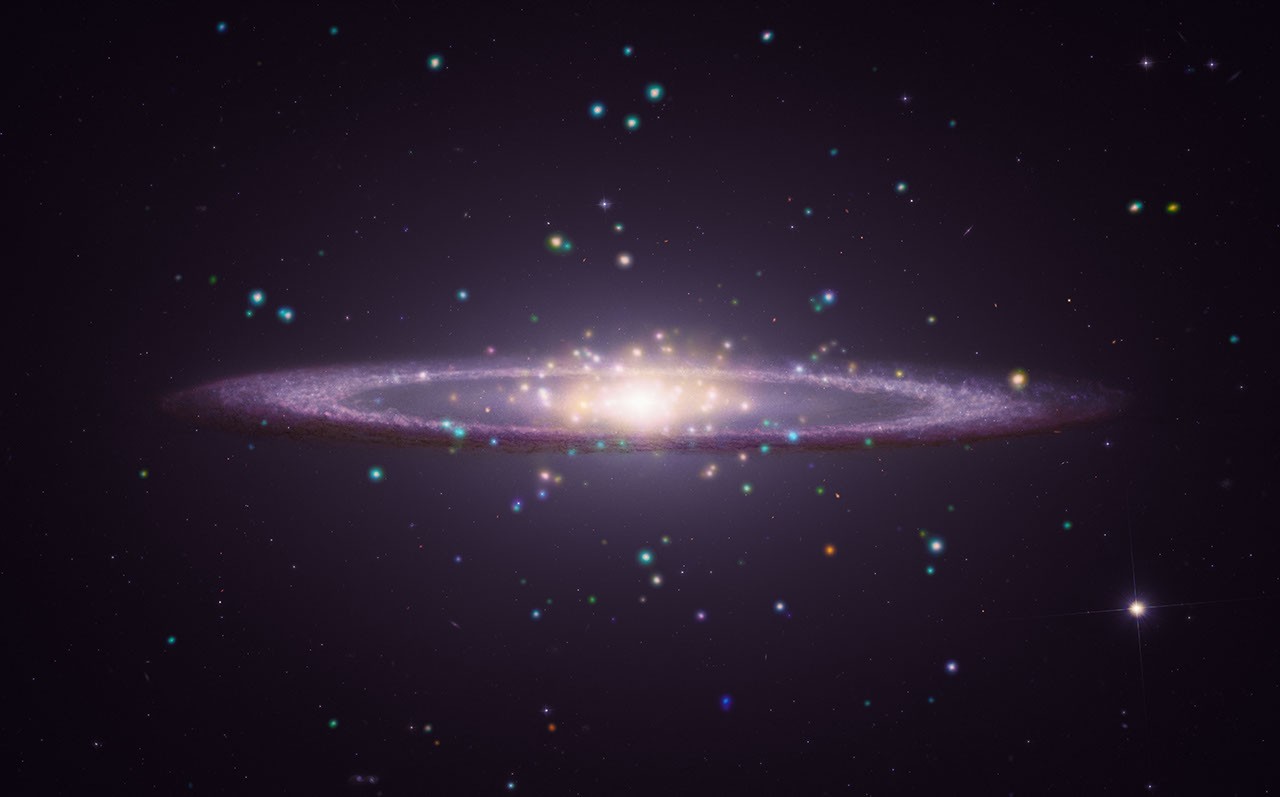
NASA’s Chandra X-ray Observatory has released a new gallery featuring 16 images of galaxies, offering a detailed look at the structural variety of cosmic systems. The collection synthesises high-energy X-ray data from Chandra with observations from other major instruments, including NASA’s James Webb and Hubble Space Telescopes, IXPE, the Neil Gehrels Swift Observatory, and NuSTAR.
Astronomers generally categorise galaxies into three main types: spirals, ellipticals, and irregulars. The new images highlight specific phenomena within these categories, such as supermassive black holes, intense star formation, and galaxy mergers. By examining these external systems, scientists gain insights into the evolution of galaxies and the origins of the elements found on Earth.
Chandra’s X-ray data is critical for studying superheated gas, black hole outflows, and stellar debris. The observatory reveals gas heated to millions of degrees by winds from massive stars and the debris from exploded stars. These processes are key sources of the elements present in our bodies, the atmosphere, and the planet itself.
The gallery includes face-on spiral galaxies such as Messier 33 and NGC 3938, which provide unobstructed views of energetic star pairs and cosmic explosions along their arms. Barred spirals like NGC 1672 and NGC 1385 illustrate how central bar-shaped structures funnel fuel inward to ignite bursts of star formation. Other images, such as NGC 4725, show how star formation can be triggered by previous collisions with other galaxies.
Edge-on views of the Whale Galaxy (NGC 4631) and the Cigar Galaxy (Messier 82) showcase giant halos and superwinds of million-degree gas driven thousands of light-years into space. These intense explosions enrich the surrounding intergalactic space with vital elements. Additionally, the release features active galactic nuclei, where powerful black holes send energy outward in jets that impact entire galaxies, as seen in Centaurus A and Messier 106.
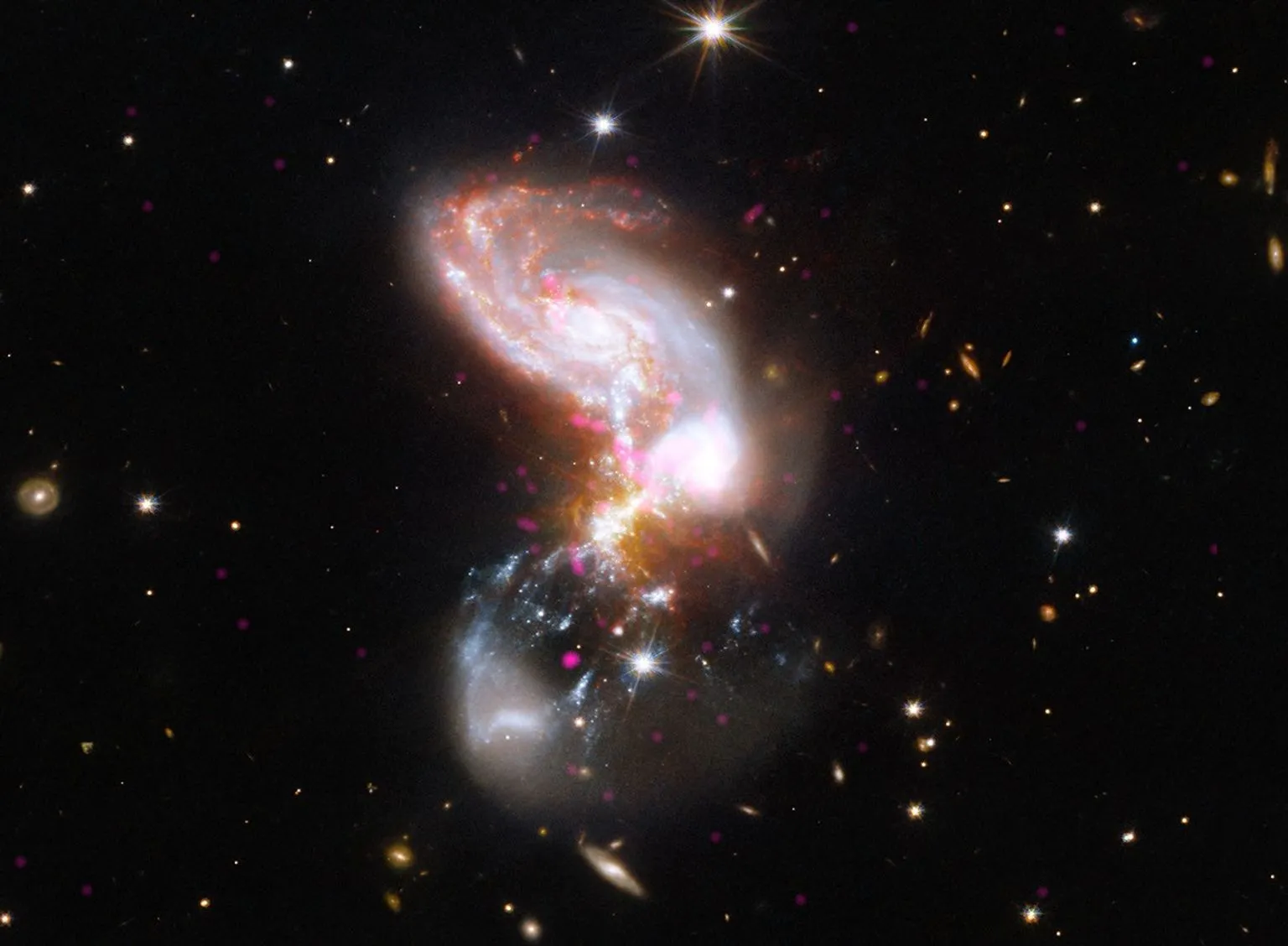
The collection also highlights galaxies undergoing extreme gravitational transformations. A direct impact in Arp 143 has created an expanding ring galaxy, while violent mergers in NGC 3256 and II Zw 096 reveal chaotic collisions that dominated the early universe. Other subjects include NGC 1569, a local laboratory for studying early universe starbursts, and Messier 90, a spiral galaxy plowing through the Virgo Cluster with its star-forming gas being stripped away.
NASA’s Marshall Space Flight Center manages the Chandra program, with science operations controlled by the Smithsonian Astrophysical Observatory’s Chandra X-ray Center.