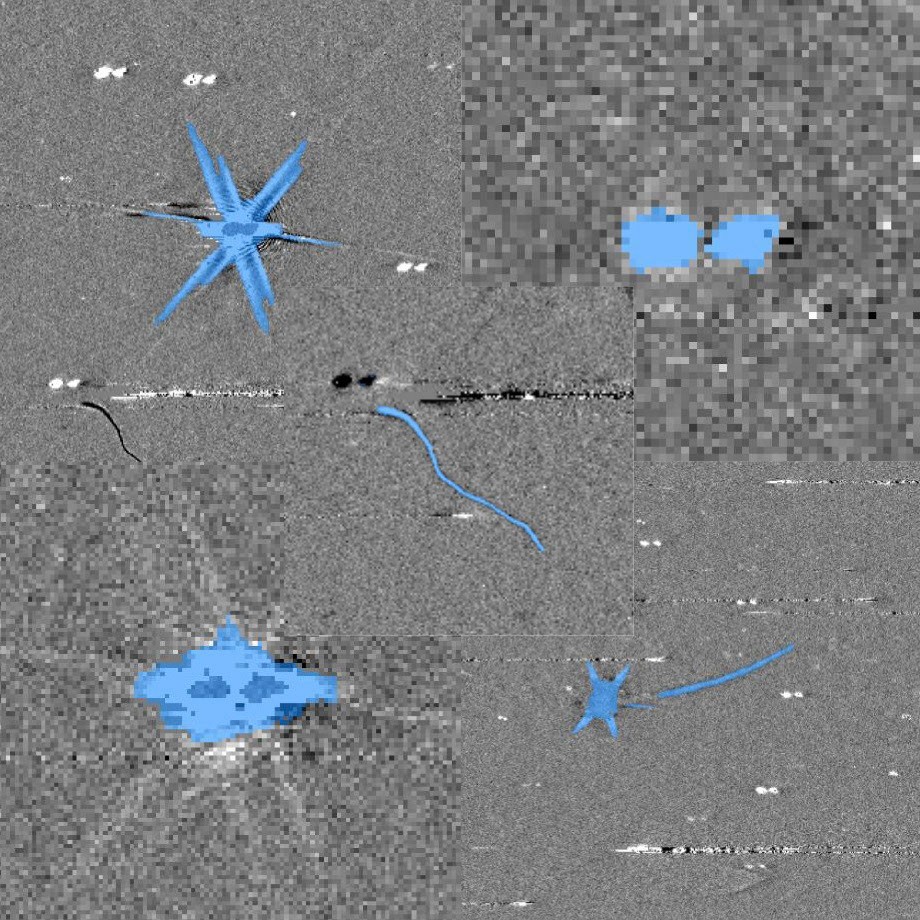
Chandra finds 84 candidate ‘hypersoft’ X-ray sources across six galaxies
The unusual objects emit very low-energy X-rays and intense ultraviolet radiation, but their physical nature remains uncertain.
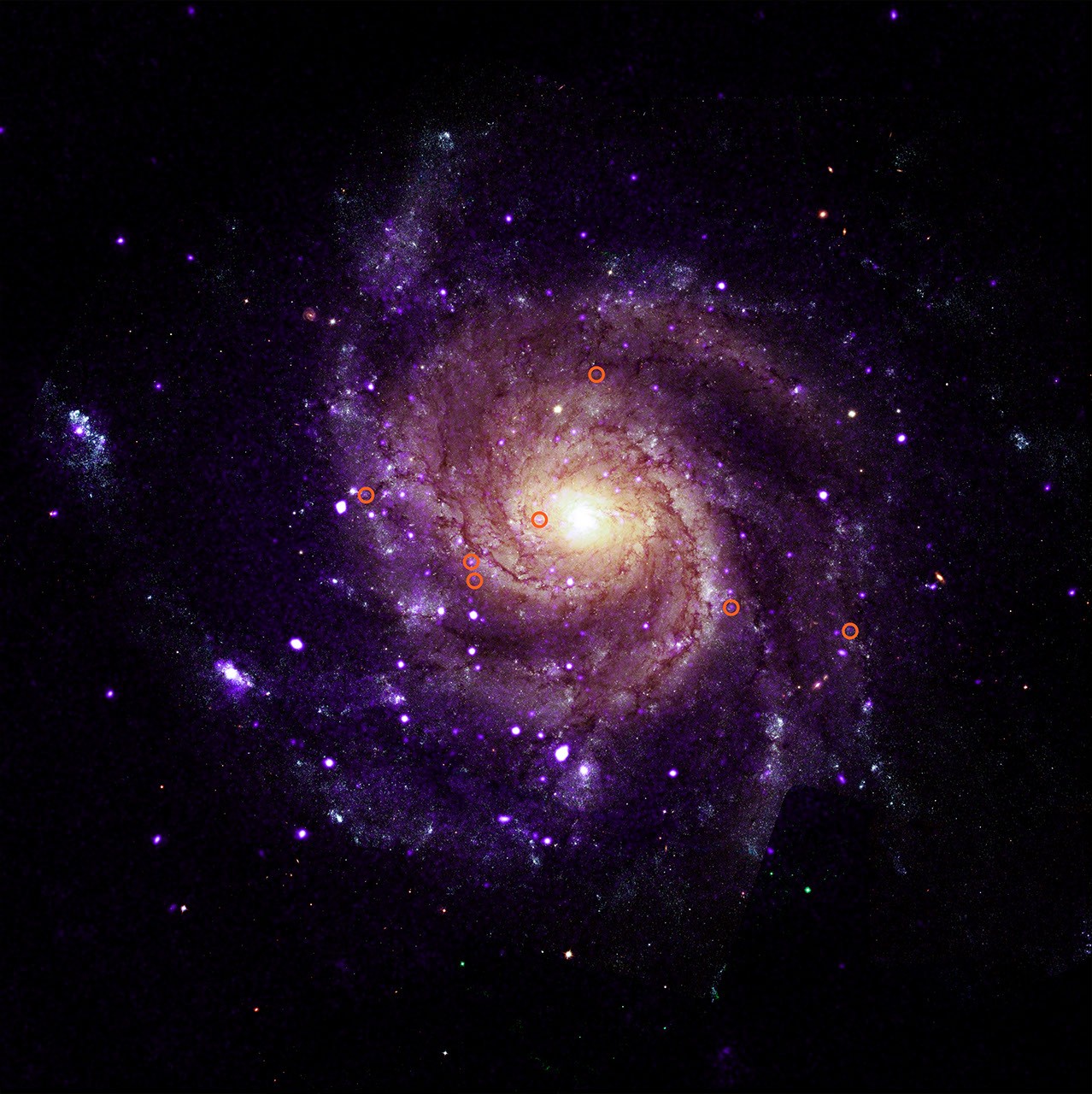
Scientists using NASA’s Chandra X-ray Observatory have identified 84 candidate “hypersoft X-ray sources” across six galaxies. The objects appear in the lowest-energy X-ray images but disappear at higher energies, indicating an unusual emission pattern.
The sources were found by analysing publicly available data from the Chandra archive. They occur in the spiral galaxies M31 and M101, as well as four elliptical galaxies, and were detected in regions containing both young and older stars.
Researchers suggest the objects may be binary systems in which a black hole, neutron star or white dwarf draws material from a companion star. Such systems are known, but the combination of unusually low-energy X-rays and intense ultraviolet radiation has not been observed in this way. The proposed explanation remains unconfirmed.
The findings, published in Nature Astronomy, may help researchers investigate the origins of Type Ia supernovae. These explosions are used to measure the expansion of the universe and helped establish that its expansion is accelerating.
The sources may also contribute to the ionisation of interstellar gas by stripping electrons from atoms. That process can affect star formation and the evolution of galaxies, although the role of the newly identified objects has yet to be established.
Their apparent absence from earlier observations may be explained by the difficulty of detecting low-energy X-rays and the absorption of ultraviolet radiation by hydrogen and helium gas between the stars.