Ceuta migrant transfer operation strains Spanish governance capacity
Spanish police deployed over 170 officers to move more than 3,000 migrants to a port camp, a logistical challenge that has intensified scrutiny of Prime Minister Pedro Sánchez’s crisis management.
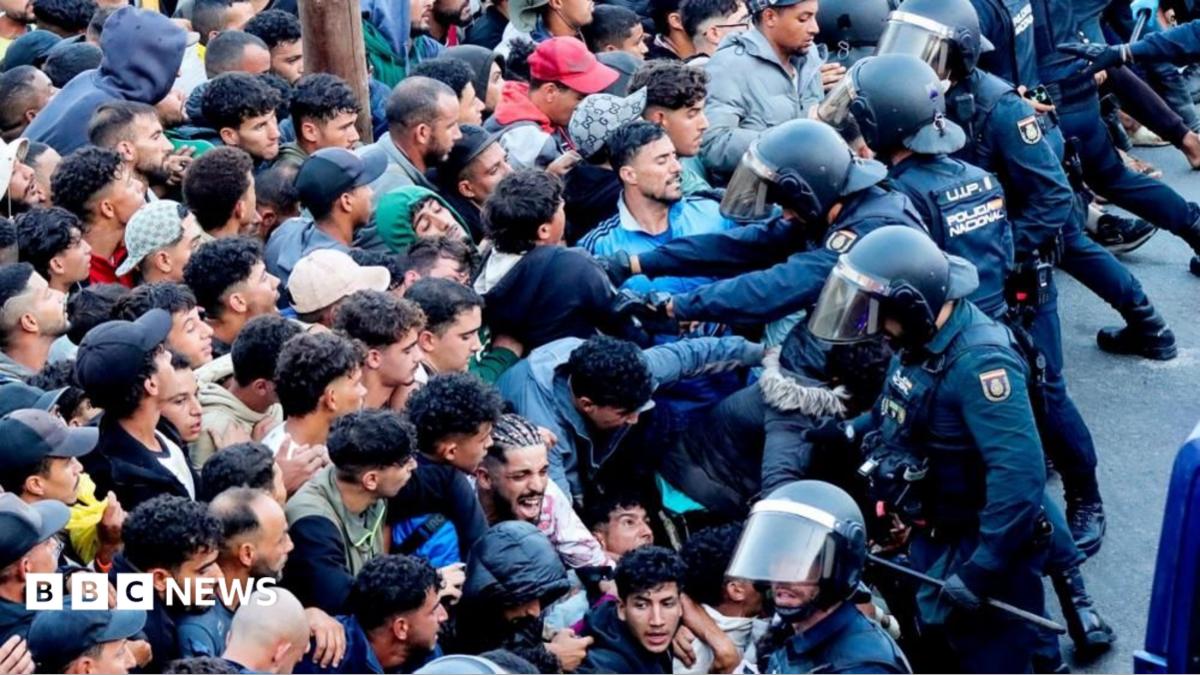
Spanish police commenced a large-scale transfer operation on Friday morning to relocate more than 3,000 migrants from the beaches of Ceuta to a new tented facility in the port area. The move, which began at approximately 07:00 local time, is part of a broader government strategy to concentrate the remaining migrant population for identification and care while their administrative status is determined.
According to the Spanish government-owned news agency Efe, over 170 officers, including drone technicians, were deployed to manage the process. Despite the significant security presence, officers struggled to contain crowds jostling for positions at the site, with reports indicating that shots were fired into the air. Some migrants reportedly broke through the cordon along the designated two-kilometre route to the port before the situation was brought under control.
The logistical constraints of the operation are evident, as the new tented site has a capacity for only 1,700 people, significantly fewer than the number of individuals being transferred in the initial phase. This discrepancy highlights the administrative pressure facing the enclave, where more than 13,000 migrants remain following a mass border breach from Morocco in July.
The chaotic scenes have intensified political criticism of Prime Minister Pedro Sánchez, who faces opposition claims that intelligence services had warned of the mass crossing in advance. While Sánchez has insisted the influx was unpredictable, government documents suggest intelligence agencies had noted social media calls for a mass crossing the day before the event occurred.
Ceuta’s Mayor, Juan Jesus Vivas, described the territory as a "pressure cooker" during a recent address to lawmakers in the European Parliament. He noted that the city’s demographics and lifestyle have been fundamentally altered by the influx, with residents expressing safety concerns and, in some cases, destroying shelters or blocking aid supplies.
The crisis has also introduced diplomatic complexities for the Spanish government. Relations with Italy have become strained following the extension of temporary border controls on each other, while Madrid continues to navigate its bilateral relationship with Morocco. The initial crossing in late July, which resulted in at least 100 deaths according to local authorities, occurred after Spain’s Supreme Court ruled against the summary return of migrants stopped at sea.