Cerebras unveils CS-4 as it takes aim at Nvidia in AI chip race
The new rack-scale system claims to deliver 30 times the tokens per second per user compared with graphics processing units, though shares fell sharply following a quarterly loss.
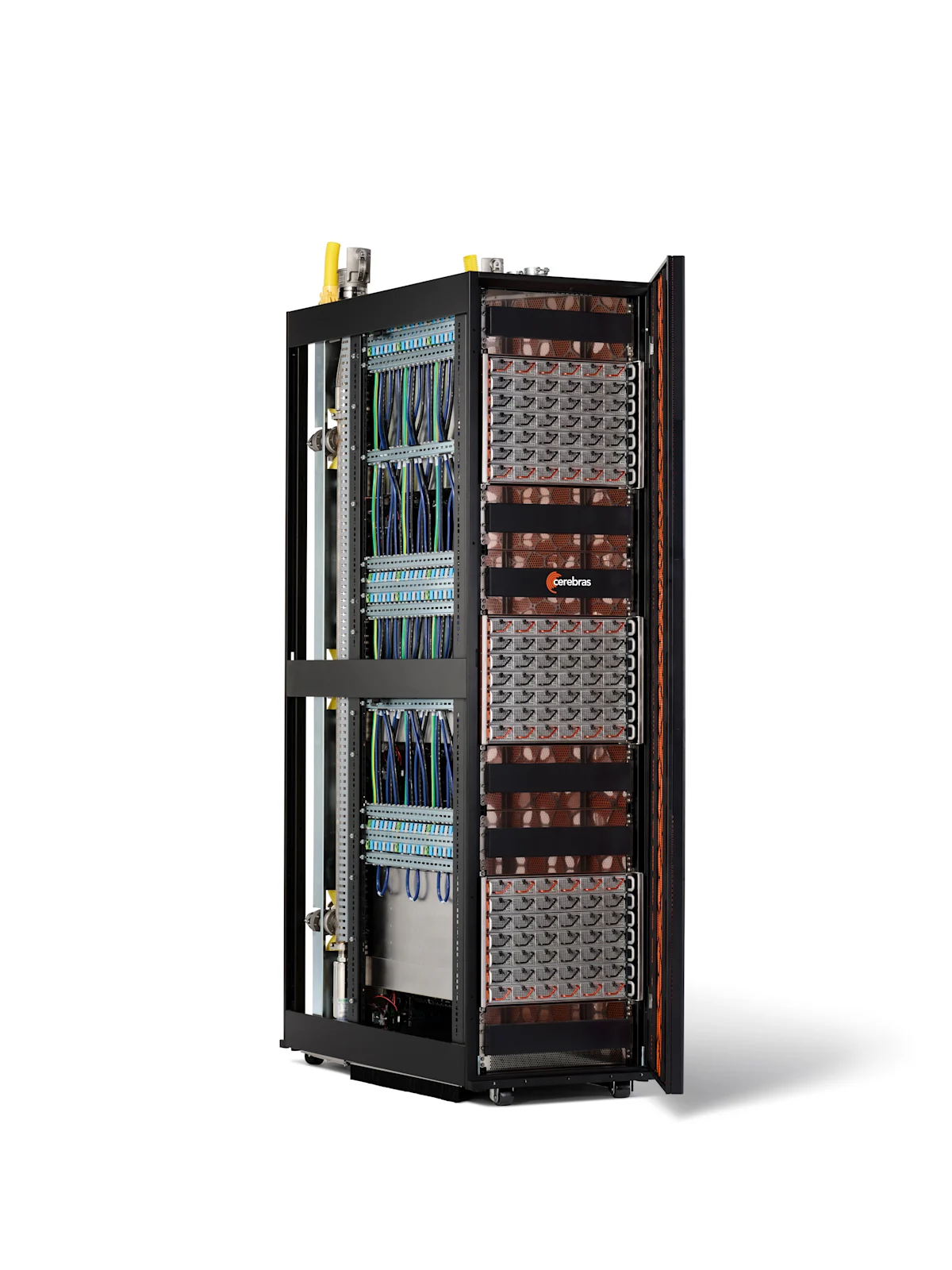
AI chipmaker Cerebras has unveiled its Cerebras CS-4, a new rack-scale system that the company claims is the fastest AI accelerator in the industry. The launch positions the firm in direct competition with Nvidia, as it seeks to capture a larger share of the market for artificial intelligence hardware.
The CS-4 is designed specifically for AI inference, which involves running AI models rather than training them. At its core are three wafer-scale WSE-3 Turbo processors, which Cerebras describes as the largest AI semiconductors ever built. Each processor contains four trillion transistors and is the size of a dinner plate.
A key differentiator for the system is its use of static random-access memory, or SRAM, rather than the dynamic random-access memory, or DRAM, used in many conventional systems. While SRAM is significantly faster, it is also more complex and expensive, making it difficult to implement in smaller processors. Cerebras argues that its large wafers provide the necessary space to leverage this technology effectively.
Because the Cerebras processors are single products, data travels shorter distances compared to systems from competitors like Nvidia or AMD, which often pair multiple chips. This architectural choice is intended to reduce latency and improve overall speed.
Cerebras CEO Andrew Feldman stated in a statement that the CS-4 delivers industry-leading speeds on the largest frontier models. "Historically, fast inference meant using smaller and less capable models," Feldman said. "Cerebras CS-4 delivers industry-leading speeds on the largest frontier models, fundamentally changing the paradigm."
Despite the technical claims, the market reaction has been mixed. Cerebras shares fell more than 35 per cent to $218 as of midday Tuesday. The drop followed the reporting of a second-quarter loss per share of $2.98, compared with a profit of $1.91 in the same period last year.
The company had gone public in May at $185 per share and began trading at $350, but the stock has declined precipitously since then. Although Cerebras provided better-than-anticipated guidance for the third quarter, it was not enough to satisfy Wall Street investors.