Ceasefire holds as US and Iran exchange strikes amid stalled diplomacy
US Central Command intercepts ballistic missile over Kuwait following Iranian retaliation, while President Donald Trump warns of further military action if Tehran fails to comply with new proposals.
The ceasefire between the United States and Iran, which commenced on 8 April, remains technically in place despite a recent escalation involving military strikes and intercepted missiles. United States Central Command (Centcom) reported striking a ground control site in the southern Iranian port city of Bandar Abbas, citing self-defence against threats from Iranian forces. In response, Iran’s Islamic Revolutionary Guard Corps (IRGC) claimed to have attacked a US air base, though the specific location was not identified. Centcom confirmed the interception of a ballistic missile over Kuwait, describing the Iranian action as an egregious ceasefire violation.
Diplomatic negotiations, facilitated by Pakistan, have stalled due to irreconcilable differences regarding Iran’s nuclear programme, the lifting of sanctions, and control over the Strait of Hormuz. Iranian state media recently reported an unofficial 14-point memorandum of understanding that included demands for the lifting of the US naval blockade and Iranian control over shipping routes in the strait. The White House dismissed the reported draft as a complete fabrication, while US Secretary of State Marco Rubio indicated that the coming hours or days would determine if diplomatic progress is possible.
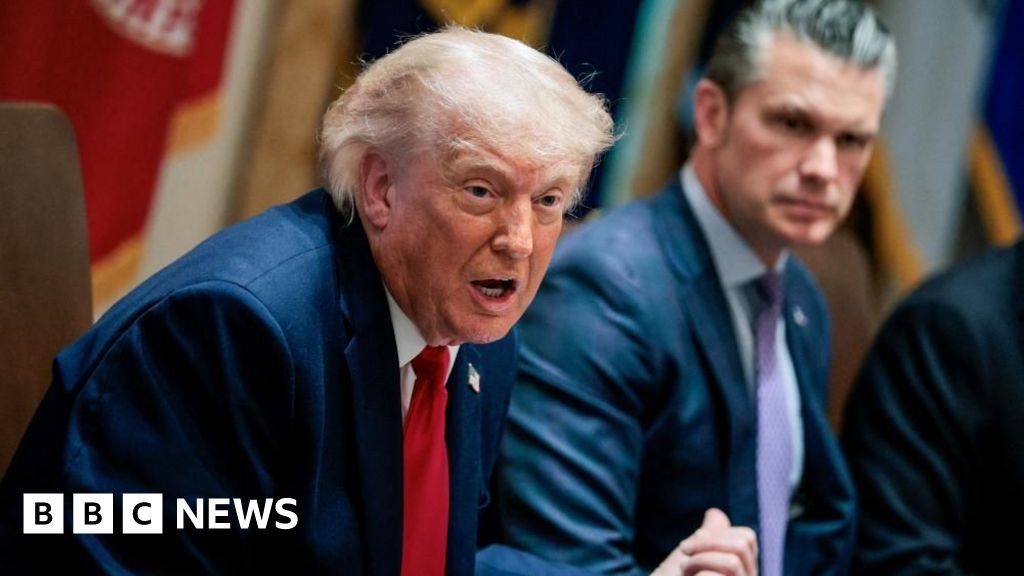
US President Donald Trump expressed dissatisfaction with current peace proposals, warning that failure to comply could result in a return to war. During a televised cabinet meeting, Trump stated that Iran was beginning to provide necessary concessions but reiterated his threat that non-compliance would trigger further military action. He also issued a stark warning to traditional ally Oman regarding its conduct in the strait, stating that Oman must behave or face military consequences.
The US Treasury has sanctioned Iran’s newly established Persian Gulf Strait Authority, accusing the body of attempting to monetise state-sponsored terror. The Office of Foreign Assets Control (OFAC) described the scheme as a new attempt by the IRGC to generate revenue from its activities. This move coincides with ongoing US enforcement of a blockade on Iranian ports, while Iran continues to control shipping through the Strait of Hormuz.
Despite domestic pressures and hardline rhetoric from both sides, neither nation appears interested in a return to all-out conflict. The ceasefire, now more than seven weeks old, has lasted considerably longer than the active phase of fighting which preceded it. While both sides have engaged in tit-for-tat exchanges, including the shooting down of Iranian drones near the strait, the broader diplomatic process remains the primary focus, albeit with significant obstacles to a lasting agreement.