CDU parliamentary leader Jens Spahn resigns following surrogacy controversy
The resignation of Jens Spahn marks the latest governance challenge for the conservative coalition, as Chancellor Merz moves to appoint a successor in consultation with CSU leadership.
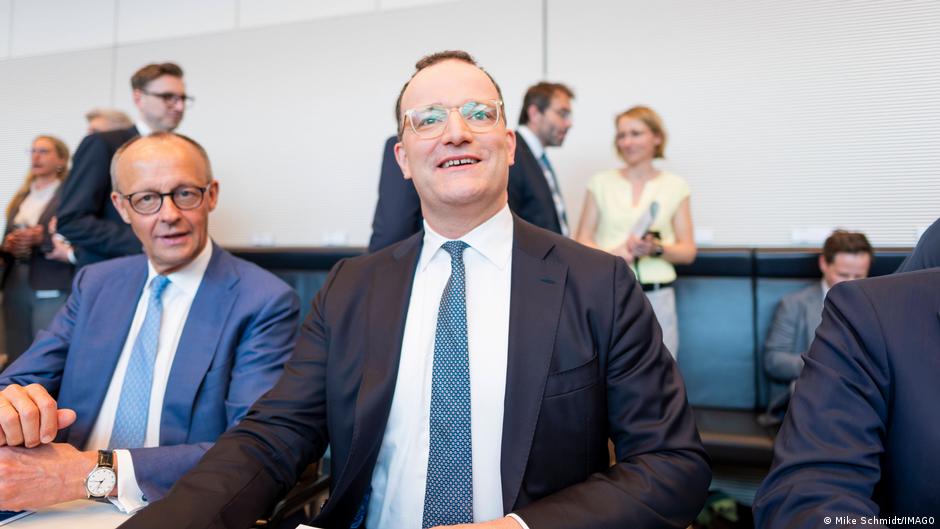
Jens Spahn has resigned as the parliamentary leader of the CDU/CSU bloc in the German Bundestag, effective Saturday, following intense scrutiny over his use of a surrogate mother in the United States to have a child with his husband. The departure was requested by Chancellor Friedrich Merz, who stated that the arrangement was incompatible with the political standing of the ruling conservative coalition.
Spahn, who leads the joint parliamentary group of the Christian Democratic Union (CDU) and its Bavarian sister party, the Christian Social Union (CSU), acknowledged in a statement that his new role as a father rendered his continuation in office untenable. "In recent days, I have come to realize that my personal happiness in starting a family with my husband and becoming a father is incompatible with my political office," Spahn said. He emphasised that "credibility is the highest good in politics," framing the resignation as a necessary measure to preserve the integrity of his position.
Chancellor Merz, also a member of the CDU, described Spahn’s departure as the "right" and "unavoidable" decision. The Chancellor cited the domestic legal framework and party policy as central factors, noting that surrogacy is not permitted in Germany and that the CDU formally opposes the legalisation of the practice. While the procedure took place in the United States where it is legal, the divergence from German law and party doctrine created significant political pressure.
The resignation triggers an immediate leadership review within the conservative bloc. Merz indicated that he would consult with Markus Söder, the leader of the CSU, to propose a new parliamentary group chair. The Chancellor confirmed that the specific procedure and timeline for selecting a successor would be coordinated with the relevant party and parliamentary group committees, ensuring the transition aligns with internal governance protocols.
This development underscores the strict adherence to policy consistency required within the CDU, particularly regarding bioethical and family law issues. As the government navigates this leadership transition, the focus shifts to identifying a successor who can maintain the cohesion of the ruling bloc while adhering to the established ideological and legal boundaries of the Christian Democratic Union.