Carson Beck’s NFL debut offers encouraging metrics, but historical precedent suggests caution
Beck completed 15 of 19 passes for 188 yards and a touchdown in his professional debut, yet the broader context of rookie quarterback trajectories indicates that August results rarely predict regular-season viability.
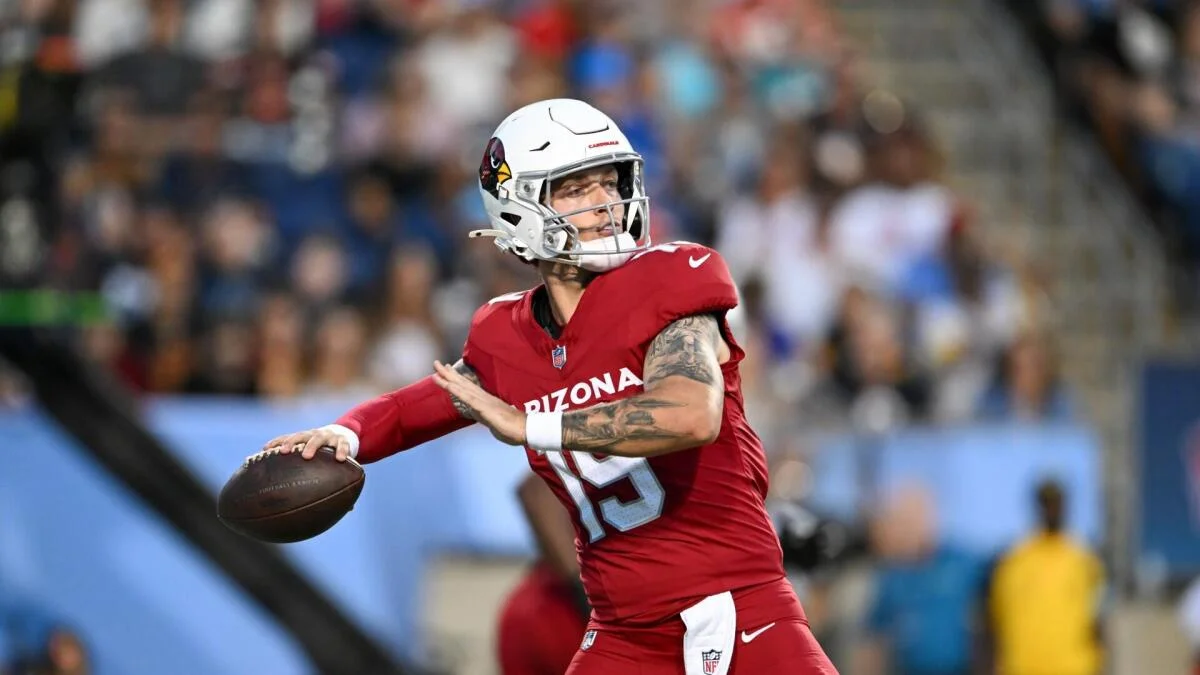
Carson Beck made his National Football League debut for the Arizona Cardinals during the Hall of Fame Game, recording 15 completions from 19 attempts for 188 yards and one touchdown without committing a turnover. The performance followed a developmental trajectory that saw Beck transfer from the University of Georgia to the University of Miami, where he refined his approach under offensive coordinator Mike LaFleur. Currently ranked third on the Cardinals’ depth chart behind Jacoby Brissett and Gardner Minshew, Beck’s outing provided a glimpse into his potential fit within Arizona’s structure.
Analysts have drawn comparisons between Beck’s profile and that of Tyler Shough, suggesting Beck could emerge as a Day 2 pick capable of running an offense efficiently. LaFleur’s system prioritises quick processing and accurate distribution over highlight-reel throws, a style that aligns with Beck’s collegiate strengths. At Georgia, Beck’s first-down completion rate of 38.6 per cent ranked in the 95th percentile among draft-eligible quarterbacks from 2015 to 2026, and he demonstrated the ability to get the ball out rapidly, a trait that former Titans general manager Ran Carthon noted was essential for his transition to the professional level.
Carthon, who advised Beck to focus on efficiency and team play rather than individual heroics, observed that Beck adhered to this guidance during his debut. Beck avoided the pitfalls of indecision or taking unnecessary sacks, instead operating with the poise and speed required to manage motions and shifts. His big-time-throw rate in college hovered around three per cent, significantly lower than Justin Herbert’s 9.2 per cent in 2017, underscoring a game built on consistency and schedule maintenance rather than explosive playmaking.
Despite the encouraging statistics, experts caution that preseason results are often misleading indicators of future regular-season success. Historical data from the last decade presents a mixed landscape for rookie quarterbacks. While players such as Dak Prescott and Baker Mayfield looked like franchise anchors in their first preseason appearances, others like Josh Rosen and C.J. Stroud struggled initially before developing into Pro Bowl-caliber starters. Stroud’s rough debut, in particular, serves as a reminder that early-season performance does not always correlate with long-term viability.
The Arizona Cardinals’ decision to evaluate Beck in this context reflects a broader understanding of quarterback development. While Beck’s debut was technically sound and aligned with the team’s strategic preferences, it remains an incomplete data point. The transition from college to the NFL involves significant adjustments that are rarely fully visible in a single preseason game, leaving Beck’s long-term role with the Cardinals to be determined by regular-season outcomes rather than August metrics.