Canada’s border controls face scrutiny over treatment of Palestine solidarity advocates
The Muslim Association of Canada reports coordinated scrutiny of international scholars, while critics allege pro-Israel lobbying groups are influencing immigration decisions.
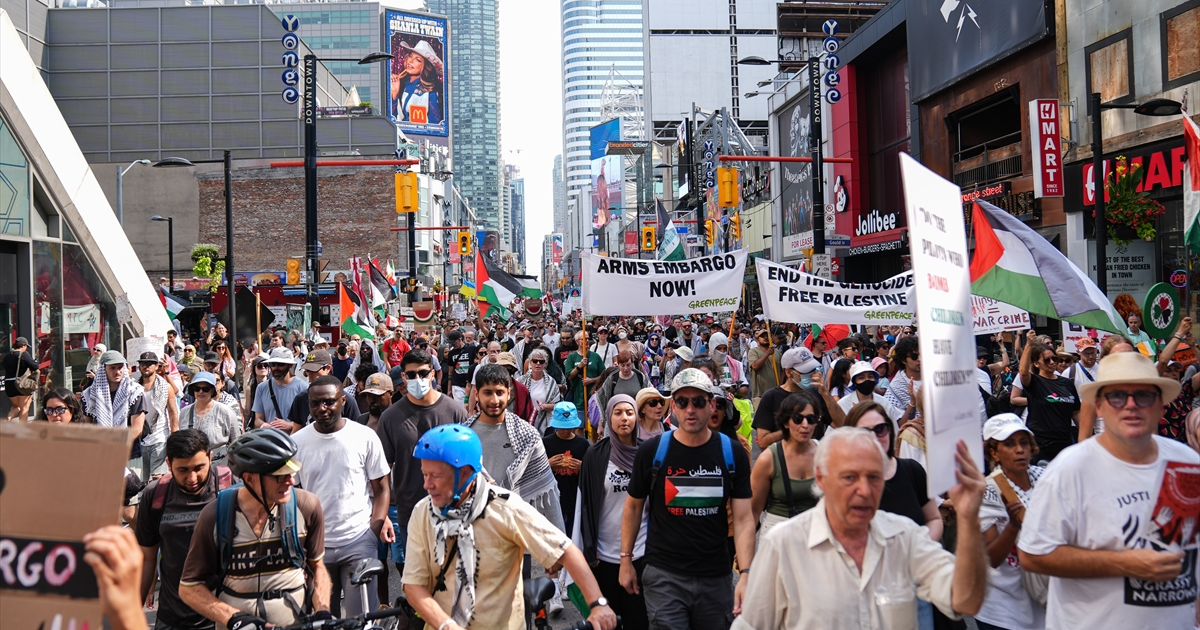
Canadian border authorities have intensified scrutiny of international scholars, activists, and speakers critical of Israel’s war on Gaza, resulting in visa revocations, entry denials, and prolonged interrogations. Recent high-profile incidents include the treatment of former South African ambassador Ebrahim Rasool, British commentator Anas Altikriti, French MEP Rima Hassan, and former UN Special Rapporteur Richard Falk. The Muslim Association of Canada (MAC) reported that attendees of its annual convention in Toronto faced electronic travel authorisation delays, cancellations, and harsh interrogation conditions, including the denial of water and prayer space.
The trend is attributed by critics to pressure from pro-Israel lobbying groups, such as HonestReporting Canada, B’nai Brith Canada, and the Centre for Israel and Jewish Affairs, who have campaigned against invited speakers. In November, former UN Special Rapporteur Richard Falk and his wife, Hilal Elver, were detained and interrogated in Ottawa while attending the Palestine Tribunal on Canadian Responsibility; officials reportedly suggested they posed a national security threat. Earlier this year, French MEP Rima Hassan was denied entry to Montreal ahead of scheduled speaking engagements.
Recent incidents involve British commentator Anas Altikriti, who spent 11 hours under questioning at the border and ultimately abandoned his efforts to enter Canada. Former South African ambassador Ebrahim Rasool was interrogated for hours at Toronto Pearson Airport, describing the experience as reminiscent of apartheid-era questioning, albeit in a "softer" form. He had previously been expelled by the Trump administration.
MAC described the treatment of convention attendees as "deliberate and coordinated," noting that some visas were revoked without notice. The organisation highlighted that the atmosphere at the convention was reflective and community-oriented, contradicting online narratives of extremism that preceded the event. The author of the source material, who attended the convention, noted that the gathering was well-attended despite the campaign against it.
The article argues that these measures represent a shift from legitimate security concerns to ideological policing, where criticism of Israel is increasingly treated as adjacent to extremism. It warns that this pattern mirrors broader trends in Western democracies, where dissenting voices face heightened scrutiny under the guise of national security. The piece concludes that such practices risk eroding democratic space and fostering a sense of conditional citizenship among Muslim communities in Canada.