Canada and EU weigh strategic alliance beyond trade
Mark Carney is seeking a broader partnership with the European Union spanning defence, technology, energy, critical minerals and economic security.
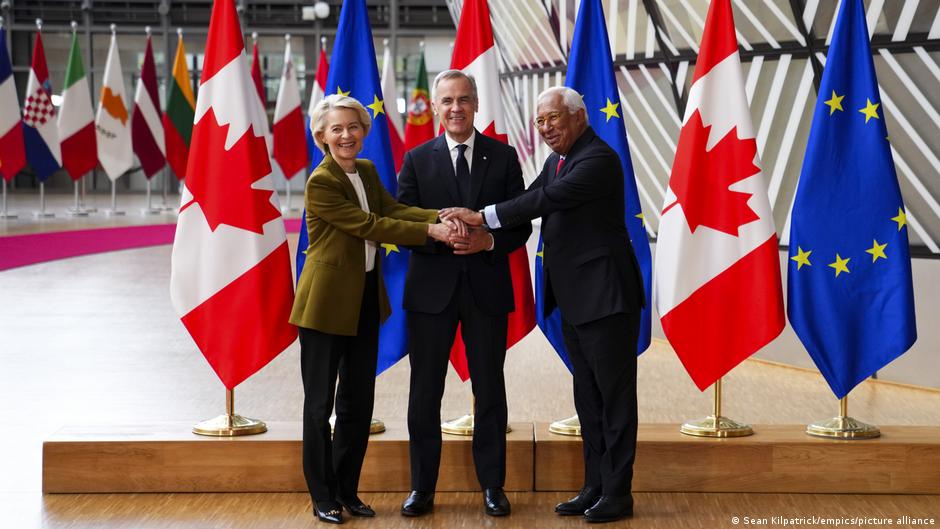
Canada and the European Union are exploring a deeper strategic partnership as Prime Minister Mark Carney seeks what he calls a “unique alliance” with Europe.
The discussions extend beyond the existing Comprehensive Economic and Trade Agreement, or CETA, and could cover defence production, advanced manufacturing, technology, Arctic cooperation, energy, batteries, artificial intelligence, quantum computing, cybersecurity and critical minerals.
European Commission President Ursula von der Leyen has indicated that the EU is open to expanding cooperation. Carney is expected to outline his vision for future Canada-EU relations in a speech to the European Parliament.
Canada has joined the EU’s Security Action for Europe programme, which could support greater participation in joint defence procurement. However, Canadian companies still face significant barriers, and it remains unclear how far the EU would relax its procurement rules.
Potential cooperation could also include the joint operation of satellites, maintenance of North Atlantic fibre-optic cables and energy supplies. Patrick Leblond of the University of Ottawa told Deutsche Welle that the focus was more likely to be an alliance on economic security and defence than Canadian participation in the EU single market or customs union.
The talks come as Canada seeks additional partners amid escalating trade tensions with the United States, while remaining closely tied to its North American neighbour. CETA, provisionally in force since September 2017, removes nearly all tariffs and provides mutual market access, but its potential has not been fully realised.
No final partnership model has been agreed. A reported “associate member” status remains a possible option rather than an established proposal, and the scope of any future defence and economic cooperation is still under discussion.