Canada accelerates trade diversification strategy amid US tariff threats
With the EU and China positioned to absorb increased exports, Ottawa is pursuing new agreements in the Indo-Pacific and North Africa to safeguard its economic interests.
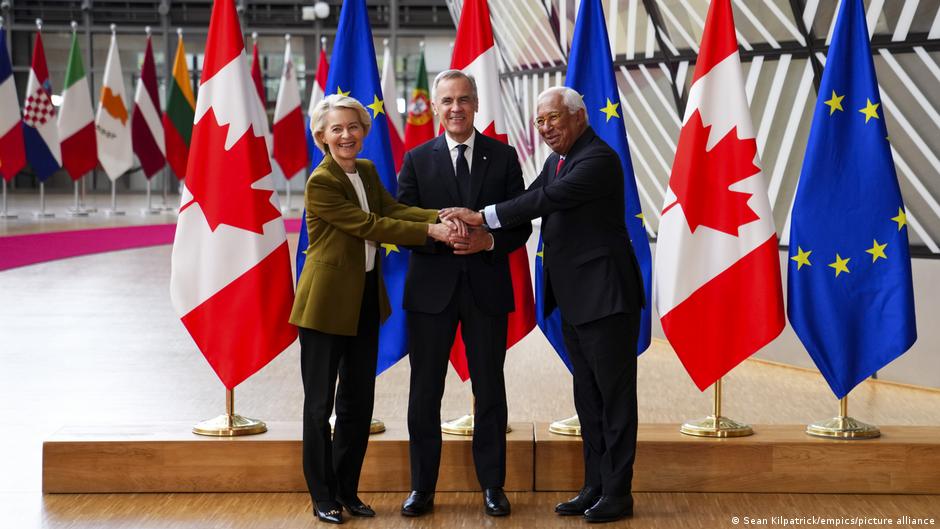
Canada is intensifying efforts to diversify its trade portfolio in response to escalating tariff threats from US President Donald Trump, who has proposed a 50 per cent levy on a range of imported goods. The proposed tariffs, which affect approximately $20 billion worth of products including wine and hockey sticks, have prompted Prime Minister Mark Carney to pledge that his government will take any measures necessary to protect Canadian workers, farmers, and businesses.
Mark Camilleri from The Canada EU Trade and Investment Association stated that while the new threats are significant, they do not alter the long-standing policy direction. He noted that under Carney, the government has adopted a more ambitious strategy to deepen ties with Europe and the Indo-Pacific, aiming to reduce over-reliance on the US market rather than decoupling entirely.
The European Union remains a cornerstone of this strategy, with bilateral trade reaching €130.8 billion in 2025 under the Comprehensive Economic and Trade Agreement (CETA). While the agreement has removed nearly 98 per cent of tariffs and boosted EU GDP by €3.2 billion annually, Julian Karaguesian, an economics lecturer at McGill University, highlighted that regulatory barriers and agricultural protectionism continue to hinder Canadian food exporters.
Infrastructure challenges also complicate energy trade with Europe. Although Canada signed a preliminary agreement with Germany for one million tonnes of liquefied natural gas annually from the proposed Ksi Lisims project, the deal faces opposition from indigenous and environmental groups. Karaguesian argued that these logistical hurdles mean China is likely to become the primary beneficiary of increased Canadian exports, given the complementary nature of the two economies.
Beyond traditional partners, Foreign Minister Anita Anand signalled that concluding a free trade agreement with ASEAN is a top priority following recent meetings in Indonesia. Economists suggest that deteriorating relations with the US may also open doors to markets in North Africa, the Middle East, and Latin America, offering Canada opportunities to leverage its comparative advantage in agriculture and natural resources.