Cabinet Office confirms rare earths in seabed mud near Minami Torishima
Japanese government project announces findings that support efforts to diversify supply chains amid geopolitical tensions.
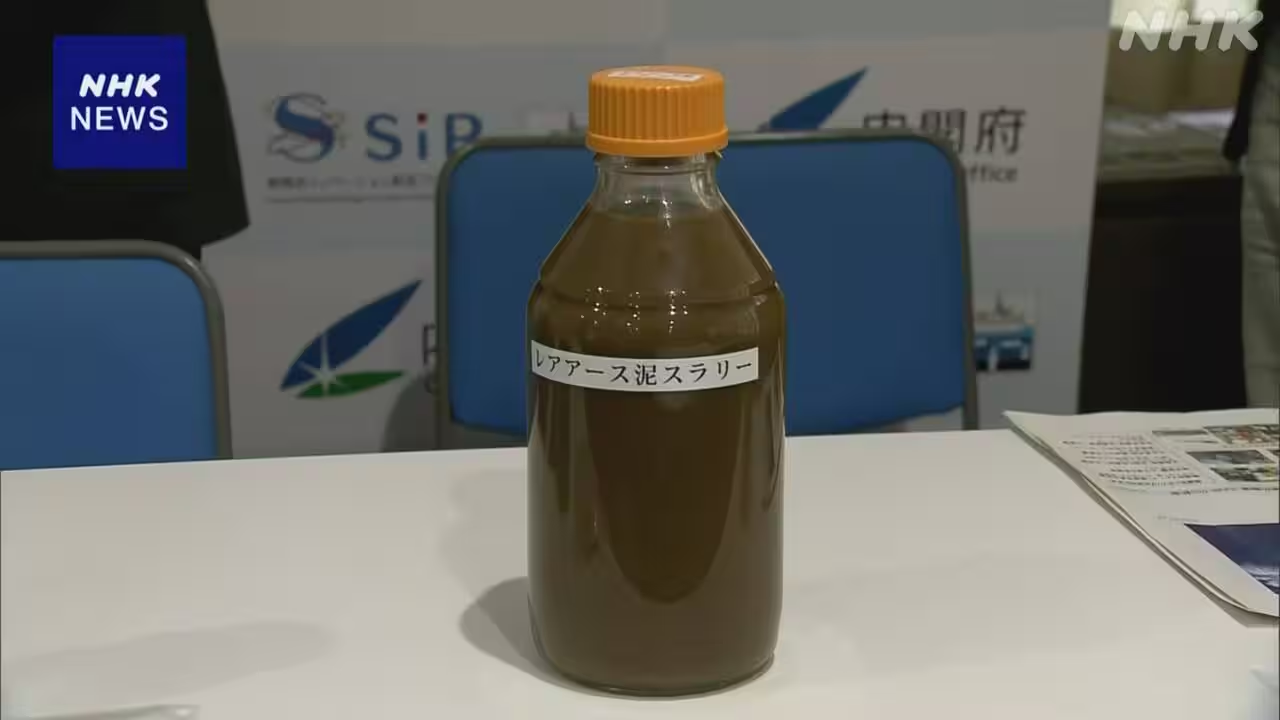
The Japanese Cabinet Office held a press conference on 24 July 2026 to announce the results of an analysis conducted on mud retrieved from the seabed near Minami Torishima. The project, which successfully extracted sediment containing rare earth elements in February 2026, confirmed that the material includes rare earths essential for high-tech products.
The announcement marks a significant step in the government’s resource security strategy. By verifying the presence of these critical elements in domestic waters, the Cabinet Office has provided scientific confirmation that supports ongoing efforts to secure alternative supply chains for materials vital to Japan’s technology and manufacturing sectors.
While the press conference indicated that the types and proportions of the rare earths were part of the announced analysis, the available reporting confirms the qualitative presence of these elements rather than detailing specific commercial concentrations. The Cabinet Office stated that the sediment contains rare earths necessary for high-tech applications, reinforcing the strategic value of the seabed resources around Minami Torishima.
This development occurs against a backdrop of increasing geopolitical friction regarding resource exports. Japan has been actively seeking to reduce reliance on single-source suppliers, particularly in light of recent export restrictions and management tightening on dual-use items imposed by China. The confirmation of rare earths in local seabed mud offers a potential avenue for domestic production and supply chain resilience.
The Cabinet Office project’s success in retrieving the mud earlier this year has now transitioned into a phase of verification. The current findings establish the presence of the targeted elements, laying the groundwork for further assessment of the resource’s viability for industrial extraction and long-term policy planning.