Businessman Ali al-Zaidi Named Iraq's Prime Minister-Designate to End Political Deadlock
The Coordination Framework seeks a "blank slate" leader to navigate regional instability and present a cabinet within 30 days.
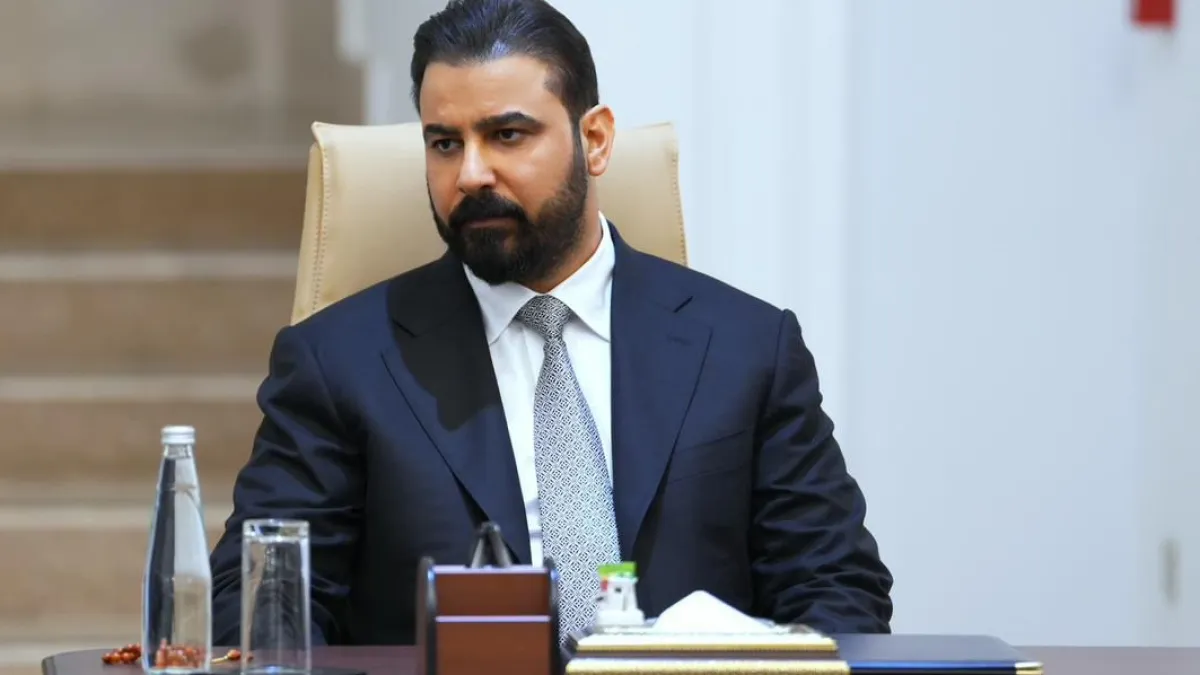
Iraq's Coordination Framework has appointed businessman Ali al-Zaidi as the country's prime minister-designate in a move designed to resolve months of political stagnation. President Nizar Amedi officially named the 40-year-old to form a new government, a decision that follows the withdrawal of former Prime Minister Nouri al-Maliki and the failure of outgoing Prime Minister Mohammed Shia al-Sudani to secure a second term. This selection marks a significant shift in the nation's leadership, prioritising a candidate acceptable to both domestic factions and international powers.
Al-Zaidi, who holds no prior political experience, brings a background in law, finance, and banking rather than state administration. He currently sits at the helm of the National Holding Company, a conglomerate established in 2017 with extensive interests in agriculture, real estate, banking, logistics, and renewable energy. His portfolio also extends to the education and health sectors, where he serves as chairman of the board for Shaab University and the Ishtar Medical Institute. Analysts suggest his lack of political history is his greatest asset, offering a "blank slate" that avoids alienating internal rivals or triggering a US veto.
The appointment comes amidst intense regional instability and specific US pressure to limit the influence of pro-Iran armed groups. Following the withdrawal of Nouri al-Maliki due to opposition from US President Donald Trump, the Coordination Framework faced a severe constitutional crisis. Washington escalated this pressure by suspending cooperation and funding for Iraqi security agencies, issuing strong warnings against any government influenced by Iran-linked figures. Al-Zaidi's elevation is viewed as a pragmatic compromise, leveraging his business acumen to engage with Washington through economic interests rather than ideological rhetoric.
His stated vision focuses on institutional reform, empowering youth, and transitioning Iraq from a centrally planned system towards a more open and sustainable economy. However, his financial background is not without scrutiny; he previously chaired the board of Al-Janoob Islamic Bank, which financial watchdogs note faced sanctions from the Central Bank of Iraq. Despite this, the Coordination Framework, the largest Shia parliamentary bloc, unanimously approved him as the ultimate compromise candidate after rejecting other potential figures who might have triggered a US veto or exacerbated internal factionalism.
Al-Zaidi now faces a strict 30-day deadline to present his cabinet to parliament and secure a vote of confidence from at least 167 lawmakers. The Shia bloc commands 185 of the 329 seats in parliament, providing a parliamentary majority if the process is completed successfully. If successful, he will inherit a nation walking a geopolitical tightrope, tasked with managing the economic fallout from the closure of the Strait of Hormuz and addressing deep-rooted corruption.
The new prime minister-designate must also navigate the complex future of the Popular Mobilisation Forces (PMF) amid unprecedented regional instability. Caught in the crossfire of wider Middle Eastern conflicts, the government will need to manage the fallout from attacks against US interests and regional countries while diplomatic efforts continue to end the expanding conflict. The Coordination Framework is betting that al-Zaidi can steer the country through this volatile chapter by balancing economic pragmatism with the demands of a polarised domestic landscape.