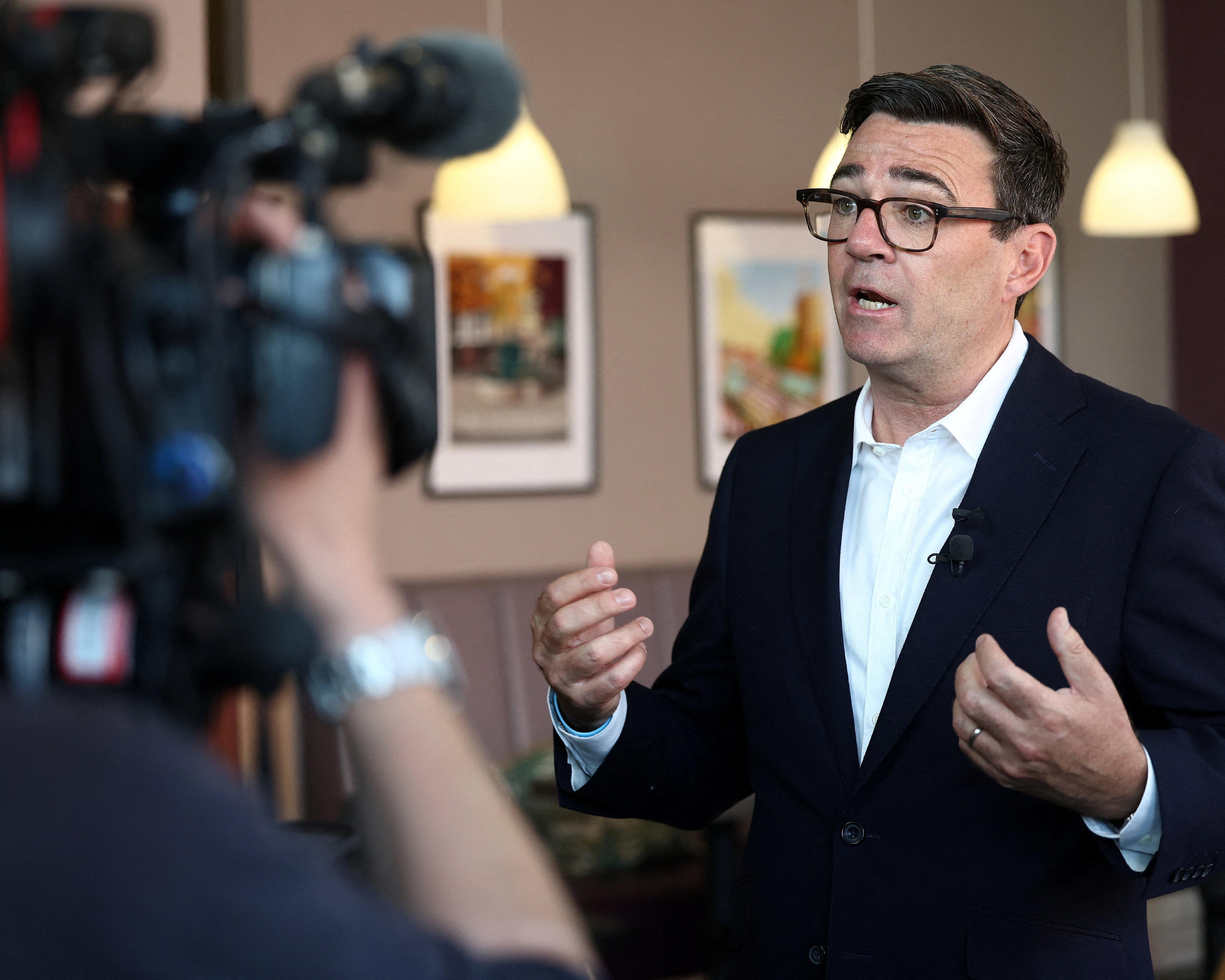
Burnham to propose relocation of No 10 operations to Manchester
Makerfield MP Andy Burnham is set to announce plans to move parts of the Prime Minister’s office to Manchester, aiming to decentralise power from London and address regional inequality.

Andy Burnham, the Makerfield MP and overwhelming favourite to succeed Prime Minister Keir Starmer, plans to relocate portions of the No 10 operation to Manchester. The proposal, first reported by the Financial Times, will be detailed in a major policy speech next week, marking Burnham’s first significant policy address since winning his parliamentary seat. The announcement underscores his commitment to radical devolution and serves as a central pillar of his anticipated leadership platform.
The move follows the resignation of Prime Minister Keir Starmer and the decision by former health secretary Wes Streeting not to contest the Labour party leadership. With Burnham positioned to enter No 10 as soon as next month, allies indicate that devolution will be at the heart of his governance strategy. A spokesperson for Burnham declined to comment on the report ahead of the scheduled speech.
Burnham argues that the UK suffers from some of the worst regional inequality among developed nations, a disparity he attributes to the high centralisation of political power in London. To counter this, he intends to govern according to a “Makerfield test,” a framework under which policies are evaluated based on their impact on his constituents in the north. This approach aligns with his previous advocacy for every area of the UK to have its own devolved settlement and the option to elect a mayor.
While Burnham has previously called for a “basic law” to equalise living standards across the country, it remains uncertain whether he will adopt specific economic recommendations from his advisers. Notably, former Bank of England economist Andy Haldane has suggested splitting the Treasury and establishing a new growth ministry in the north, but Burnham has not confirmed if he will pursue this structural change.
The proposal addresses longstanding concerns regarding the suitability of 10 Downing Street as a hub for modern government. Successive prime ministers have cited the unsuitability of the 300-year-old townhouse, where staff are often cramped, while much of the government’s work occurs in the adjacent Cabinet Office. Earlier this year, No 10 officials had prepared a plan to merge aspects of Downing Street and the Cabinet Office into a new prime ministerial office, but this was scrapped following Labour’s disastrous local election results.
The government has seen more success in decentralising other departments, exemplified by the opening of a new “economic campus” in Darlington. Nine departments have combined forces to establish this site, which is currently under construction as a five-storey office for 1,600 civil servants. The Darlington project demonstrates the feasibility of relocating significant government operations outside the capital, providing a precedent for Burnham’s proposed changes to the Prime Minister’s office.