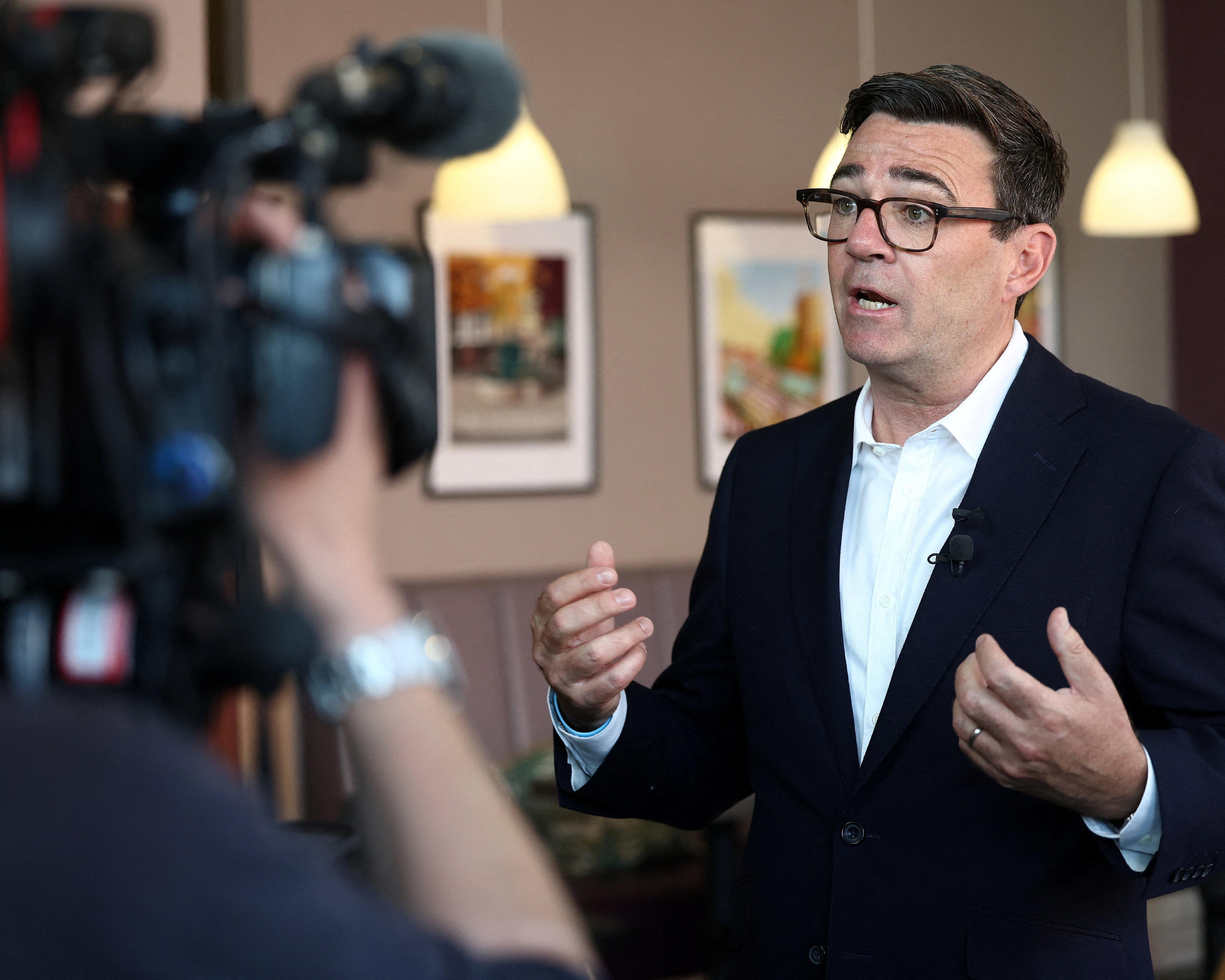
Burnham establishes Office of the Prime Minister and Cabinet to centralise economic strategy
Prime Minister Andy Burnham has announced a significant overhaul of Whitehall, creating a new central department led by Louise Haigh to oversee operations in both London and Manchester.

Prime Minister Andy Burnham has initiated a substantial reorganisation of the UK government’s central machinery, establishing the Office of the Prime Minister and Cabinet to oversee operations in both London and Manchester. Led by Louise Haigh, the new body is designed to integrate local growth and devolution teams previously housed in the Treasury and the Ministry of Housing, Communities and Local Government. The restructuring explicitly aims to position the Manchester-based "No 10 North" as the primary driver of the UK’s economy.
The overhaul involves the dissolution of the Department for Science, Technology and Innovation, with many of its functions returning to the Department for Business, Innovation and Trade and the Department for Culture, Media and Sport. However, responsibility for artificial intelligence has been centralised within the new Prime Ministerial office. Minister Kanishka Narayan has been granted a cabinet seat and will sit within the new Office of the Prime Minister and Cabinet, where a new prime ministerial adviser on AI will also be appointed.
Concurrently, the Cabinet Office is being dismantled and its functions redistributed. Some responsibilities are moving to a new agency called OneGov, which will be controlled by Cabinet Secretary Antonia Romeo and handle civil service human resources functions, including pensions, recruitment, and security vetting. Other specific units are being transferred to various departments, including the equality office to the housing ministry, digital ID to the culture department, the public sector fraud authority to the Department for Work and Pensions, and the investment security unit to the business department.
Angela Smith, the leader of the House of Lords, announced the changes via a written ministerial statement, describing the move as a fundamental rewiring of the state. Smith stated that the changes are intended to change the geography of government to deliver a stronger, more strategic centre that empowers local leaders. The government emphasised that local economic growth policy and regional empowerment are no longer to be isolated from one another, establishing No 10 North as the engine room for devolution and good growth across the country.
To facilitate the shift to the north, the government has announced it will offer relocation packages to civil servants willing to move to the soon-to-be created No 10 operation. Whitehall sources indicated that generous incentives would be necessary to persuade civil servants with existing local growth jobs in London to relocate to Manchester, ensuring the new structure could be implemented quickly.