Burnham cabinet achieves historic gender parity but retains Oxbridge and regional skew
Prime Minister Andy Burnham’s first cabinet marks a milestone with women holding half the seats, yet educational and regional disparities persist, reflecting a shift from the previous administration’s focus on state education and broader geographic representation.
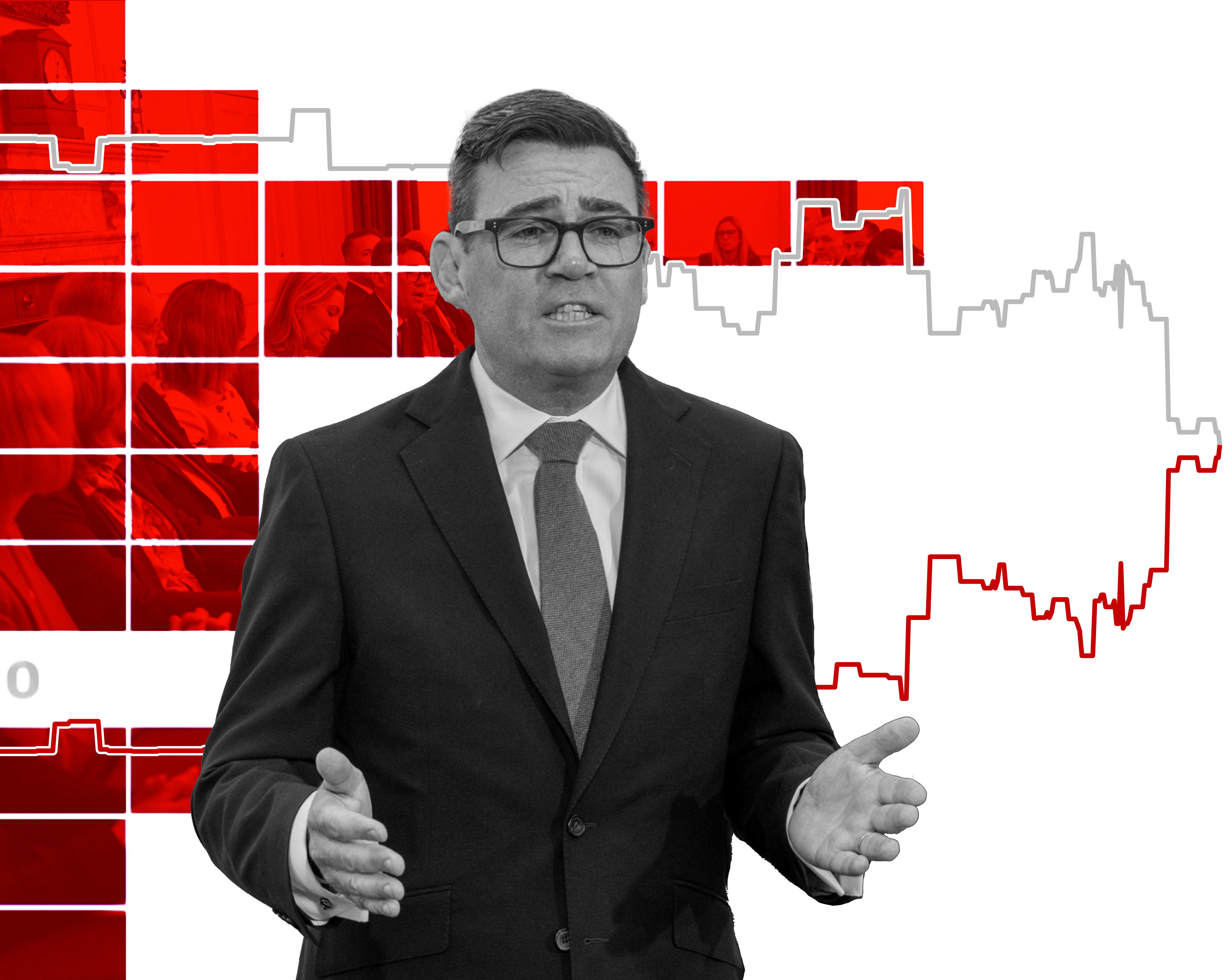
Prime Minister Andy Burnham has appointed his first cabinet, achieving gender parity for the first time in British political history with women holding exactly 50 per cent of the seats. This milestone represents a significant shift from the administration of his predecessor, Keir Starmer, whose first ministerial team comprised 46 per cent women. The appointment also signals a reshuffling of power, with key allies of Starmer demoted or sacked, including the replacement of Rachel Reeves by John Healey as Chancellor, which reduces the number of women holding one of the four great offices of state to three.
The new team exhibits a pronounced regional skew, with MPs from the north-west constituting just over a quarter of the cabinet despite representing only 11 per cent of the UK population. This overrepresentation contrasts with the previous government and marks a consolidation of Burnham’s power base as former Greater Manchester mayor. The north-west was already overrepresented under Starmer, whereas the cabinet of Rishi Sunak contained only two MPs with constituencies in the region.
Educational demographics have shifted away from the state-education prominence seen in the previous shadow cabinet. While Bridget Phillipson previously described Starmer’s team as one of the most class-conscious in recent memory, 22 per cent of Burnham’s ministers attended private school for their secondary education. This figure is more than double the rate in the general population and significantly higher than the zero per cent private school attendance recorded for most of Starmer’s tenure, though it remains below the more than half seen in the cabinets of Sunak, Liz Truss, and David Cameron.
The cabinet remains heavily dominated by Oxbridge alumni, with more than half having studied at Oxford or Cambridge. This proportion is similar to that in Sunak’s cabinet and higher than under other recent Conservative prime ministers, standing in stark contrast to the 1 per cent of the wider population who attended these institutions. Burnham himself studied English at Cambridge, becoming the first Cantabrigian Prime Minister since Stanley Baldwin, breaking a streak of six consecutive prime ministers who did not attend Oxford or Cambridge.
Minority ethnic representation stands at 14 per cent, with four ministers from black or minority ethnic backgrounds, including Home Secretary Shabana Mahmood, Energy Secretary Miatta Fahnbulleh, and Minister for AI Kanishka Narayan. This level is lower than the 16 per cent in the UK population and below the 20 per cent achieved by Sunak in 2022, though it exceeds the representation under Starmer. The appointment coincides with the inauguration of No 10 North in Manchester and the inaugural meeting of the National Economic Council, a cabinet committee originally established by Gordon Brown in 2008.