Burnham appointed UK prime minister, pledges honesty amid policy continuity concerns
King Charles III formally installs Andy Burnham on 20 July 2026 as he promises to address working-class hardships and rebuild party unity.
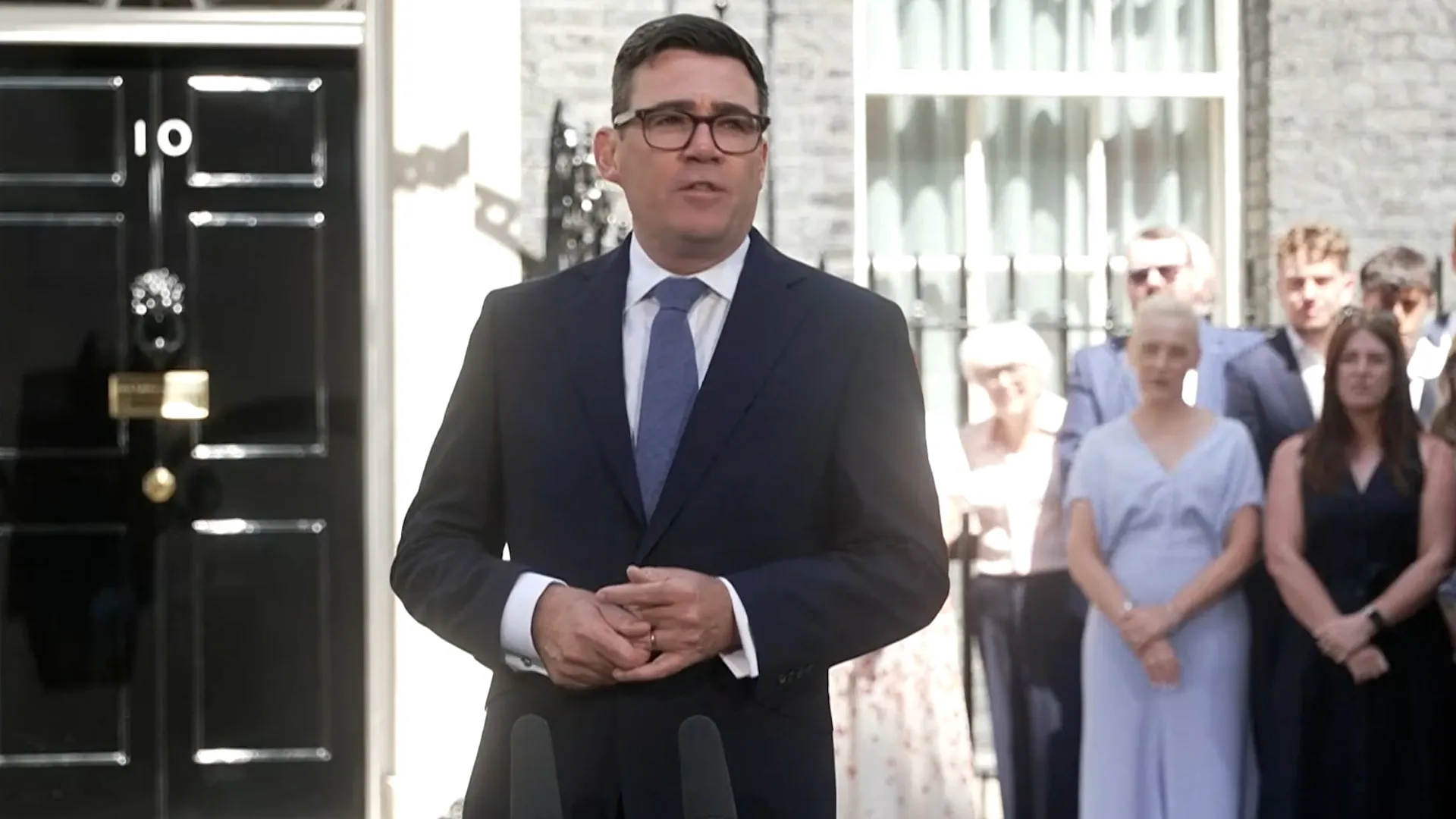
Andy Burnham has formally assumed the office of Prime Minister of the United Kingdom, succeeding Keir Starmer following the latter’s resignation after sustained public pressure. King Charles III officially appointed Burnham on 20 July 2026, marking the conclusion of a Labour Party leadership election that saw Burnham emerge as the new head of government.
In his inaugural address, Burnham opened with a direct appeal to the public, stating, "I want to be honest with you." The new prime minister has positioned himself as an outsider intent on re-establishing unity within the Labour Party and addressing the hardships faced by working-class communities. His stated agenda includes a renewed push for social housing and a commitment to coalition-building politics.
Despite Burnham’s framing of his tenure as a fresh start, critics have argued that his appointment represents a continuation of existing policies rather than a radical shift in direction. The incoming government inherits a Labour Party that retains its status as the ruling party in the UK, but faces scrutiny over policy continuity and the prime minister’s long-standing ties to groups such as Labour Friends of Israel.
Further details regarding the composition of Burnham’s cabinet and specific legislative priorities are expected to be released in the coming days. The transition follows a turbulent period for the previous administration, with the exact nature of the public pressure leading to Starmer’s departure remaining unspecified in official records.
While the political landscape shifts in Westminster, the broader national context includes recent developments in international sport, where Spain defeated Argentina 1-0 to win the 2026 FIFA World Cup final, and England secured third place by defeating France 6-4.