Burkina Faso Junta Leader Urges Citizens to 'Forget' Democracy as Regional Instability Deepens
A 2023 UNDP report links the rise in authoritarianism to governance deficits and public disappointment, while experts argue for democratic models adapted to local realities.
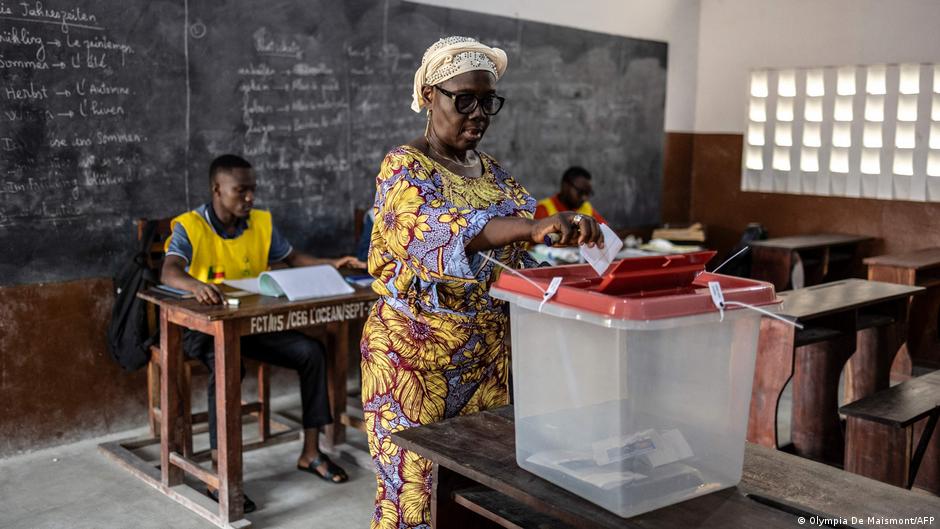
Burkina Faso’s junta leader, Ibrahim Traore, has explicitly urged citizens to abandon democratic processes, stating on state broadcaster RTB in April that "democracy kills." Traore, who seized power in a 2022 coup, told the public that if an African attempts to explain democracy, they should "run away." This provocative stance has resonated with segments of the population in the capital, Ouagadougou, where many prioritise security against jihadism and economic rebuilding over political participation. With 2026 marking a politically charged election year, concerns persist regarding fraud, repression, and a widening disconnect between young people and political elites.
The rhetoric from Traore underscores a wider regional trend of military takeovers and democratic instability, particularly in West Africa. Between 2020 and 2023, military forces seized power in Mali, Burkina Faso, Niger, and Guinea. In January 2025, the three francophone nations of Niger, Mali, and Burkina Faso formally withdrew from the regional bloc ECOWAS to establish their own partnership, the Alliance of Sahel States. This move signals a significant shift in regional governance, moving away from established economic and political unions towards a new military-led alliance.
The instability extends beyond West Africa, affecting nations across the continent. In Gabon, the military took power in 2023, while Guinea-Bissau experienced a coup in 2025. In Chad, a transitional military council governed until 2025, after Mahamat Idriss Deby Itno succeeded his father, Idriss Deby Itno, who was killed by rebels in 2021 following 30 years of leadership. Meanwhile, Sudan has been engulfed in a full-scale civil war following a violent struggle between rival factions, illustrating that military takeovers are no longer isolated incidents but part of a broader regional dynamic.
A 2023 report from the United Nations Development Programme (UNDP) attributes these shifts to multidimensional poverty, inequality, and governance deficits. The study highlights factors such as the manipulation of constitutional term limits, limited youth and women's participation, and higher military expenditure. It notes that when citizens are disappointed with the delivery of democratically elected governments, they are more likely to support non-democratic styles of governance, including military rule. This disillusionment has led to a renegotiation between authoritarian and democratic forces across the continent.
Experts argue that democratic models must be adapted to local realities to regain public trust. Veye Tatah, who works with the nonprofit organisation Africa Positive, stated that many systems are shaped by colonial legacies and do not reflect local culture, ethnicity, or lifestyles. She emphasised that if a system fails to deliver basic services such as food, water, and education, people question its utility. Tatah called for a "mental revolution" away from corruption and clientelism, suggesting that current developments are not a definitive retreat of democracy but a phase of adaptation.
While some nations face authoritarian rule or hybrid systems, others maintain stable democracies. Cape Verde is consistently ranked among Africa's most stable democracies, and in southern Africa, Botswana and Namibia remain stable despite the rise of more authoritarian-leaning systems in Zimbabwe. South Africa, despite challenges with unemployment and inequality, maintains a comparatively strong civil society and robust institutional structures. In Nigeria, political scientist Farouk Bibi Farouk described democracy as an "ongoing process" rather than a stable condition, citing the country's ability to adapt despite ethnic and religious conflicts.
The central issue, according to experts, is less about the model of democracy itself and more about its implementation. Where institutions function, trust emerges; where they fail, frustration grows. The current landscape in Africa is characterised by a complex mix of authoritarian systems in North Africa, a coexistence of democracies and military regimes in West Africa, and varying degrees of stability in other regions. The key question remains how democratic models can be shaped to function in people's daily lives, moving beyond abstract concepts to become a lived political reality.