Bumble removes gendered messaging barriers in bid to boost user confidence and compete with Tinder
The dating app’s updated protocol, effective 11 August 2026, introduces a 72-hour reply window and AI-assisted prompts to discourage one-word openers, as CEO Whitney Wolfe Herd doubles down on artificial intelligence integration.
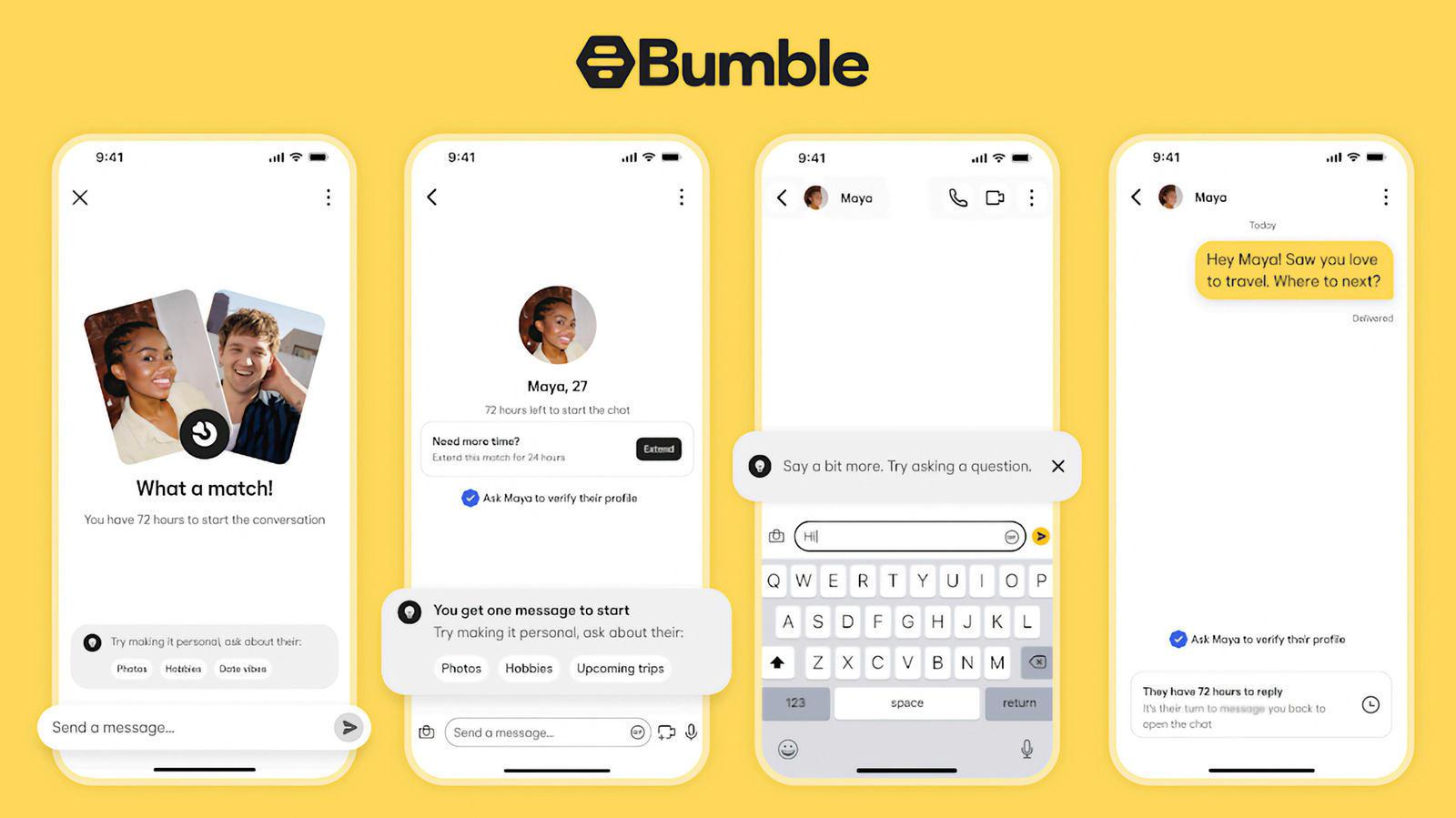
Bumble has implemented a comprehensive update to its messaging architecture, removing long-standing gendered restrictions that previously dictated who could initiate contact. The new feature, launched on 11 August 2026, permits either person in a match to send the first message, effectively dismantling the platform’s original “women message first” protocol. This change simplifies previous iterations such as the 2024 “Opening Moves” feature, which allowed women to set prompts for men to respond to, and aligns the app’s heterosexual matching experience with the rules already applied to same-sex and nonbinary connections.
The update aims to reduce user pressure and foster more intentional dialogue. Recipients now have a 72-hour window to reply to a message and commence a conversation. To further encourage substantive interaction, the app will detect attempts to send one-word openers and prompt users with onscreen suggestions to write more detailed messages. Bumble reports that 62 per cent of women and men state they feel more confident when they have autonomy over how and when conversations begin.
This structural shift coincides with Bumble’s broader strategic pivot towards artificial intelligence integration. The company introduced Bee, an AI assistant designed to help connect users, in March 2026. Founder and CEO Whitney Wolfe Herd has indicated that AI and in-person events form a central component of the company’s future roadmap. The messaging overhaul follows earlier teasers from May regarding changes to the platform’s communication dynamics.
The move comes as Bumble seeks to strengthen its market position against competitors such as Tinder, which retains the largest market share in the United States according to Business of Apps. While the new rules apply broadly, the research cited by Bumble regarding user confidence was specifically focused on male and female demographics, leaving the applicability to all user groups unverified. The effectiveness of the one-word message detection system in improving overall conversation quality remains to be seen.
Bumble’s evolution from its founding principle of empowering women to initiate contact reflects a broader industry trend towards flexible user agency. By making the pressure to message first entirely optional, the platform attempts to balance user comfort with engagement metrics. The integration of AI tools and the removal of rigid gendered protocols suggest a continued effort to modernise the digital dating landscape while addressing user fatigue with traditional app mechanics.