Bulgaria’s Air Defence Gaps Exposed as Ukrainian Drone Crashes Near Romanian Border
A Ukrainian-manufactured Maya decoy drone exploded in a sunflower field near Kardam, revealing that neither Bulgarian nor NATO radars detected the low-flying aircraft and intensifying debate over the government’s pragmatic approach to the war in Ukraine.
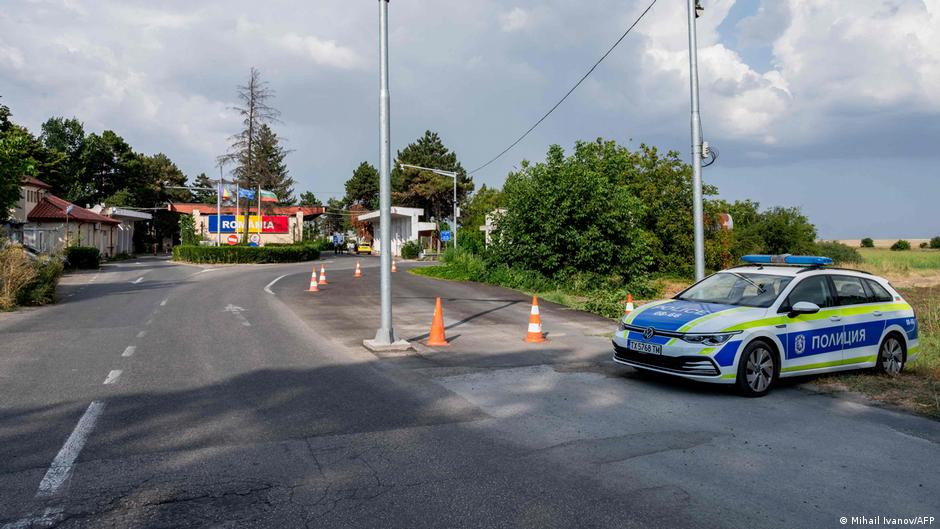
A Ukrainian-manufactured Maya decoy drone exploded in a sunflower field near the village of Kardam, approximately 100 metres from the border checkpoint with Romania, exposing significant deficiencies in Bulgaria’s air defence capabilities. Bulgarian officials confirmed the incident was not deliberate, yet the breach of airspace has triggered a political response that underscores the country’s evolving stance on the conflict in Ukraine. The Bulgarian Foreign Ministry summoned the Ukrainian ambassador to protest the unauthorised entry, while the government has previously halted state arms supplies to Kyiv in favour of a more pragmatic foreign policy.
Defence Minister Dimitar Stoyanov acknowledged that neither Bulgarian nor NATO radars detected the low-flying aircraft, admitting that current defences are insufficient to provide comprehensive coverage. Stoyanov announced plans to acquire up to 10 anti-drone and electronic warfare systems through the EU’s SAFE mechanism, noting that while Bulgaria recently reinforced aerial defences in the northeast following increased drone activity in neighbouring Romania, these measures failed to prevent the Kardam incident. The minister stated that the ministry will prepare a formal anti-drone strategy, a document that currently does not exist.
The drone crashed about one kilometre from a compressor station on the Trans-Balkan gas pipeline route, which connects Turkey and Ukraine, raising initial concerns about potential targeting of key infrastructure. However, officials confirmed there were no casualties or damage to infrastructure. Prime Minister Rumen Radev initially claimed the drone carried a significant amount of explosives, but on-the-ground reports indicated the explosion did not create a crater and only damaged a few sunflowers.
Speculation regarding the cause of the crash has focused on potential Russian electronic warfare interference or technical failure. Stoyanov noted that the drone’s GPS system was unprotected, suggesting possible manipulation via a spoofing campaign or a technical failure due to a defective chip. Former Defence Minister Todor Tagarev stated that electronic warfare, likely by Russia, is the most probable cause of the loss of control, though the current government has not publicly investigated this hypothesis. The Defense Ministry declined to confirm if Russian spoofing is being actively investigated, referring questions to the Military Prosecutor’s Office.
The incident has intensified political debate regarding Bulgaria’s foreign policy shift. Radev’s government, which won an absolute majority in April, has moved away from steadfast support for Ukraine, blocking EU sanctions on the Russian Orthodox Church and declining to join the Coalition of the Willing. The Bulgarian Foreign Ministry used the incident to reiterate that security in the region can only be achieved through diplomacy, a position echoed by Stoyanov. Meanwhile, Russian Foreign Ministry representative Yuri Pilipson praised the Bulgarian government’s restrained rhetoric regarding the incident.