Buffalo Bills Unveil 'Nickel City' Kit Amid Criticism Over Brand Identity
The removal of the traditional buffalo logo and the design’s reliance on the Buffalo nickel coin have drawn scrutiny from observers who view the release as a commercial strategy rather than a tribute to the team’s history.
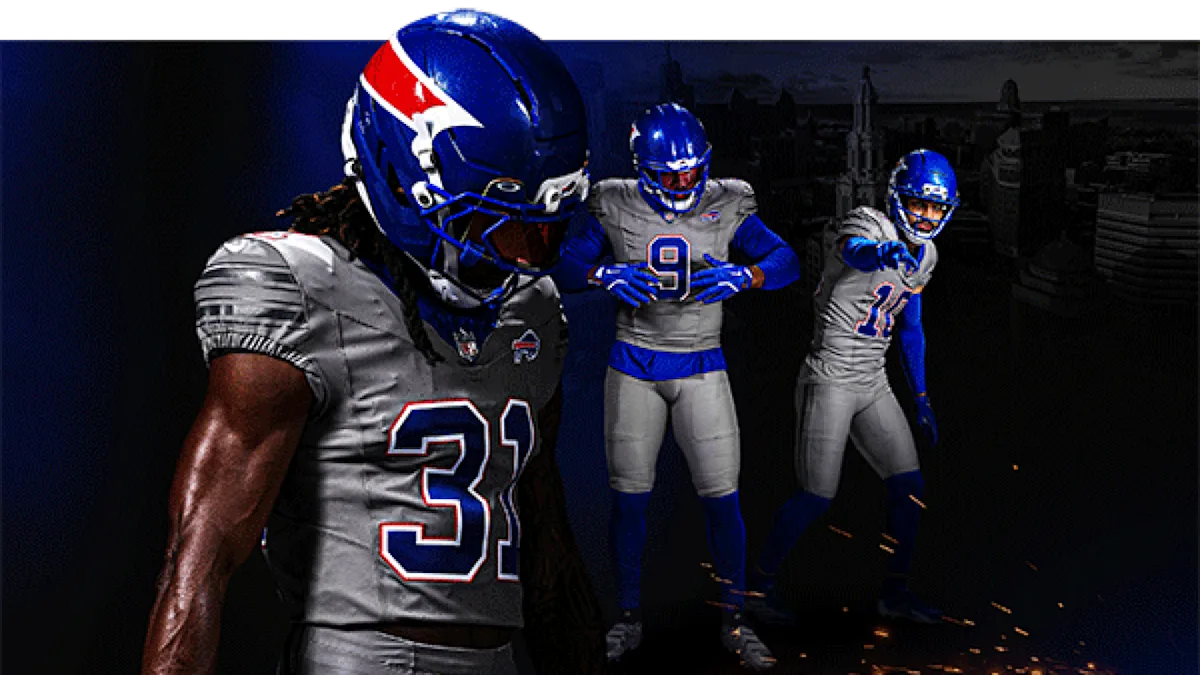
The Buffalo Bills have released a new alternate uniform set titled 'Nickel City', a move that has intensified scrutiny regarding the commercial direction of the National Football League. The kit features a grey jersey and grey pants, paired with a helmet that notably omits the team’s traditional buffalo logo. The design draws direct inspiration from the Buffalo nickel coin, which circulated in the United States between 1913 and 1938.
The introduction of the uniform has been characterised by critics as part of the ongoing 'Nikefication' of the NFL, a trend perceived by many as prioritising merchandise sales over sporting heritage. The release has been described as a 'money grab', with observers noting that the decision to base the kit on a unit of currency serves primarily to drive jersey sales rather than honour the franchise’s history.
Controversy has centred on the helmet design, which excludes the iconic buffalo imagery associated with the team. Critics have pointed out the irony of the design choice, noting that the historical Buffalo nickel coin featured a bison on one side. The removal of the buffalo from the helmet has been viewed as a confusing departure from the coin’s original aesthetic and the team’s established visual identity.
The Bills, a foundational franchise in the American Football League (AFL) based in Buffalo, New York, have faced criticism for relying on such gimmicks. Observers argue that the team, being a successful franchise, does not require outside-the-box marketing strategies to generate interest. The release has been seen as an unnecessary deviation from the history embedded in the team’s helmets and uniforms.
While the team maintains that the uniform is a tribute to local history, the reception has been mixed. The design has been compared to a flawed digital creation, with some suggesting that the aesthetic appeal is questionable. The debate highlights the tension between commercial innovation and the preservation of sporting tradition in modern professional football.