BRICS summit highlights limits of unified response to Iran war
A New Delhi declaration preserved consensus among BRICS members, but an Al Jazeera opinion article says divisions over the Iran conflict exposed the bloc’s limits as a geopolitical force.
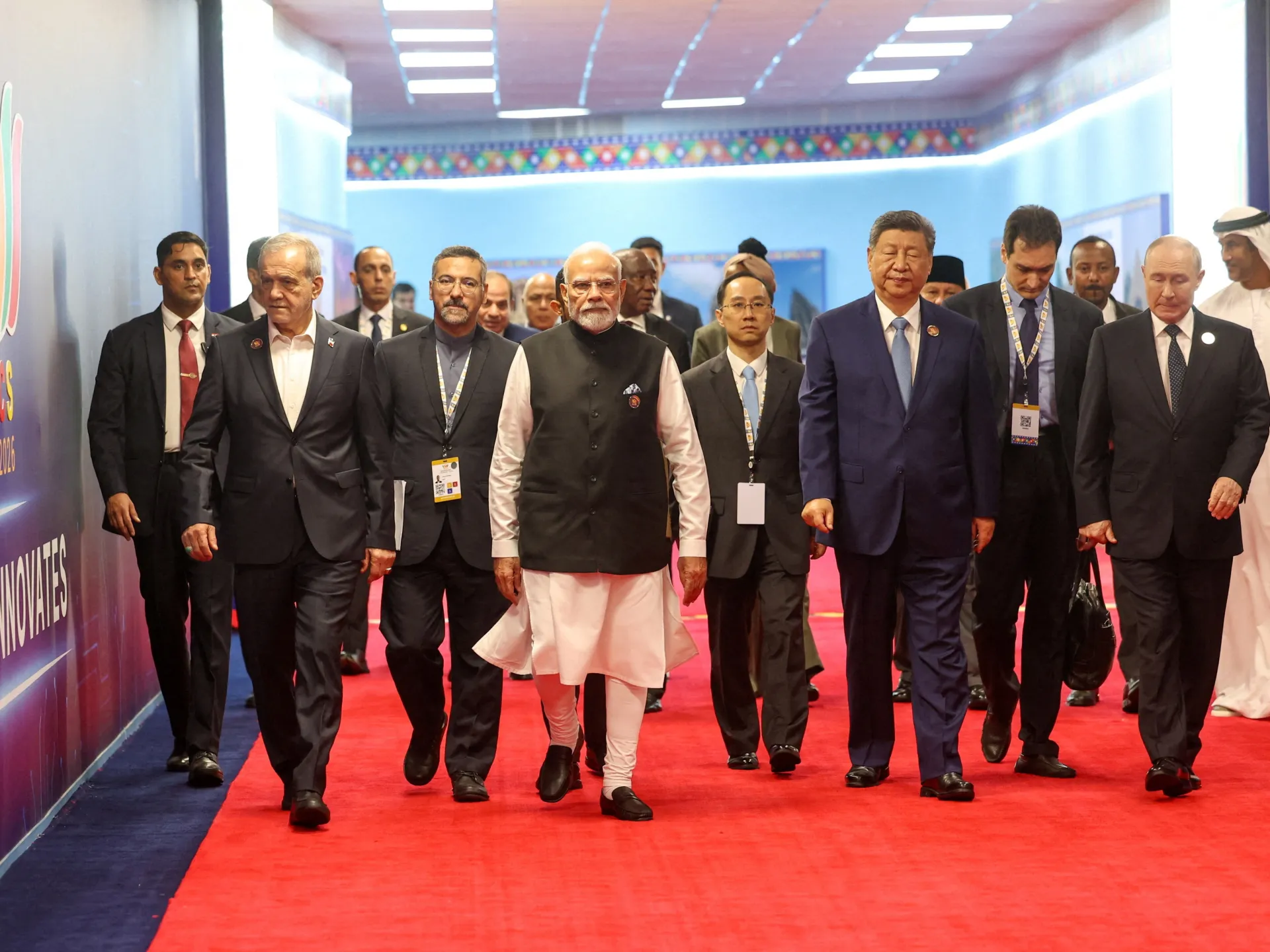
BRICS leaders have maintained a common diplomatic position while avoiding a direct response to the war on Iran, according to an Al Jazeera opinion article examining the bloc’s summit in New Delhi.
The New Delhi Declaration called for “maximum restraint” in the Middle East and criticised attacks on civilian infrastructure and safeguarded nuclear facilities. It reportedly avoided naming the United States, Israel or Iran, allowing the bloc’s 11 members and 10 partner countries to support the statement despite differing strategic interests.
The article says the divisions were already evident at a BRICS foreign ministers’ meeting in May, which failed to produce a common position. Iran sought condemnation of US and Israeli military action, while the United Arab Emirates objected to language that overlooked Iranian attacks and its own security concerns.
The author argues that BRICS’ expansion has increased its economic and diplomatic reach while bringing regional rivalries into the organisation. India is described as using the bloc to preserve strategic autonomy while maintaining ties with the United States, Russia and China, rather than turning BRICS into an alliance against Washington.
China, Russia, Brazil and Indonesia are also portrayed as seeking greater influence or strategic options without converting the group into a vehicle for direct confrontation with the United States. The article concludes that BRICS is more likely to operate as a bargaining coalition, cooperating on institutional reform, development finance, South-South trade and non-dollar payment mechanisms than acting as a unified geopolitical bloc.