Brexit decade review: Economic drag and policy divergence take toll on UK
A comprehensive review of the UK’s departure from the European Union reveals that key economic and social promises have failed to materialise, with structural barriers and regulatory costs weighing on growth.
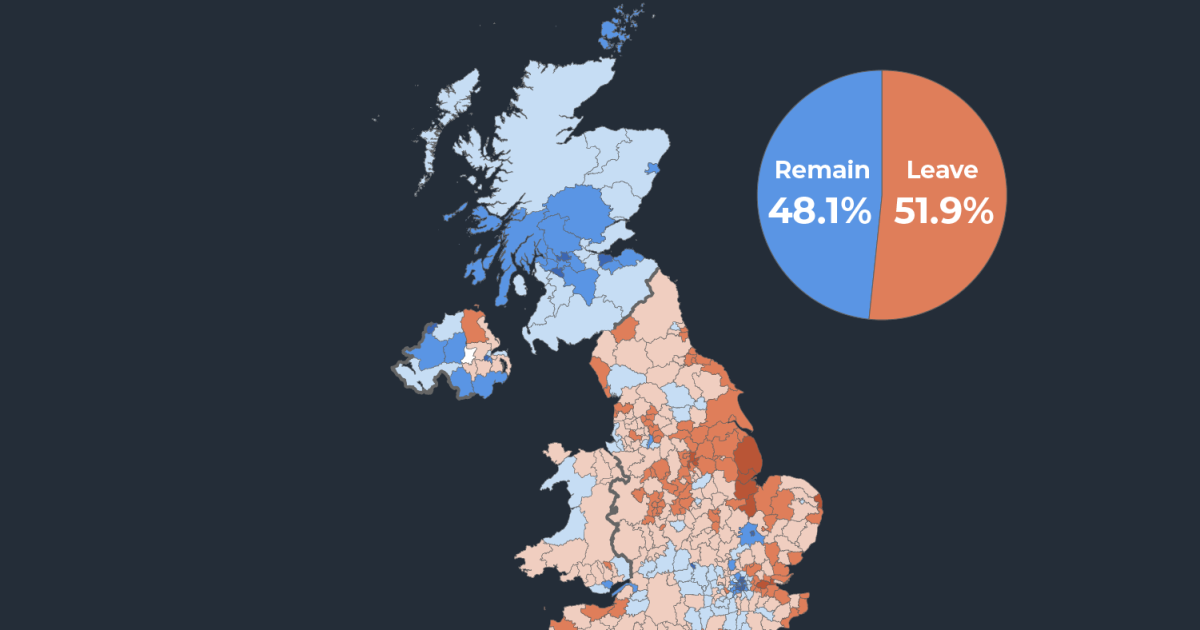
A decade after the United Kingdom voted to leave the European Union, comprehensive analysis indicates that the economic and social outcomes have largely diverged from the promises made during the 2016 referendum campaign. Research suggests the UK economy is smaller than it would have been had the country remained in the bloc, with real GDP per capita lagging behind its EU peers by five index points as of 2025. The structural drag of trade barriers and political uncertainty continues to impact long-term growth projections, which economists estimate at an average annual rate of just 1.3 percent between 2026 and 2030.
Business investment has fallen significantly compared to a non-Brexit scenario, with studies placing the shortfall between 12 and 18 percent. This decline is attributed to years of regulatory ambiguity that delayed corporate decision-making. According to the Office for Budget Responsibility, the nation’s productivity is estimated to be four percent lower as a direct result of the exit. Trade with Europe is projected to remain 15 percent lower in the long run, a figure that trade deals with non-EU countries have not offset. The transition to the EU-UK Trade and Cooperation Agreement introduced new barriers, including rules of origin requirements, retesting protocols, and dual regulatory compliance for data handling.
The financial cost of these new border arrangements has been substantial. Border checks alone have cost the UK £4.7bn up to 2024, according to HSBC Global Investment Research. Additional sanitary controls on food trade impose a further annual burden of approximately £54m on traders. While larger enterprises have absorbed some of these costs, smaller businesses have faced existential challenges, with some ceasing exports to the EU entirely. The pound has not returned to pre-Brexit levels, remaining constrained by the UK’s persistent trade deficit and reduced attractiveness for foreign investment following the relocation of operations to mainland Europe.
Migration patterns have also defied the Leave campaign’s central promise of reduced numbers. Although the points-based immigration system successfully reduced net migration from the EU, this was offset by a surge in arrivals from non-EU countries, pushing total net migration to a record high in 2023. While tighter rules introduced in 2025 have caused numbers to fall, they remain above pre-Brexit levels. On the regulatory front, the government has retained 6,800 pieces of EU law to prevent legal vacuums, with only a third amended or repealed. The fast-track mechanism for revoking these laws, the Retained EU Law (Revocation and Reform) Act, is set to expire on June 23, 2026, returning the process to standard parliamentary scrutiny.
Public opinion has shifted markedly over the ten-year period. A June 2026 poll conducted by YouGov shows that 57 percent of Britons believe leaving the EU was the wrong decision, compared to 30 percent who view it as the right choice. A separate Ipsos poll indicates that 52 percent of the population think the UK should apply to rejoin the bloc. This sentiment is particularly strong among younger demographics, with about two-thirds of 18- to 24-year-olds favouring rejoining, contrasting with little more than a third of those over 65.