Bolivia’s Paz government faces ‘attempted coup’ allegations as subsidy cuts spark nationwide riots
Highway blockades, hospital oxygen shortages, and an arrest warrant for COB leader Mario Argollo mark the escalation of anti-government protests in La Paz.
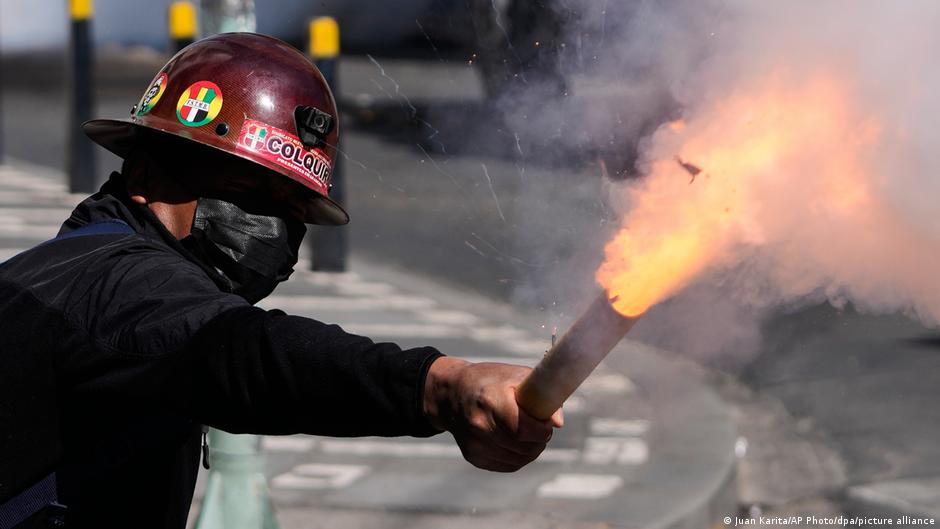
Anti-government protests in Bolivia have escalated into violent riots, with demonstrators in the capital, La Paz, detonating small charges of dynamite, storming public buildings, and establishing dozens of highway blockades. The unrest has precipitated severe logistical failures, including critical shortages of fuel, food, and hospital oxygen cylinders, alongside precautionary closures of banks. The US State Department has characterised the ongoing instability as an "attempted coup," while economists warn the situation is plunging the South American nation deeper into crisis.
The unrest stems from economic struggles exacerbated by policy shifts under center-right President Rodrigo Paz. Following his election victory in October 2025, Paz abolished petrol subsidies in late 2025, causing fuel prices to nearly double. This measure, intended to consolidate the state budget, triggered a surge in inflation that accelerated due to domestic factors and external pressures such as the war in Iran. Government statistics indicate that by April, Bolivian purchasing power had dropped 14 per cent compared to the previous year, with the country’s poor disproportionately affected.
A heterogeneous alliance comprising trade unions, farmers, miners, teachers, and Indigenous groups has coalesced around demands for wage increases, the reinstatement of petrol subsidies, and Paz’s resignation. The coalition’s formation was further galvanised by the government’s initial passage of a law allowing landowners to pledge small plots of land as collateral for bank loans, which protesters argued threatened small farmers with dispossession. Although the government repealed this law, tensions escalated as demonstrators began calling for the president’s resignation.
In response to the unrest, the Bolivian government has issued an arrest warrant for Mario Argollo, the boss of the Central Workers Union (COB), accusing him of terrorism and inciting unrest. Economy Minister Jose Gabriel Espinoza labelled demonstrators "political agents" sent to help former President Evo Morales return to power, though he provided no evidence for these claims. President Paz has announced a cabinet reshuffle and proposed the creation of an economic and social council to allow protest groups input into decision-making, while simultaneously stating he would not negotiate with those he described as "vandals."
International reaction has been divided, with the US, Peru, Chile, Argentina, Paraguay, and four Central American countries expressing support for the Paz administration. The European Union and five European embassies issued a joint statement calling for dialogue. Meanwhile, the Paz government is negotiating significant international loans, including a $200 million World Bank loan, a $4.5 billion pledge from the Inter-American Development Bank, and talks regarding a $3.3 billion International Monetary Fund loan, to offset the societal consequences of inflation and stabilise the economy.