Blue Origin MK1 Lander Validates Critical Systems in NASA Vacuum Chamber
The demonstration mission successfully simulated lunar vacuum and extreme temperatures while carrying science payloads destined for the South Pole.
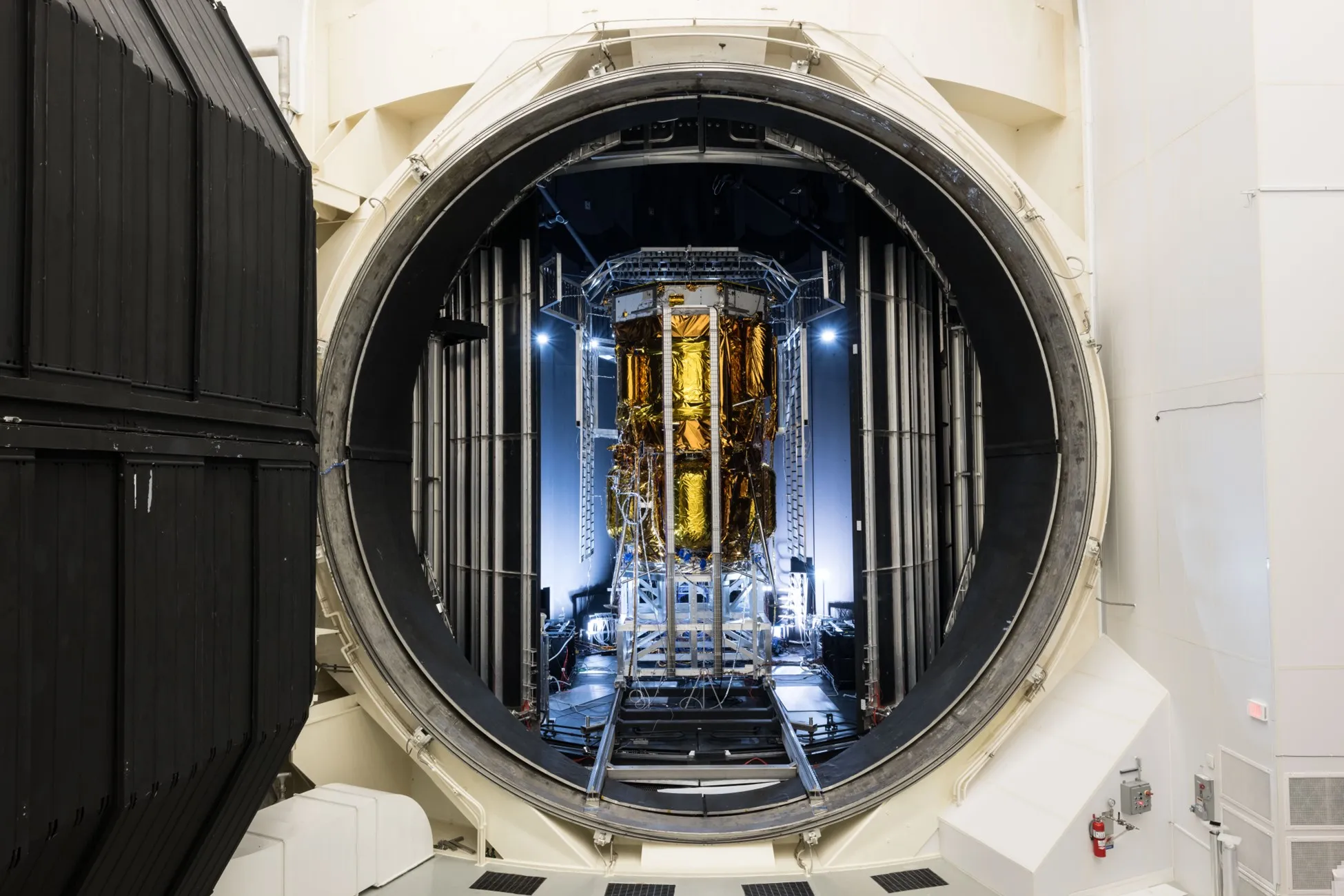
Blue Origin has confirmed that its uncrewed cargo lander, MK1, also known as Endurance, has completed testing inside NASA Johnson Space Center's Chamber A. Funded by the private company as a commercial demonstration mission for the Artemis programme, the vehicle underwent rigorous evaluation to validate its precision landing, cryogenic propulsion, and autonomous guidance capabilities. The tests were conducted under simulated space vacuum and extreme temperature conditions to ensure structural and thermal integrity before the spacecraft faces the realities of lunar flight.
This demonstration mission operates under a public-private partnership model facilitated by a reimbursable Space Act Agreement. Through this arrangement, Blue Origin conducted the work within NASA facilities, utilising what the agency describes as a "front door" approach. This strategy provides commercial partners access to world-class technical expertise and infrastructure while maintaining strict safety and mission assurance standards aligned with agency objectives. Chamber A, one of the largest thermal vacuum test facilities globally, allowed engineers to model the specific environmental stresses the lander would encounter during its journey to the Moon.
During the testing phase, MK1 carried two specific NASA science and technology payloads under the Commercial Lunar Payload Services initiative. These instruments are destined for the lunar South Pole region and include the Stereo Cameras for Lunar Plume-Surface Studies and a Laser Retroreflective Array. The stereo cameras are designed to capture high-resolution imagery of the interaction between the lander's engine plume and the lunar surface during descent, while the retroreflective array will assist orbiting spacecraft in determining precise locations using reflected laser light.
Lessons learned from the design, integration, and testing of MK1 will be incorporated to support future Artemis missions and the development of the crewed Blue Moon Mark 2 system. This uncrewed vehicle serves as a critical technology maturation step, helping to reduce risk for future human-class systems designed to safely transport astronauts from lunar orbit to the surface. The data gathered from these trials will inform the evolution of landing capabilities required for sustained human exploration at the Moon's South Pole.
The testing validates the system performance necessary for advancing Human Landing System capabilities as part of the broader Artemis campaign. By confirming that the vehicle can operate effectively under simulated lunar conditions, the mission contributes directly to the agency's goal of returning American astronauts to the Moon. The successful completion of these tests represents a significant milestone in the transition from commercial demonstration to the operational requirements of future crewed exploration.