Blue Origin blast jeopardises NASA lunar timeline and Amazon satellite mandates
A catastrophic failure during a routine engine test of the New Glenn rocket has caused extensive damage to Launch Complex 36, casting doubt on NASA’s 2028 crewed landing target and Amazon’s compliance with Federal Communications Commission deadlines.
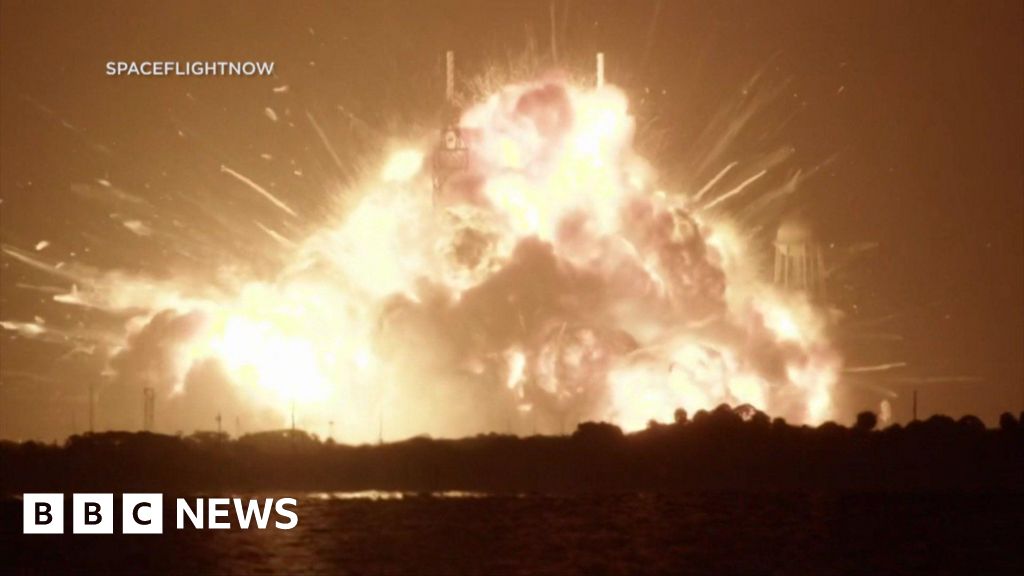
A Blue Origin New Glenn rocket exploded during a routine hot-fire engine test at Kennedy Space Centre’s Launch Complex 36 in Florida on 28 May 2026. The incident, which occurred at approximately 21:00 local time, caused extensive damage to the launch infrastructure, including the collapse of a lightning protection tower, though no injuries were reported. As the sole facility in the world built to launch the New Glenn, the pad requires significant repairs and recertification, a process analysts expect to take months rather than weeks.
The setback severely impacts NASA’s lunar ambitions, jeopardising the timeline for the robotic Moon Base 1 lander, originally targeted for autumn 2026, and the 2028 crewed landing target. NASA Administrator Jared Isaacman acknowledged the difficulty of developing new heavy-lift launch capabilities, noting that spaceflight is unforgiving. The agency had recently awarded Blue Origin a contract worth up to US$468 million to deliver commercial lunar terrain vehicles by 2028, a delivery schedule now tied to the availability of the New Glenn rocket.
Amazon’s Leo broadband constellation faces immediate operational disruption, as the destroyed rocket was scheduled to deploy 48 satellites. Under its Federal Communications Commission licence, Amazon is required to have 1,618 satellites in orbit by 30 July 2026. As of late May, the company was approximately 1,300 satellites short of this target, with delays attributed in part to launch vehicle availability. With New Glenn grounded, Amazon must rely on secondary providers, exacerbating its compliance issues.
The incident strengthens SpaceX’s position as Amazon’s primary launch provider and a dominant force in the commercial space sector. SpaceX CEO Elon Musk responded to the blast on X, stating, "Most unfortunate. Rockets are hard." The failure highlights the competitive gap between Amazon’s Leo network, which currently has just over 300 satellites in orbit, and SpaceX’s Starlink, which has more than 10,000 satellites operational.
Blue Origin founder Jeff Bezos confirmed that all personnel were safe and vowed to rebuild the facility. However, the explosion raises broader strategic concerns for NASA, particularly as China advances its own lunar ambitions with plans to land astronauts by 2030. The agency’s next crewed Moon mission, Artemis III, scheduled for 2027, involves testing commercial lunar landers, including Blue Origin’s Mark 1 demonstrator, which was already in final stacking in Florida prior to the explosion.