BJP secures historic victory in West Bengal, ending TMC rule after 15 years
Analysts attribute the decisive win to religious polarisation and anti-incumbency sentiment following a controversial voter list revision and record turnout
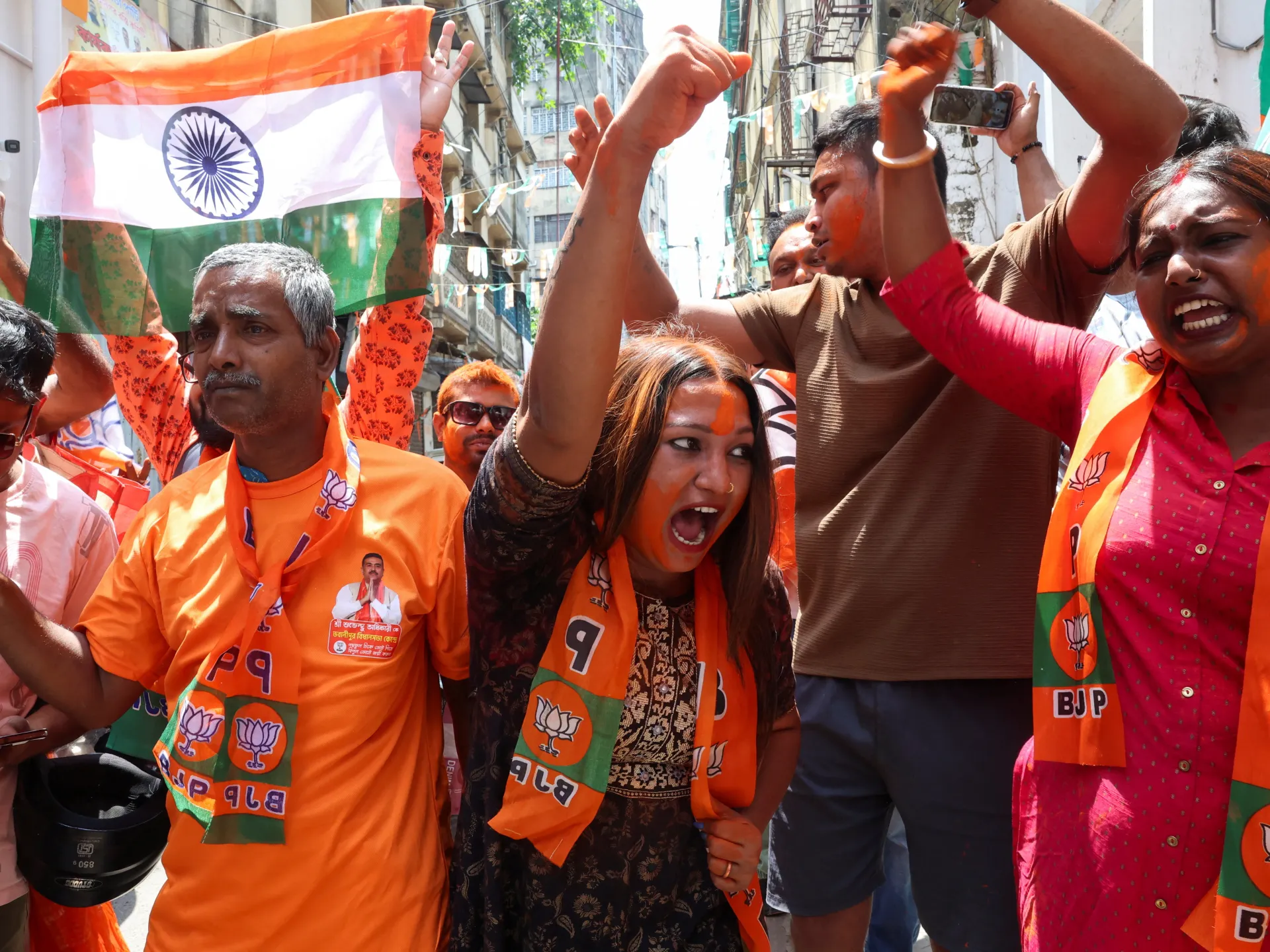
On 4 May 2026, the Bharatiya Janata Party (BJP) achieved a decisive victory in the West Bengal state legislative elections, winning or leading in 200 of the 294 seats. This outcome marks the first time the party has secured power in the state, effectively ending 15 years of governance by the All India Trinamool Congress (TMC) under Chief Minister Mamata Banerjee. Early results indicate the BJP achieved a thumping majority, while the TMC won or led in just 87 seats.
The shift in political power is viewed as a significant boost to Prime Minister Narendra Modi's national standing, offsetting previous electoral setbacks suffered by the party in the 2024 national elections. Analysts attribute the change to a combination of religious polarisation, underlying anti-incumbency sentiment against the TMC machinery, and a better-managed election campaign compared to previous years. The result extends the hegemonic power of the BJP to govern India, altering the political capital of parties opposed to the central leadership.
Prior to the election, the Election Commission of India (ECI) conducted a controversial Special Intensive Revision (SIR) of the electoral rolls, removing more than nine million names, which constitutes nearly 12 per cent of the state's voters. Opposition parties and activists allege this move disproportionately disenfranchised Muslims, a claim challenged by the TMC and other opposition groups. The top court did not restore the voting rights of millions affected but directed the ECI to publish a list of affected voters, a move that has heightened tensions and distrust between the opposition and the central government.
Voter turnout reached a record high of approximately 92.93 per cent, with nearly 68.2 million people casting votes. The BJP's ideological founder, Shyama Prasad Mukherjee, was from West Bengal, making the state's loss historically symbolic for the party. Despite this, the BJP had traditionally been a marginal player in the state, where the TMC emphasised religious pluralism and protection of minority rights. The BJP's win has been described as a consolidation of Hindu votes, though it remains impossible to verify specific demographic voting patterns until the ECI releases detailed vote counts.
The central government deployed a record 2,400 companies of paramilitary troops to West Bengal for the elections. While the federal government claimed this was to assist election officials in carrying out the exercise without fear of political violence, the TMC and other opposition parties argued that the forces served to intimidate or influence voters. The heavy presence of security forces created a situation where fence-sitters, potentially afraid of the TMC's machinery on the ground, were moved by the visible security apparatus.
In her first reaction to the vote counting, Banerjee addressed her party workers in a video statement, calling all workers and leaders not to leave vote-counting booths until the last ballots are counted. She accused the central government of using paramilitary forces to oppress the TMC and break up opposition offices. Analysts agree that while the voter revision exercise alone could not have delivered such a decisive victory, the combination of factors suggests a dramatic shift in the region's political landscape that will likely lead to further drama.