Bessent presses G20 to mirror US tariff strategy against Chinese imports
The US Treasury Secretary argued that non-market economies are draining global growth, urging peers to adopt protective measures similar to Washington’s recent tariff regime.
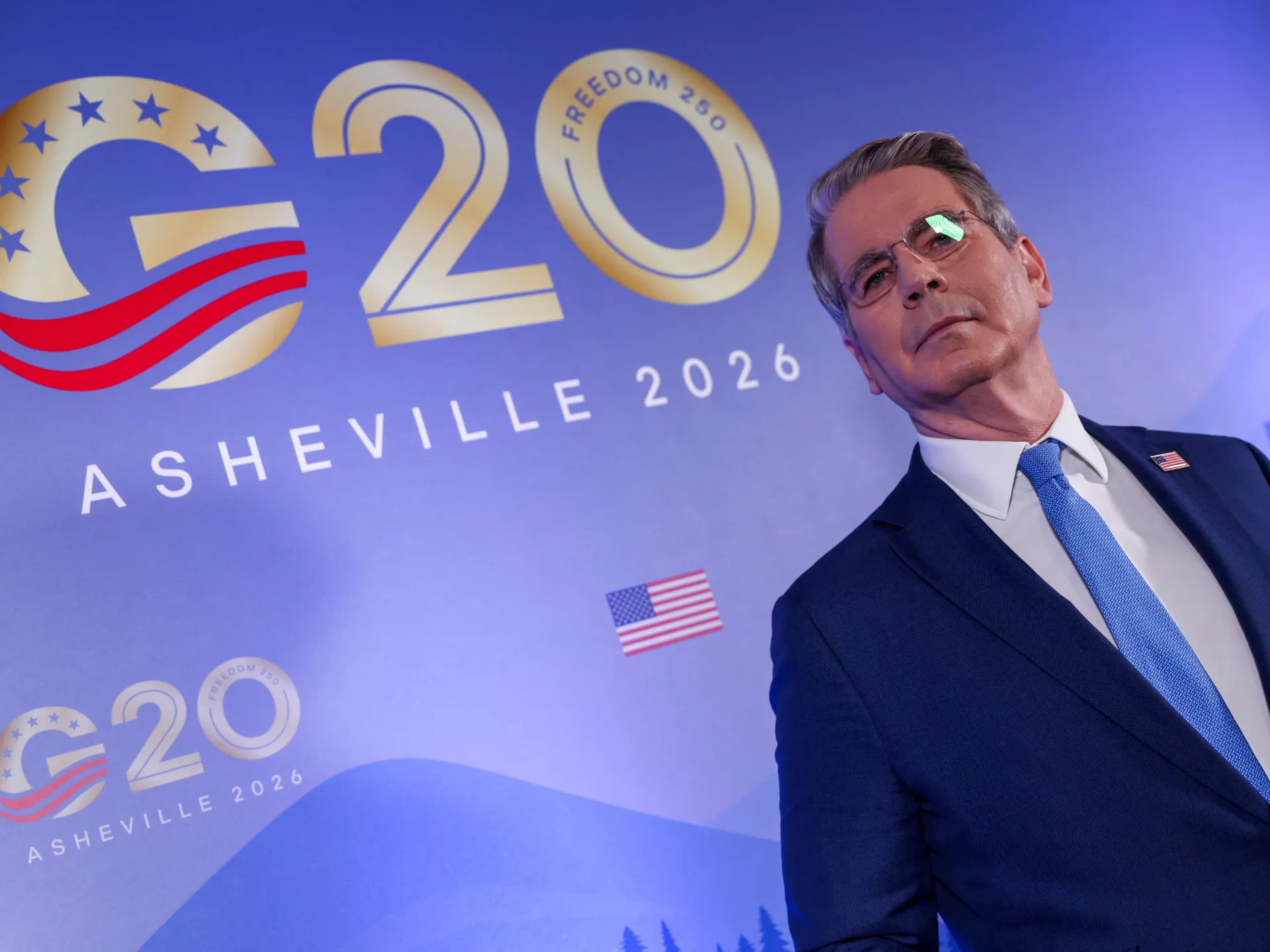
US Treasury Secretary Scott Bessent has urged G20 finance chiefs to adopt measures comparable to US tariffs to shield domestic industries from a surge in Chinese imports. Speaking at a two-day meeting in Asheville, North Carolina, Bessent contended that trade imbalances driven by non-market economies were “sucking” essential growth from the global economy. He specifically cited the rapid expansion of Chinese exports in electric vehicles and semiconductors as a primary driver of these distortions.
Bessent stated that he had warned trading partners in the previous year that stricter US tariffs would result in Chinese goods being diverted to their markets. “And unfortunately, I was right. They have – and the rest of the world probably needs to take a hard look at what they should be doing to protect their citizens’ jobs,” he told the assembly. The comments reflect a broader institutional push by the Trump administration to frame trade policy as a mechanism for preserving domestic employment and industrial capacity.
The diplomatic push comes against a backdrop of significant market volatility, with a global bond market selloff driven by concerns over rising debt levels and inflationary pressures. China’s export volume increased by 23.9 per cent in July on a year-on-year basis, a trend attributed to chronically weak domestic demand. This export push has intensified pressure on other economies, particularly as the United States has imposed high tariffs on Chinese goods and outright bans on specific products, including Chinese vehicles.
However, the efficacy of the US approach is contested by its own trading partners. The Tax Foundation, an independent think tank, found that tariffs imposed by the Trump administration throughout 2025 raised the overall retail price of imported consumer goods by roughly 7 per cent relative to pre-tariff trends. This data has fuelled criticism from economists and politicians who argue that the policies are raising costs for US consumers while simultaneously punishing allied nations.
European officials acknowledged China’s role in creating economic imbalances but emphasised that the United States and Europe also bore responsibility for stabilising the global economy. European Economy Commissioner Valdis Dombrovskis agreed that China was a major source of imbalance but noted that Western nations had roles to play in evening the scales. In more direct terms, German Finance Minister Lars Klingbeil identified the US-Israel war on Iran and ongoing US tariff disputes as major causes of uncertainty holding back the global economy.
“Uncertainty is poison for economic growth,” Klingbeil said. “The tariff conflicts being pursued by the US, such as the current dispute with Canada, destroy trust.” He highlighted that the recent announcement of a 50 per cent tariff increase on Canadian auto imports, effective 1 January 2027, exemplified the friction caused by unilateral trade actions.
It remains unclear whether the US will succeed in unifying the diverse G20 forum to agree on a joint communique regarding global imbalances. China has shown little interest in longstanding calls to reduce industrial subsidies or rebalance its economy, while its yuan remains significantly undervalued by most measures. Additionally, Beijing has leveraged its dominance in critical mineral processing by placing export restrictions on rare earths in April 2025, a move that has impacted non-US companies as well.