Belarus rebrands former dissident Pratasevich as intelligence asset
Five years after forcing a Ryanair flight to land in Minsk to arrest the opposition figure, Belarusian authorities have reclassified Raman Pratasevich as a foreign intelligence employee, a shift that lacks logical explanation for his initial detention.
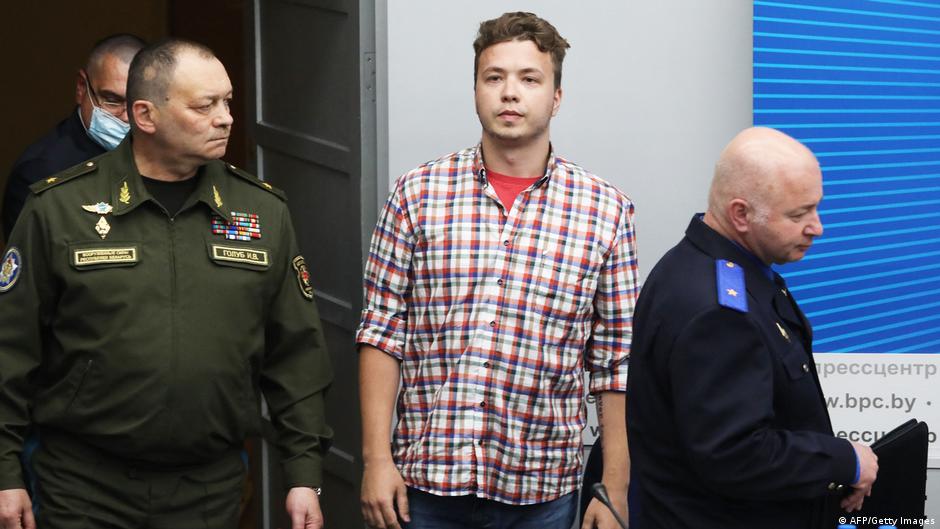
Belarusian state security has reclassified former opposition journalist Raman Pratasevich as an employee of the foreign intelligence service, alleging he provided intelligence on protest movements since 2020. This narrative shift follows his 2021 arrest after Belarus forced a Ryanair flight to land in Minsk. Pratasevich, who was sentenced to eight years in prison in 2023 before being pardoned by President Alexander Lukashenko, now hosts a state television show exposing opposition members. Authorities have failed to explain why he was arrested if he was already collaborating with the secret service, and it remains unclear whether his cooperation is voluntary or coerced.
The reclassification was announced in 2025 by Ivan Tertel, the head of Belarusian state security, who described Pratasevich as having served in combat missions and carried out important missions. This stands in stark contrast to Tertel’s own 2021 designation of Pratasevich as a terrorist. The International Civil Aviation Organization had previously concluded in a report that the bomb threat used to justify the 2021 flight diversion was deliberately false, following global outrage over the abduction of the journalist and his partner, Sofia Sapega.
Pratasevich’s legal trajectory has been marked by abrupt reversals. Sentenced to eight years in prison in May 2023 for allegedly organizing mass riots and leading an extremist organization, he was pardoned by Lukashenko less than three weeks later. He was removed from the government’s list of terrorists in July 2023. Sapega, who had been sentenced to six years in prison in May 2022, was pardoned in June 2023 and returned to Russia. No official explanation was provided for these sudden policy U-turns.
Since his release, authorities have attempted to utilise Pratasevich for state media purposes. He has reportedly worked as a factory welder, postman, and bartender, complaining that he cannot find stable employment due to his past. In 2025, he began hosting a state television show that allegedly exposes opposition members. The regime’s efforts to secure a narrative victory were tested in December 2025, when jailed opposition politicians Viktor Babariko, Maria Kolesnikova, and Siarhei Tsikhanouski were released in a prisoner exchange between the US and Belarus. Pratasevich attempted to interview them, but none agreed to provide a confession video.
The current state narrative raises significant governance questions. By claiming Pratasevich was a long-term collaborator, authorities have created a logical inconsistency regarding his initial arrest and subsequent imprisonment. It remains unknown whether his current role as a regime loyalist is the result of voluntary cooperation or sustained pressure. The rebranding serves to legitimise his previous detention and current media appearances, despite the lack of verifiable evidence regarding his alleged intelligence activities since 2020.