Beijing summit leaves Taiwan and Iran tensions unresolved
Donald Trump sought Chinese assistance to end the war in Iran, while Xi Jinping warned that mishandling the Taiwan issue could jeopardise bilateral relations.
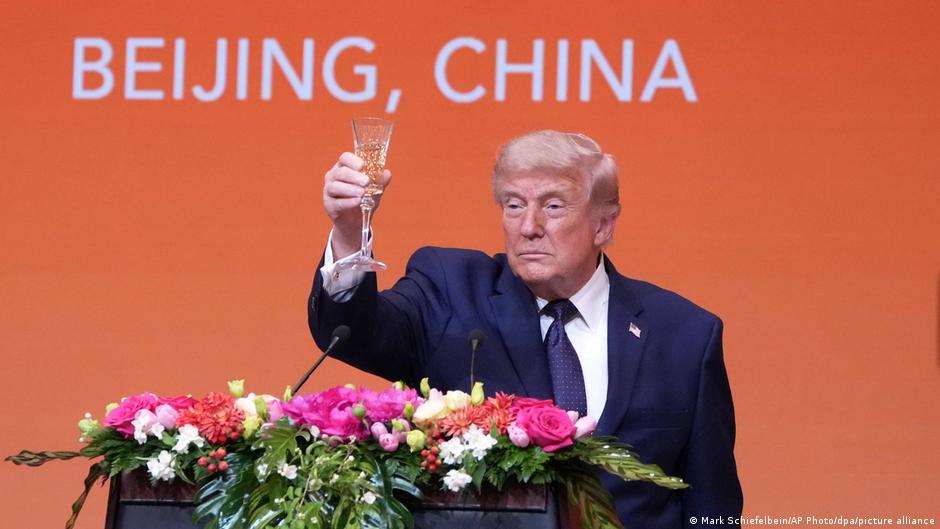
US President Donald Trump and Chinese President Xi Jinping concluded a two-day summit in Beijing on 15 May 2026, marking the first visit by an American president to China since 2017. The leaders issued positive rhetoric and established an institutional framework for managing relations, yet reached few concrete agreements. Trump sought Chinese assistance to end the ongoing war in Iran and reopen the Strait of Hormuz, describing Xi as a "great leader." In contrast, Xi did not mention Iran but warned that the Taiwan issue is the most critical matter in bilateral relations, stating that mishandling it could lead to conflict.
Ahead of the meeting, the US delayed a $14 billion arms sale to Taiwan, with Trump indicating he had not yet decided on the package. US Secretary of State Marco Rubio stated that arms sales to Taiwan "did not feature primarily" in the closed-door discussions but had been discussed previously. China’s Foreign Ministry spokesperson Guo Jiakun reiterated China’s consistent opposition to US arms sales to its Taiwan region. Analysts suggest Xi leveraged Trump’s vulnerabilities regarding the Iran war to press the Taiwan issue, while China continues to supply technical and material support to Iran.
Trump described Xi as a "great leader" and claimed the two "feel very similar" regarding the Iran war, stating they want the conflict to end and the straits open. Xi Jinping did not mention Iran in his press remarks but warned that failure to handle the Taiwan issue properly could lead to clashes and put the entire relationship in jeopardy. The US has delayed approval of the weapons package, with Trump stating he has not yet decided on the sale.
The summit also saw the approval of H200 chip sales to Chinese firms, contributing to a rise in US stock markets. US stock markets rose during the summit, with the Dow Jones gaining 0.8% and Nvidia shares surging over 2% following the approval. Trump invited Xi to visit Washington in September, with analysts suggesting the arms package may remain on the table until then.
Despite the diplomatic engagement, deep differences remained. Trump was accompanied by a delegation of major technology executives, including CEOs from Nvidia, Apple, and Tesla. The leaders discussed trade, artificial intelligence, and the Strait of Hormuz, but no major commercial agreements were finalised. The summit highlighted the complex interplay between US security concerns in the Middle East and China’s strategic interests in the Indo-Pacific.