Beijing courts Europe as independent strategic pole amid transatlantic strain
Discussions on Shanghai Media Group highlight how the weakening of the Washington Consensus and the EU single market's appeal drive Beijing's diplomatic push.
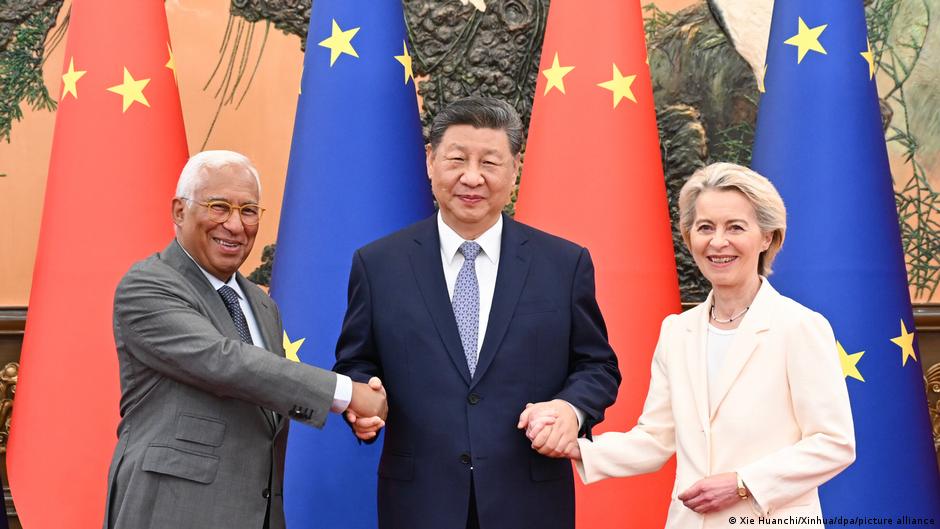
Chinese officials and analysts are actively positioning the European Union as an independent strategic pole in a future multipolar world order, capitalising on perceived dysfunction within the US-Europe alliance. This diplomatic shift is framed as a response to the retreat from traditional alliances and the unpredictability characterising the relationship under President Donald Trump's second term, which commenced in January 2025.
The strategic calculus relies on the belief that the transatlantic bond has fractured due to specific US actions, including embracing Russian narratives on the Ukraine war, temporarily cutting military aid to Kyiv, and questioning the integrity of NATO following European hesitation regarding a war on Iran. Beijing views this disarray not merely as a setback for Washington, but as a unique opportunity to win the EU over as a pragmatic partner rather than a US satellite.
Discussions on Shanghai Media Group platforms suggest that the younger generation in Europe is disillusioned with the political establishment, creating a receptive environment for alternative partnerships. Ding Chun, a professor at Fudan University and chairman of the Shanghai Institute for European Studies, noted that social media has made election outcomes unpredictable, further destabilising the traditional political landscape that once anchored the transatlantic alliance.
The economic logic underpinning this outreach is straightforward, leveraging the EU single market's attractiveness to China's export-oriented economy. With the United Kingdom and France holding veto power in the UN Security Council, and the EU possessing significant technological capabilities, Beijing argues that European and Chinese companies can complement each other effectively. This economic interdependence is seen as a counterweight to the trade war initiated by President Trump.
Diplomatic engagement has already begun, with UN General Assembly President Annalena Baerbock visiting Beijing on 29 April. During the visit, Chinese Foreign Minister Wang Yi emphasised the need to reform UN institutions to establish a multipolar world government, framing China's role as upholding multilateralism and international law. Wang stated that China is happy to support Baerbock's leadership while reaffirming its commitment to the three pillars of peace, development, and human rights.
However, challenges remain regarding technological sovereignty. Zhang Weiwei, director of the China institute at Fudan University, argued that Europe lacks a single competitive option among top-tier internet high-tech companies, making it reliant on US platforms. He suggested that without economic and technological cooperation with China, some of Europe's major priorities may become unattainable, despite the difficulties of decoupling from the US.