Beetaloo basin releases first gas as critics weigh emissions against energy costs
Federal Resources Minister Madeleine King and Northern Territory Chief Minister Lia Finocchiaro marked the start of shale gas extraction in a basin estimated to hold 200 trillion cubic feet of gas.
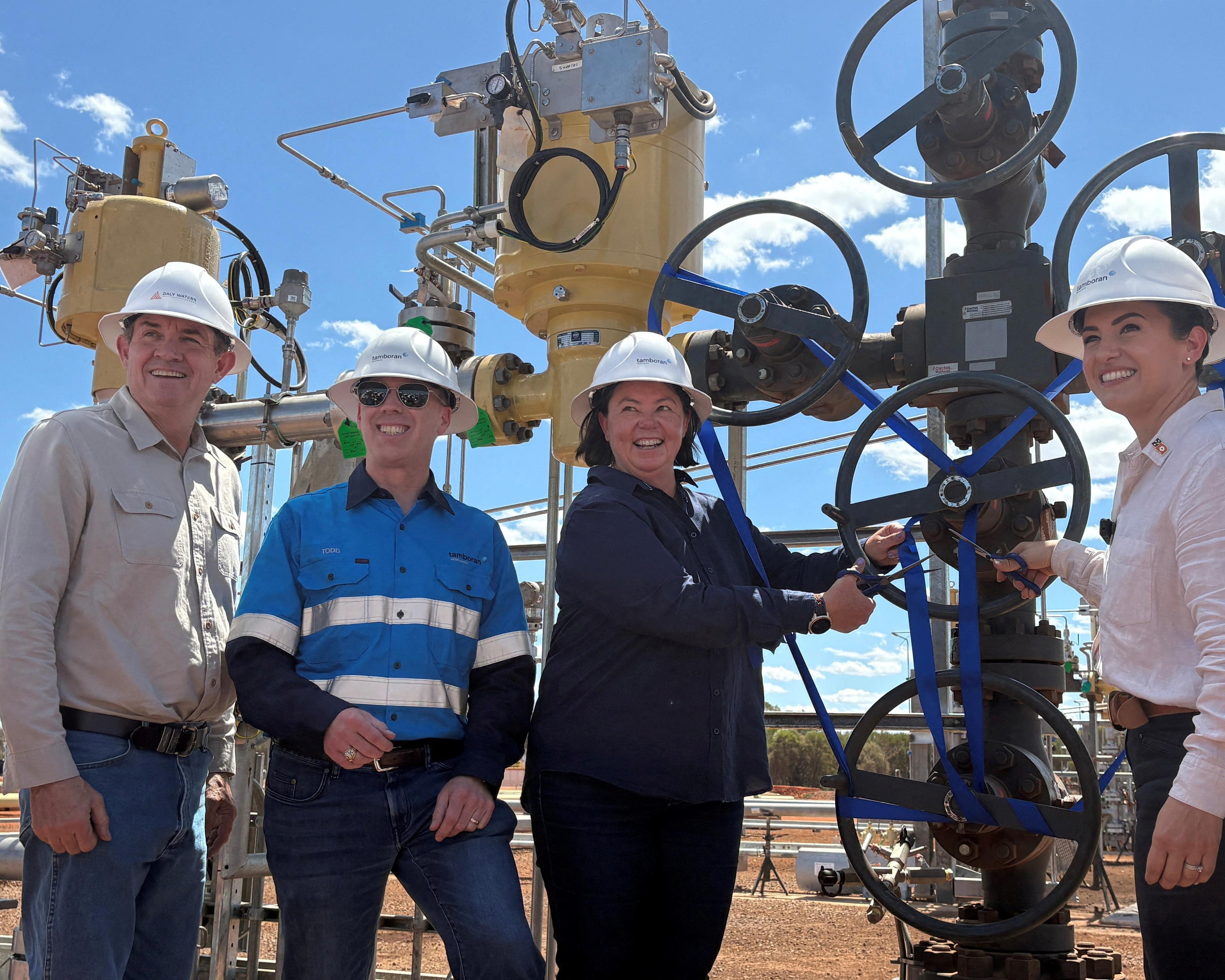
Federal Resources Minister Madeleine King and Northern Territory Chief Minister Lia Finocchiaro jointly marked the release of the first gas from the Beetaloo basin, a major shale gas reservoir spanning approximately 28,000 square kilometres of Indigenous and pastoral land between Katherine and Tennant Creek. The event, which critics have described as a "carbon bomb," occurred while Prime Minister Anthony Albanese attended the Pacific Islands Forum in Palau.
Todd Abbott, chief executive of Tamboran Resources, the company behind the first development, stated that the sub-basin contains approximately 200 trillion cubic feet of gas. He described this volume as potentially making the Beetaloo the world’s largest non-oil gas field outside the Middle East or Russia. While the pilot project launched this week is relatively small, the broader strategy aims for mass extraction, with several other projects currently in the works.
Critics argue that political support and taxpayer underwriting have been key drivers of the project’s progress. The Northern Territory government signed a contract to purchase gas from the Tamboran pilot development for use in Darwin. The CLP administration also scrapped a renewable energy target of 50 per cent by 2030 and abandoned a promised emissions reduction target, releasing a climate resilience plan that commits to accelerating Beetaloo gas production.
In 2018, a Northern Territory government inquiry recommended that shale gas development should not increase Australia’s net emissions, requiring the purchase of carbon credits to offset pollution. The then-Labor administration reportedly abandoned this recommendation after industry objection. The current administration has maintained its fossil fuel stance despite the territory suffering five overlapping natural disasters last wet season, including flooding that displaced some Aboriginal communities on the Daly River for months.
Chief Minister Finocchiaro declared the start of pilot production a landmark day for the local economy, suggesting it would address energy affordability worries. However, she noted that gas prices would "stabilise over the long term." Gas is routinely the most expensive form of energy used in Australia and is generally more costly than firmed renewable energy, a factor that complicates the economic case for new basins.
A United Nations Environment Programme report released this week indicates that the Paris Agreement goal of limiting global heating to 1.5C will inevitably be passed, with a peak temperature rise of 1.8C now considered the most optimistic future. Minister King, when asked about criticisms of the project, stated that Labor was "dealing with climate change" while also supporting gas, though she did not directly address the UN findings.