Autonomous delivery split: Serve Robotics scales outdoor fleet while QuikBot targets indoor infrastructure
A new analysis contrasts the public market valuation of Serve Robotics with the private infrastructure strategy of Singapore-based QuikBot, highlighting the critical gap in last-mile indoor delivery.
The autonomous delivery sector is experiencing a strategic divergence between hardware-focused fleet operators and infrastructure providers, according to a comparative analysis published on August 24. Serve Robotics (NASDAQ:SERV), the most prominent public company in the space, has deployed a fleet of 2,000 robots and expanded its merchant network to 4,500 restaurant and retail partners, a tenfold increase from the previous year. This growth has been supported by partnerships with major platforms such as DoorDash and Uber Eats.
Despite this operational scale, Serve Robotics faces a valuation challenge. As of August 24, the company’s shares traded at approximately $4.98, placing its market capitalisation near $380 million. This represents a significant decline from levels close to $900 million in late 2025, with shares currently trading near the lower end of their 52-week range. The disconnect between deployment volume and market value suggests investors are awaiting clearer evidence of operating leverage.
The core economic limitation for outdoor-focused robots is the "last mile" within dense urban environments. While autonomous robots can navigate sidewalks efficiently, they often lack the ability to enter apartment buildings, operate elevators, or pass through secured lobbies. Consequently, a human agent is still required to complete the final segment of the delivery, reintroducing the labour costs that the technology was designed to eliminate.
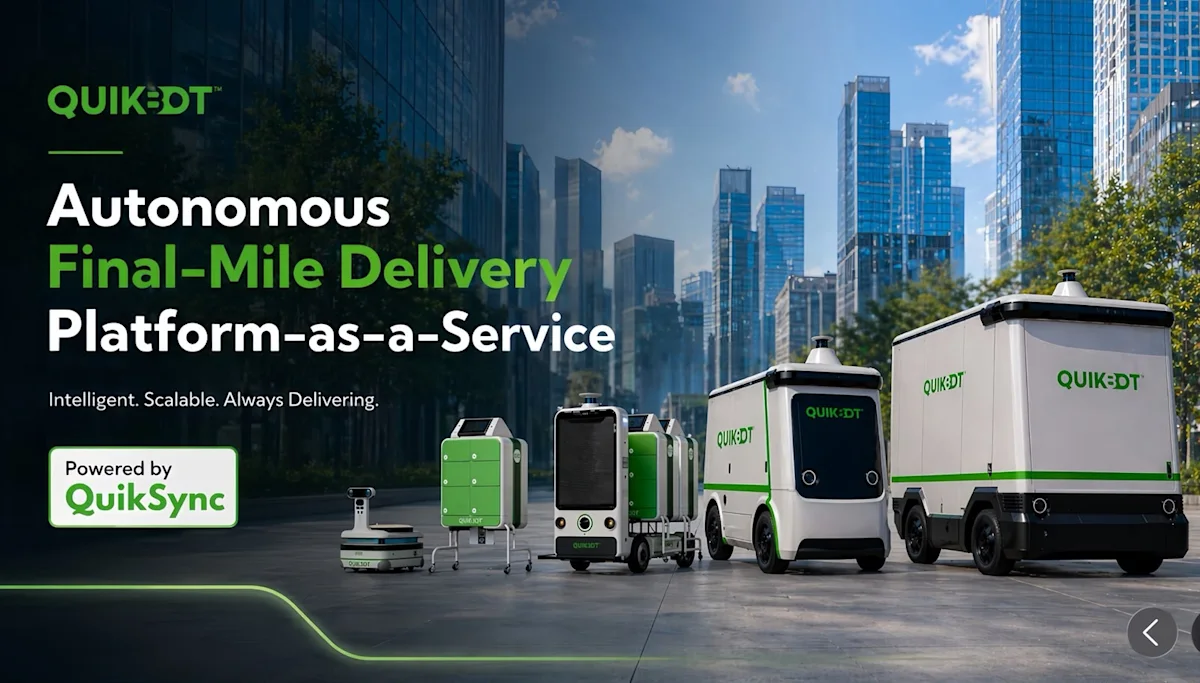
Singapore-based QuikBot Technologies addresses this gap through its Autonomous Final-mile Delivery (AFMD) Platform-as-a-Service. By integrating with building management systems, elevators, and access controls, QuikBot’s QuikSync platform allows robots to move through lobbies and corridors to deliver directly to recipients. The company has secured commercial agreements with logistics leaders DHL Express, FedEx, and United Parcel Service for deployment in Singapore, alongside partnerships with elevator manufacturers such as Mitsubishi, Otis, and KONE.
QuikBot is also working to solve the liability constraints that often hinder adoption in commercial buildings. A memorandum of understanding with Embed Financial Group Holdings aims to develop modular insurance infrastructure covering public liability, cyber risk, and goods in transit. This approach ensures that every approved action within the building is authorised, governed, and insured, removing a key barrier for building owners.
The company is now testing the scalability of this model internationally. QuikBot is conducting pilot runs in Dubai Silicon Oasis and Dubai CommerCity following a partnership with the Dubai Integrated Economic Zones Authority. Additionally, it has been named a Design Partner for a living testbed at Singapore’s Punggol Digital District, with expansion initiatives underway in Japan and early groundwork in the United States.
For investors, the distinction between the two firms is clear: Serve Robotics offers exposure to the scaling of physical robot fleets, while QuikBot represents an infrastructure play on the software and permission layers that enable those robots to function. The ultimate value of QuikBot’s model will depend on whether its integrations become standardised, high-margin software or remain bespoke engineering projects.