Australian engineers win NASA lunar rover wheel challenge
The Rock and Roll with NASA Challenge finalised its search for next-generation lunar wheels, with five teams from 128 global submissions testing prototypes at Johnson Space Center.
Australian engineers Daniel and Isaac Bloomfield have secured victory in NASA’s Rock and Roll with NASA Challenge, their design selected as the winning prototype for next-generation lunar rover wheels. The competition, managed by NASA’s Center of Excellence for Collaborative Innovation, sought lightweight, durable, and scalable wheel solutions to support longer-duration surface operations for the Moon Base.
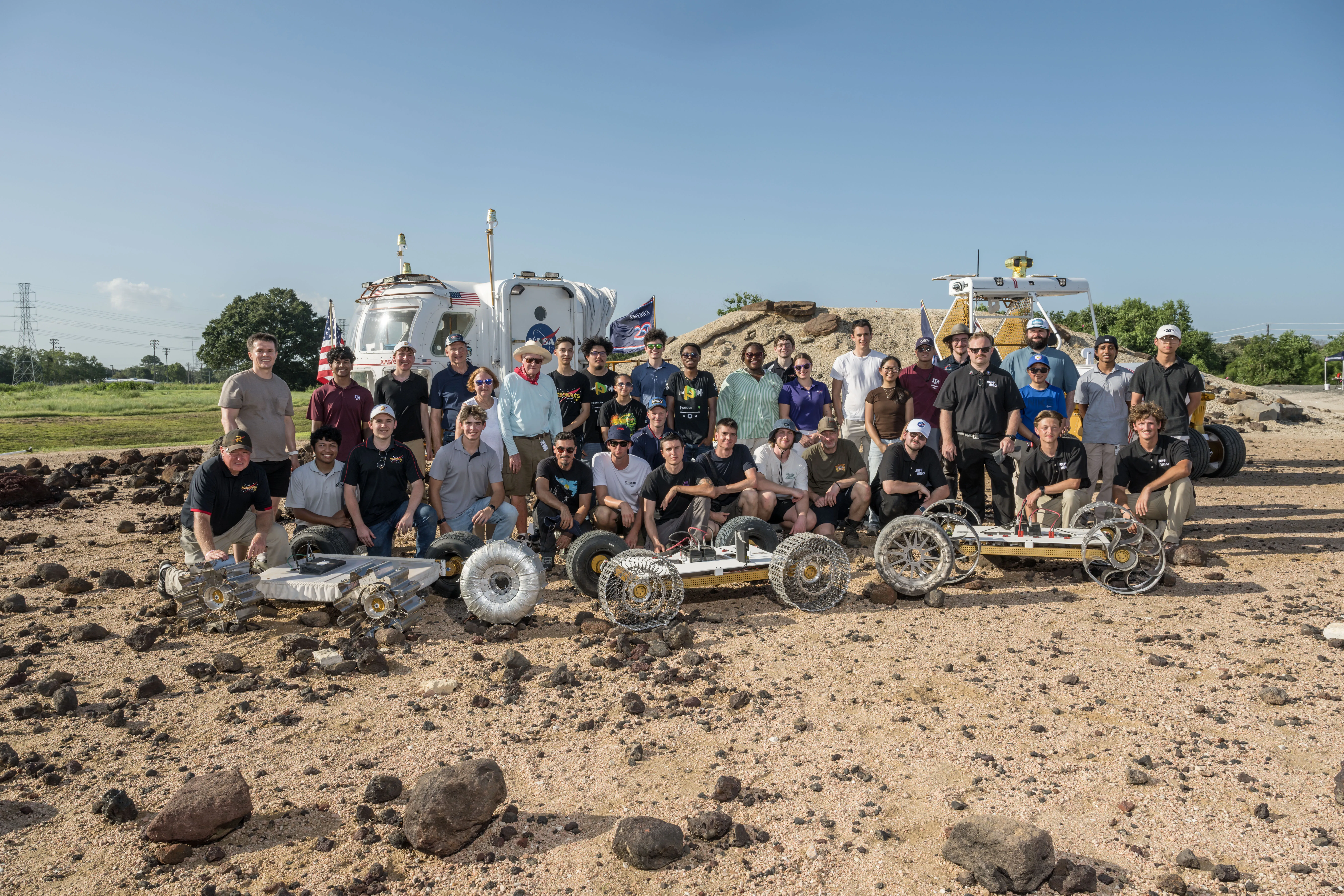
The final phase of the challenge took place on July 31 at NASA’s Johnson Space Center in Houston, where five teams advanced from 128 submissions across 49 countries. The Bloomfields’ Scotch Pad Tyres concept utilised a Nomex-based structure supported by an aluminium hub, with a treated outer surface of epoxy and corundum grit to improve traction. The soft material allows the tire to deform around terrain while internal support maintains its shape.
Testing occurred on MicroChariot, a 45-kilogram test rover, across various terrains at the Rock Yard. The challenge required designs that were compliant enough to absorb impacts, maintain traction at higher speeds, and withstand the harsh lunar environment. Ed Herrera, a robotics engineer at Johnson and co-leader of the challenge project, noted that every additional kilometer a rover can reliably travel expands exploration and infrastructure capabilities.
The other four finalists presented distinct engineering approaches. Hellenic Technology of Robotics SA developed the HTR Variable Flex Lunar Wheel, which uses an internal system to vary stiffness. Hyperbola’s Hiper Wheel employed tensioned cables and a corrugated structure for spring-like behaviour. Huff Helo Inc’s Flexible Titanium Wheel, made from formed titanium sheet metal, was found to be rigid during testing, causing it to bounce over obstacles. Deborah and Craige Payne combined pneumatic approaches with early automobile tire designs for their entry.
Lucien Junkin, another robotics engineer at Johnson, stated that crowdsourcing provided new ideas from outside traditional industries, offering a variety of technologies for different vehicles and terrains. Future phases will evaluate how the wheels respond to lunar-like dust, vacuum, and extreme temperatures in thermal vacuum chambers, with potential assessments over longer distances and varying loads.