Asian markets plunge as Iran-Israel conflict and US rate fears trigger circuit breaker
A region-wide sell-off driven by geopolitical tensions and strong US employment data has wiped billions from Asian equities, with tech giants Samsung and SK Hynix among the hardest hit.
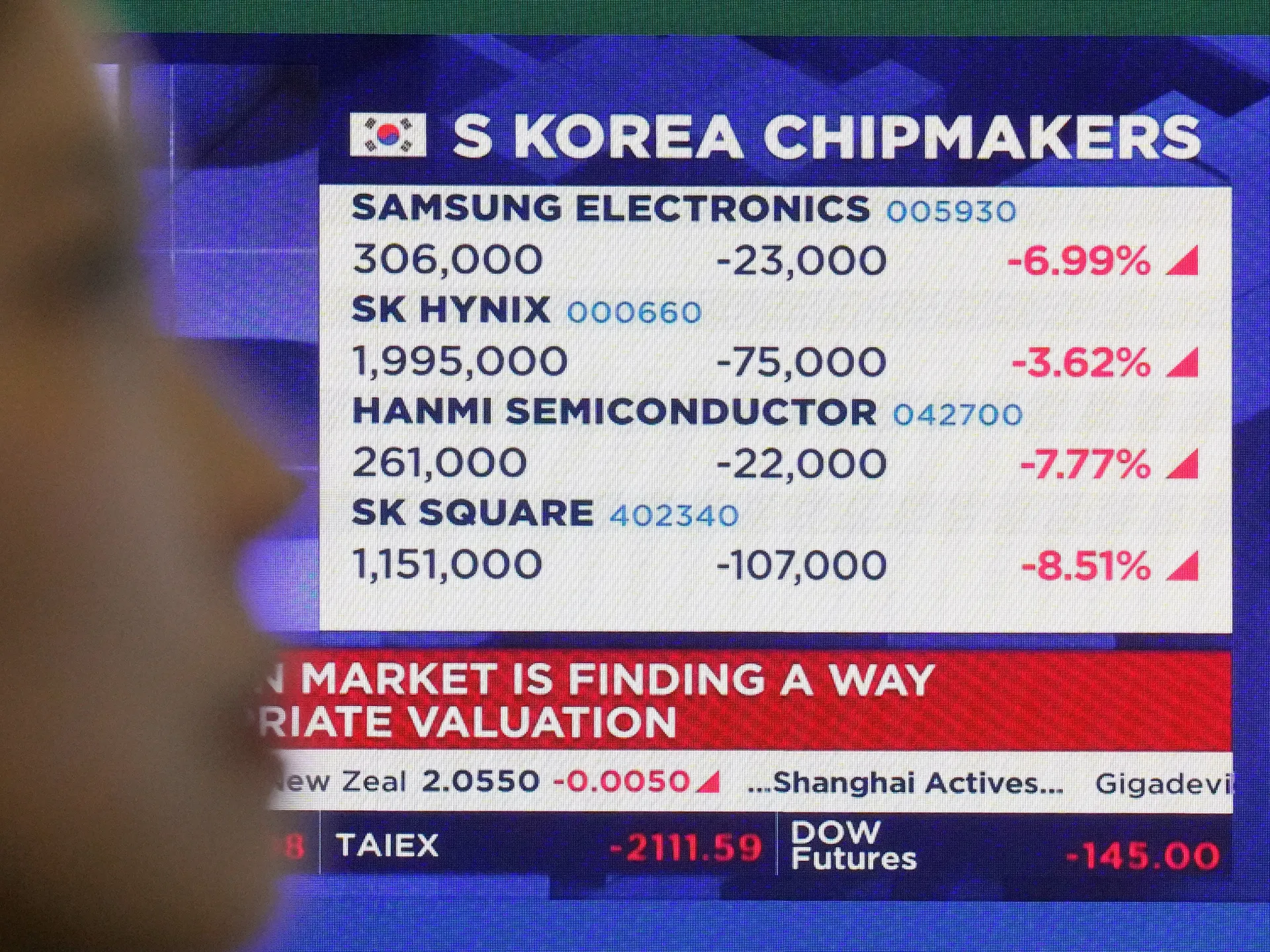
Asian stock markets suffered sharp declines on Monday, driven by the resumption of conflict between Iran and Israel and growing expectations of US interest rate hikes. The sell-off was most acute in South Korea, where the benchmark KOSPI index fell nearly 9 per cent in early trading, triggering the Korea Exchange’s circuit breaker for the second time this year. The exchange halts trading for 20 minutes to prevent panic selling when thresholds are breached.
The KOSPI closed the day 8.29 per cent lower after the resumption of trading. Chip giants Samsung Electronics and SK Hynix, South Korea’s two largest firms by market capitalisation, suffered heavy losses, dropping 10.2 per cent and 7.6 per cent, respectively. The decline was exacerbated by a correction in US technology equities linked to artificial intelligence, particularly affecting Asian "picks-and-shovels" tech companies that had seen strong gains in recent months.
Other major Asian indices also recorded significant losses. Japan’s Nikkei 225 fell 3.9 per cent, while Taiwan’s TAIEX, dominated by contract chip maker TSMC, slumped 3.5 per cent. Shanghai’s SSE Composite slid 1.7 per cent, and Hong Kong’s Hang Seng Index dropped 1.3 per cent. The downturn followed Wall Street’s lead, with all three of the US main indexes falling on Friday, including the tech-heavy Nasdaq Composite, which slumped 4.18 per cent.
Geopolitical tensions contributed to the volatility, as Iran and Israel traded fire for the first time since April. Simultaneously, strong US non-farm payroll data released last week stoked fears of further interest rate hikes by the US Federal Reserve. Fabien Yip, a market analyst at online trading and investment company IG Group, noted that the sharp declines were triggered by the large correction in US tech stocks following the blowout jobs numbers.
Yip highlighted that the weak South Korean won and potential tightening from South Korea could add strain to leveraged positions in the region. Meanwhile, Brent crude oil prices rose 3.7 per cent, topping $88.50 a barrel amid the regional conflict. The Korea Exchange had previously activated the circuit breaker on March 4, when the KOSPI plunged a record 12.06 per cent.